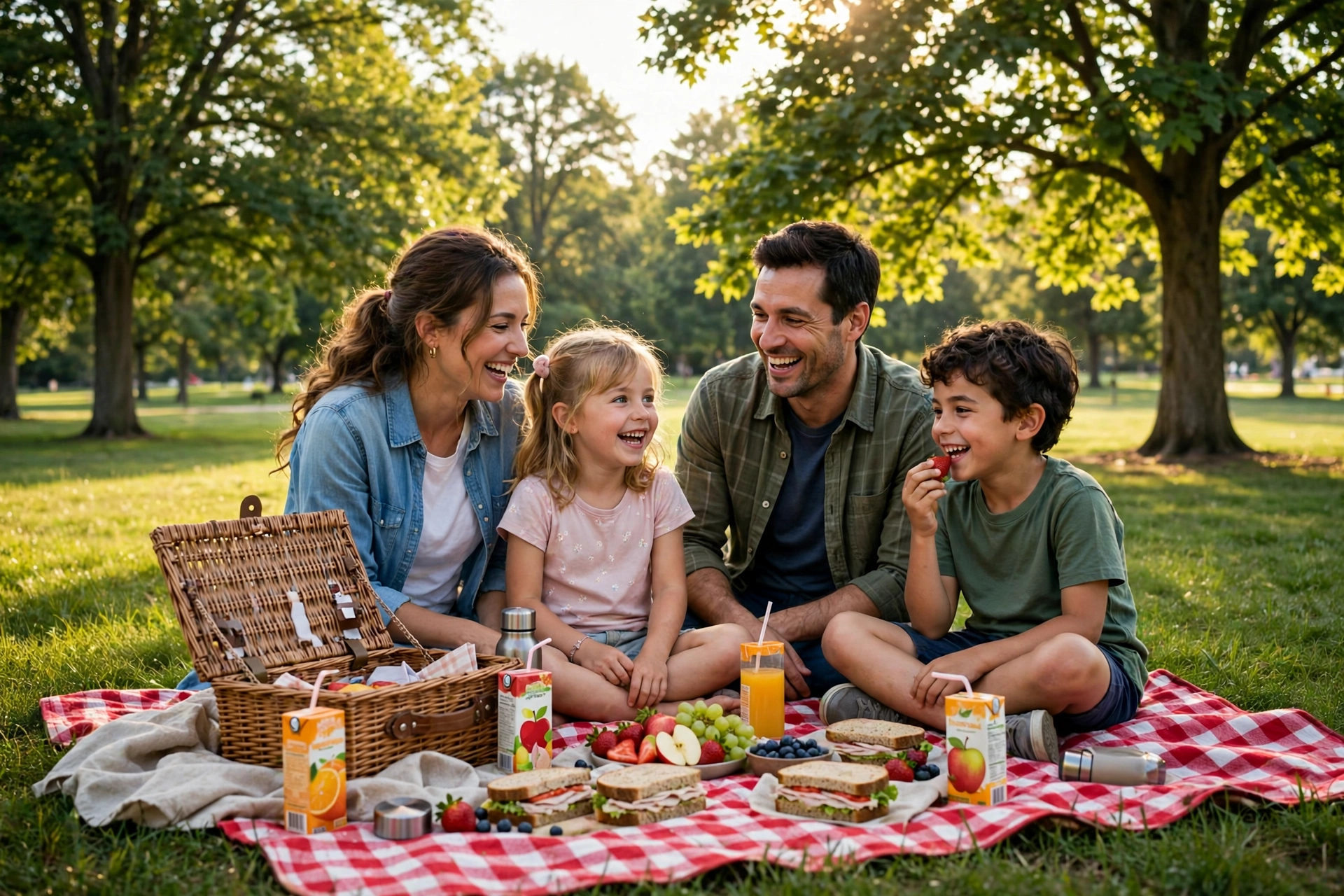
Why a Picnic Is the Easiest Family Outing
Going on a picnic with kids might be the lowest-effort, highest-reward outing a family can plan. There is no admission fee, no reservation window to watch, and no long drive. You pack food you already have, spread a blanket on the grass, and suddenly lunch becomes an adventure. Kids get fresh air, open space to run, and a break from screens — and parents get a slow afternoon that costs almost nothing.
But any parent who has tried it knows a picnic can also go sideways fast: forgotten water bottles, sandwiches that turn soggy, a toddler who melts down because there is no shade, or a whole afternoon cut short by ants in the food. The difference between a magical afternoon and a miserable one is rarely money. It is planning — and that is exactly what this guide gives you.
In this complete family guide to going on a picnic with kids, you will find how to pick a spot that works for your children’s ages, a printable packing checklist, food that actually gets eaten, food-safety rules that keep everyone healthy, games by age group, and a backup plan for bad weather. Follow it once and picnics become the outing your kids ask for every weekend.
How to Choose the Perfect Picnic Spot
The spot makes or breaks the day. A beautiful meadow with no restroom and no shade is a worse choice than a plain neighborhood park with both. Choose for convenience first, scenery second.
What to Look for in a Kid-Friendly Picnic Spot
- Shade: a big tree, a pavilion, or a shelter — especially if you are out between 11 a.m. and 3 p.m.
- Restrooms nearby: within a short walk, not a hike. This matters most with toddlers and preschoolers.
- Open, flat grass: room to run, kick a ball, and spread a blanket without slopes or hidden holes.
- Safe distance from roads and water: look for fenced playgrounds or spots set back from traffic and unfenced ponds.
- Parking close by: if you are carrying a cooler, a blanket, and a toddler, a long walk from the car ruins the mood before you start.
- A playground or splash pad nearby: built-in entertainment means fewer toys to pack.
Best Types of Picnic Spots by Age
Match the location to the season of life you are in. With a crawling baby, soft grass and a large blanket matter most. With a toddler, an enclosed playground or a spot away from busy paths keeps everyone calmer. School-age kids do best with open fields, trails, and room to explore, while teenagers appreciate a lake, a bike path, or a place where friends can join. A spot five minutes from home beats a perfect spot an hour away when your youngest melts down between nap and snack time.
If you want to level up from the local park, state parks and national park picnic areas are wonderful next steps — many have tables, grills, and ranger programs. Our guide to the best US state parks for first-time family campers is a good place to start looking for one near you.
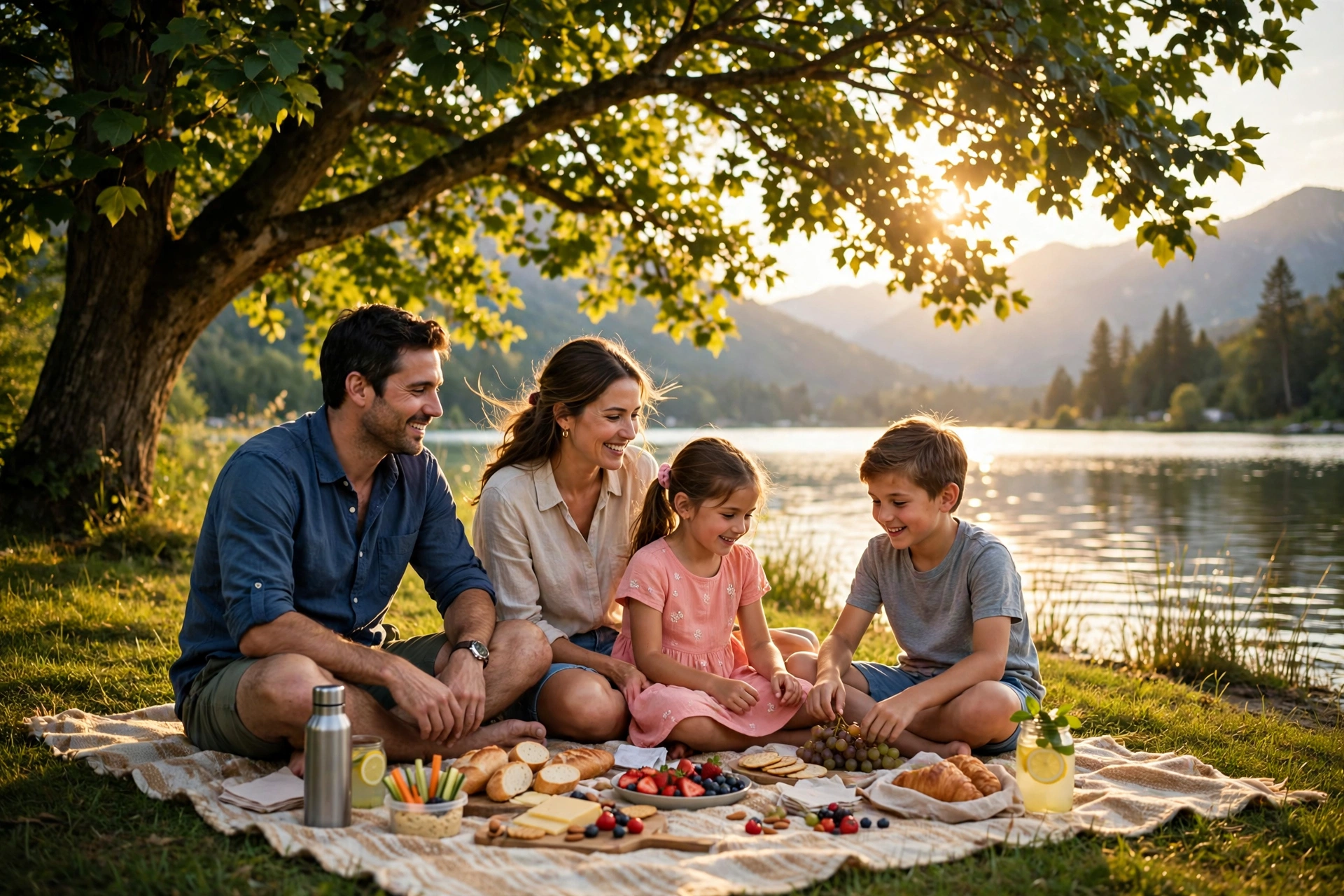
The 7-Day Picnic Plan: A Timeline That Removes the Stress
The secret to a stress-free picnic is spreading the work out. Do a little at a time and the morning of the picnic feels easy instead of frantic.
| When | What to do |
|---|---|
| A week before | Pick the spot and check the forecast, park hours, and whether grills or fires are allowed. Invite another family if you like — picnics are better shared. |
| 3 days before | Plan the menu around foods that travel well. Shop for non-perishables, drinks, and snacks. |
| The day before | Make sandwiches, wash and cut fruit, freeze water bottles to double as ice packs, and charge the camera or phone. |
| The morning of | Pack the cooler last so cold food stays cold. Do the eight-item scan in the checklist below. Load the car with the blanket on top so it comes out first. |
| At the park | Set up in the shade, put food out in small batches, and keep the cooler closed between servings. |
| Before you leave | Do a five-minute sweep: every wrapper, every toy, every sock. Leave the spot cleaner than you found it. |
What to Pack: The Family Picnic Checklist
The easiest way to avoid the sinking “I forgot something” feeling is a list you reuse every time. Keep a dedicated picnic bin in the garage with the non-food essentials so packing takes ten minutes, not an hour.
The Eight-Item Scan (Do This Before You Zip the Cooler)
- Picnic blanket — soft side up, waterproof side down, big enough for everyone
- Water bottles for every person, plus one extra
- Easy-to-eat food and snacks in sealed containers
- Napkins, wet wipes, and hand sanitizer
- Sunscreen and hats
- A small trash bag and a bag for recycling
- A basic first-aid kit with bandages and any allergy medication your child needs
- One change of clothes for younger children
Packing by Age: What Changes
| Age group | Extra to pack | Watch out for |
|---|---|---|
| Baby (under 1) | Bottles or nursing cover, bibs, extra diapers, a shaded spot for naps | Direct sun, insects, uneven ground under the blanket |
| Toddler (1–3) | Spill-proof cups, finger foods, a favorite comfort toy, wipes | Wandering toward roads or water, choking hazards like whole grapes |
| Preschool (3–5) | A ball, bubbles, coloring supplies, a change of clothes | Sunburn on long afternoons, muddy shoes in the car |
| School-age (6–12) | A frisbee or kite, a nature scavenger hunt list, a book | Overheating during active play, forgetting to drink water |
| Teen (13+) | A speaker, a card game, snacks they actually like | Boredom — let them invite a friend or pick the spot |
If you camp as well as picnic, you will recognize this system: it is the same pack-once, reuse-forever approach in our family camping checklist, just scaled down for an afternoon.
Picnic Food That Actually Gets Eaten
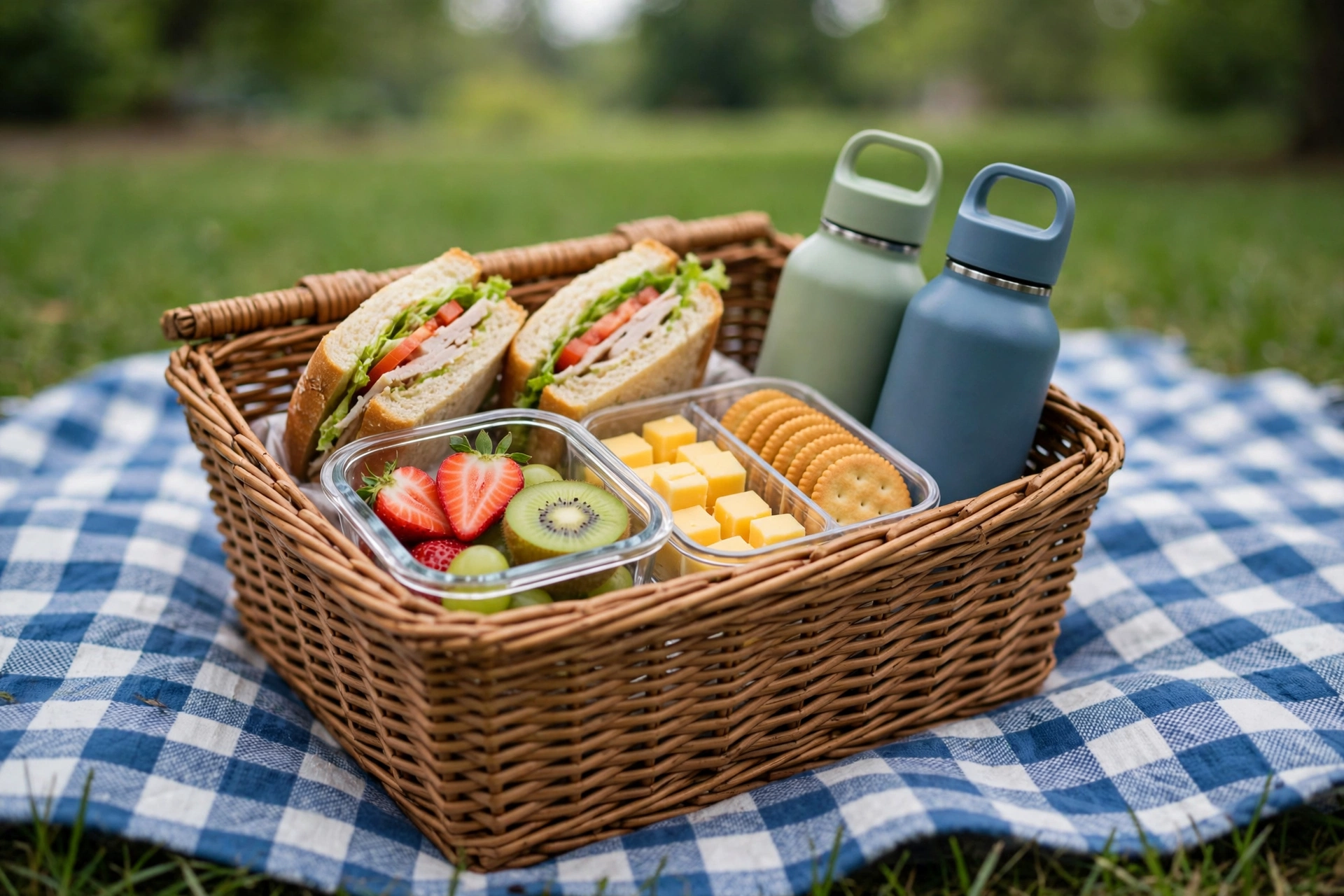
Picnic food has two jobs: it has to taste good, and it has to survive a bumpy ride in a tote or cooler. The winning formula is familiar, easy to hold, and hard to ruin.
The Five-Block Menu
Build your menu from five blocks and mix and match:
- Main: turkey-cheddar wraps, peanut butter sandwiches, or pasta salad
- Crunch: crackers, veggie sticks with hummus, or pretzels
- Fruit: grapes (cut in half for toddlers), clementines, strawberries, or melon chunks
- Something sweet: mini muffins, granola bars, or cookies
- Drinks: water first, then juice boxes or a thermos of lemonade
Cut sandwiches into triangles or strips for small hands, and pack sauces separately so nothing goes soggy. For more make-ahead ideas, our 7-day summer camping meal plan is full of dishes that travel just as well to a park as to a campsite.
Food Safety: The Rule Most Picnic Guides Skip
Warm weather and perishable food are a bad combination. According to the U.S. government’s food safety guidance, perishable food should stay chilled below 40°F and should be thrown out if it has been sitting out for more than two hours — or just one hour when temperatures top 90°F. Pack cold food in a cooler with ice packs, keep the cooler in the shade with the lid closed, and put food out in small batches rather than all at once. For the full rules, see FoodSafety.gov, the U.S. government’s food safety site.
Food Allergies at a Picnic
If anyone in your group has a food allergy, pack their food in a separate, clearly labeled container and bring wipes to clean hands and surfaces before eating. Tell other families in advance so shared dishes are safe, and always carry prescribed allergy medication. A little planning means the allergic child eats the same fun food as everyone else — just from their own safe box.
Picnic Games and Activities by Age
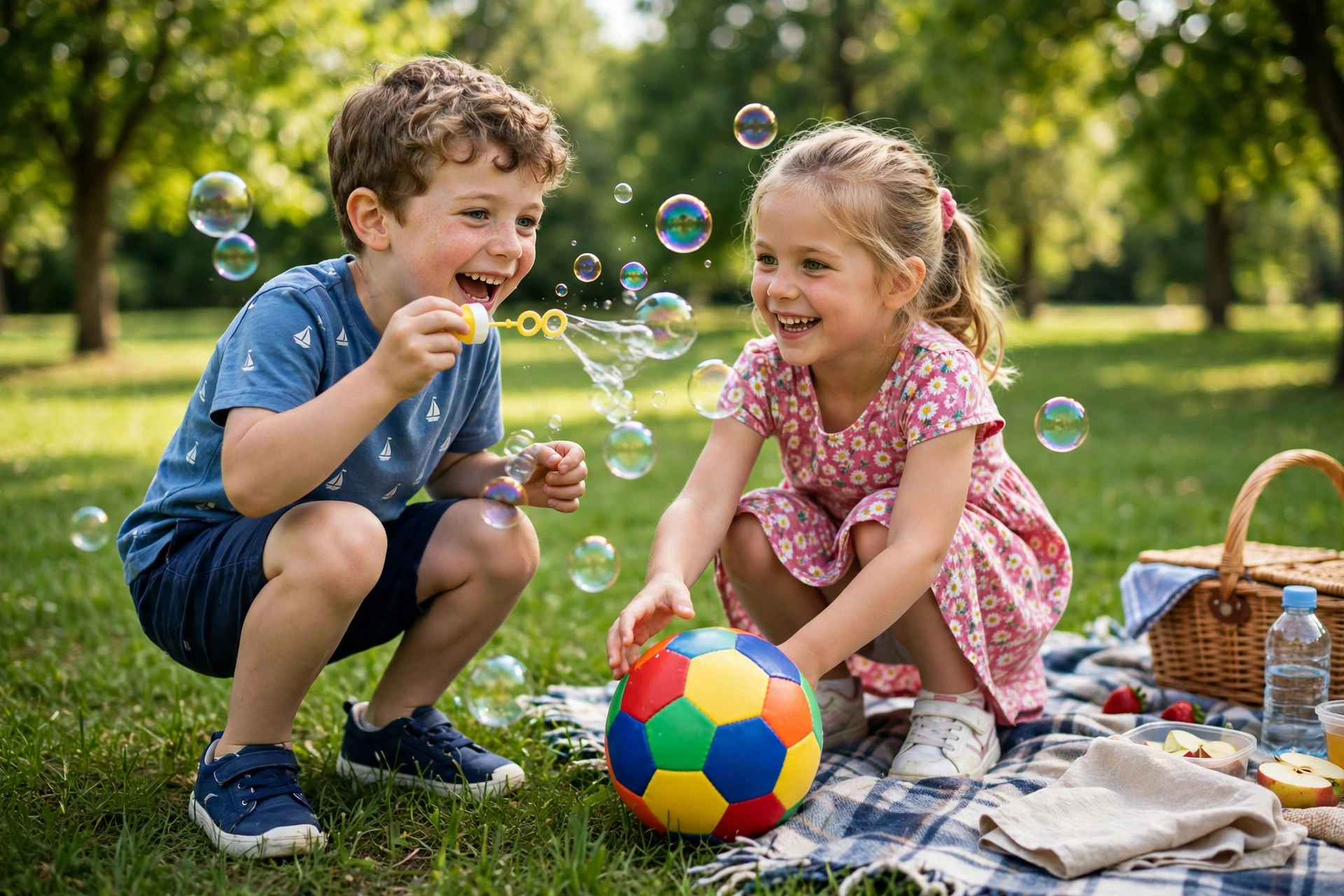
A picnic is not just lunch outdoors. It is a chance to play together, and you do not need to bring the toy box. A ball, some bubbles, and a little imagination cover most ages.
- Toddlers: blowing bubbles, rolling a ball, a simple color hunt (“find something red”)
- Preschoolers: a mini scavenger hunt, cloud watching, storytelling on the blanket
- School-age kids: frisbee, tag, a nature scavenger hunt with 10 items to find, kite flying
- Teens: card games, a friendly round of catch, photography challenges, or a playlist and a dance-off
- Whole family: a three-legged race, a tug of war with a jump rope, or a round of “I Spy” while you eat
Our 21 camping games for kids with no equipment work just as well on a picnic blanket as they do at a campsite — most need nothing but the people you brought.
Picnic Safety: Sun, Bugs, Water, and Allergies
Most picnic problems are preventable with five minutes of preparation. Sunscreen goes on before you leave the house, not after the first red shoulders appear. Reapply every two hours, more often if kids are sweating or splashing. Hats and light long sleeves do more than sunscreen alone on a bright day.
For bugs, a little insect repellent on exposed skin and long pants at dusk keep most bites away, and a quick tick check after playing in tall grass is a smart habit in wooded parks. Near water, the rule is simple: an adult watches the water whenever children are near it, and younger children stay within arm’s reach. Agree on play boundaries before the kids run off, and keep first-aid basics — bandages, antiseptic wipes, and any needed medication — in your picnic bin. For a deeper dive into trail and outdoor safety with kids, see our guide on how to teach kids trail safety by age.
When the Weather Turns: Your Backup Plan
Always check the forecast the night before, and have a plan B that does not feel like a defeat. A light rain can mean moving to a park pavilion; a thunderstorm means going home or to a covered spot. If the day is a washout, bring the picnic indoors: spread the blanket on the living room floor, eat the same food, and play the same games. Kids remember the blanket on the floor almost as fondly as the park. And a rainy-day backup list helps — our 25 rainy-day activities for kids work for a rained-out picnic afternoon too.
Leave No Trace: Teaching Kids to Care for the Park
A picnic is a gentle way to teach kids to respect nature. Before you leave, walk the area together and pick up every scrap — even the ones that are not yours. Show children how to stay on paths, leave wildflowers and rocks where they are, and keep food away from ducks and squirrels. Reusable containers and bottles cut waste, and a small bag for recycling makes the lesson hands-on. Parks stay beautiful because families like yours leave them that way.
Planning Your First Picnic This Weekend
If you have never done it, keep the first one small: a nearby park, a 30-minute window, sandwiches and fruit, a ball, and a blanket. That is enough. The kids will ask to do it again, and each picnic gets easier as your bin fills up and your checklist becomes habit.
Frequently Asked Questions About Going on a Picnic with Kids
What should I bring to a picnic with kids?
Start with a blanket, water bottles, easy-to-eat food, napkins, wet wipes, sunscreen, hats, hand sanitizer, a trash bag, and a small first-aid kit. Add age-specific extras — diapers and bottles for babies, spill-proof cups for toddlers, a ball and bubbles for older kids.
What is the best time of day for a family picnic?
Early morning or late afternoon is usually best. It is cooler, less crowded, and easier to enjoy. Avoid the peak sun hours around 1 to 3 p.m. if you want to skip the sweat and sunburns.
What food is safe to bring on a picnic with kids?
Finger foods travel best: sandwiches, wraps, cut fruit, cheese, crackers, and veggie sticks with hummus. Keep perishable food chilled below 40°F and throw out anything that has sat out for more than two hours — one hour if it is hotter than 90°F.
How do I keep kids entertained at a picnic?
You do not need much. A ball, bubbles, a frisbee, or a simple scavenger hunt covers most ages. Open grass, a snack supply, and a parent who is not glued to a phone do the rest.
What if it rains on picnic day?
Have a backup plan before you go. A park pavilion works for light rain; for a real storm, bring the picnic indoors — blanket on the living room floor, same food, same games. Kids love it just as much.
Where is the best place to have a picnic with kids?
Look for a park with shade, restrooms nearby, flat open grass, and a playground or splash pad. Parking close by matters more than scenery when you are carrying a cooler and a toddler. State parks and national park picnic areas are great next steps once you have the basics down.
