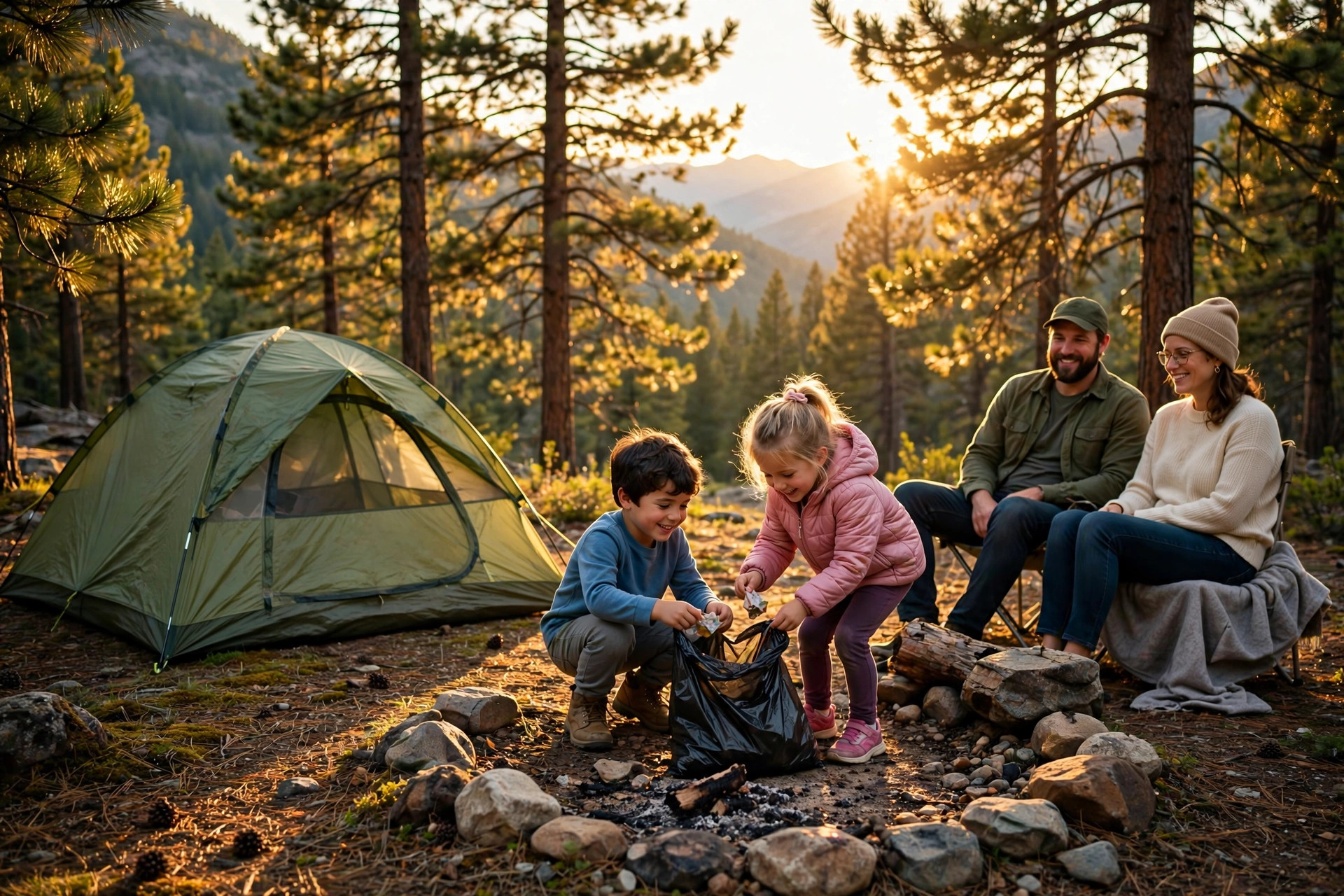
Teaching Leave No Trace for kids sounds like it could be a lecture. The words are serious, the seven principles sound formal, and the last thing you want on a family camping trip is your children zoning out while you talk about “durable surfaces.” But here is what we learned after years of camping with our kids: children love Leave No Trace once you turn it into a game. They just need the right frame — a mission, not a rulebook.
This guide turns the seven Leave No Trace principles into kid-sized missions, each with a hands-on activity that works on the trail and around camp — for toddlers and tweens alike.
What Is Leave No Trace? (And Why Families Matter Most)
Leave No Trace is a set of seven principles created by the Leave No Trace Center for Outdoor Ethics to help people enjoy the outdoors without damaging it. Rangers at national parks teach the same ideas — the National Park Service has a kid-friendly version too. The principles cover everything from planning ahead to respecting wildlife.
Families matter most in this conversation because kids form their outdoor habits early. A child who learns at age six to pack out every candy wrapper becomes an adult who instinctively does the same. And let’s be honest — kids generate more trash, wander off trail more, and are more tempted to feed that cute squirrel than any adult. Teaching them now saves a lot of heartache (and park fines) later.
The secret is simple: never lead with “don’t.” Lead with a job. Kids who have a mission — Trash Detective, Trail Guardian, Fire Captain — do the right thing because it is their responsibility, not because a grown-up said so.
Principle 1: Plan Ahead and Prepare — The Detective Game
The first principle is about research and readiness: know the rules of the place you are visiting, check the weather, and pack what you need so you do not damage the land by accident. For kids, this becomes a detective mission.
Make it fun: Before the trip, hand your child “detective duty.” Their job is to find three facts about your destination: Are campfires allowed? Are there bears? What is the weather forecast? Let them look at the park website with you or flip through the campground brochure. When they report back at the dinner table like tiny rangers, the principle has already landed.
Older kids can take charge of one packing category on your family camping checklist — rain gear, snacks, or first aid. Ownership makes the lesson stick far better than a packing lecture.
Principle 2: Travel on Durable Surfaces — The Stay-on-Trail Challenge
Fragile meadows, mossy rocks, and alpine plants can take decades to recover from a single footprint. The rule is simple: walk on trails, rock, gravel, dry grass, or snow — and when you are off-trail, spread out instead of walking single file so you do not carve a new path.
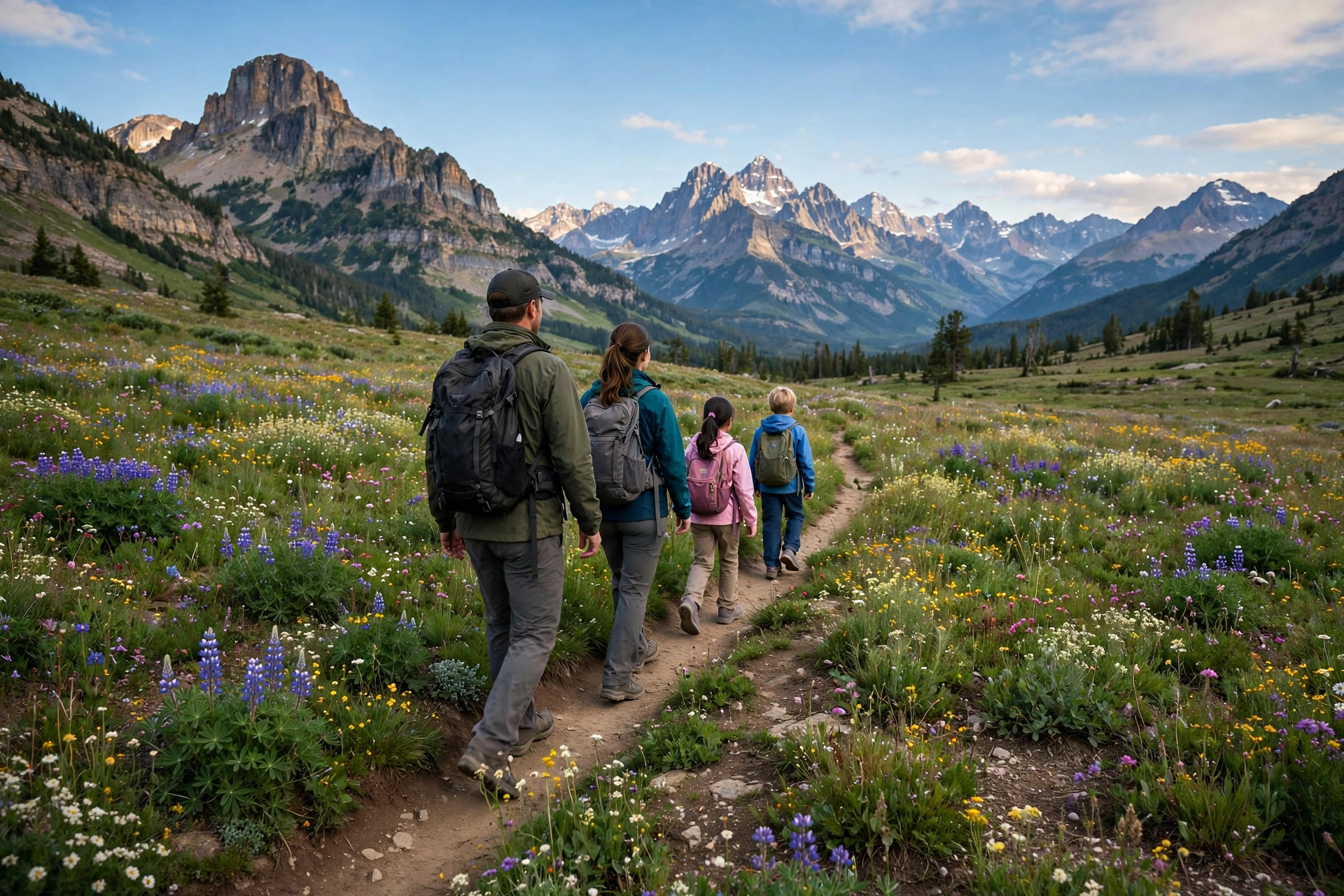
Make it fun: Turn it into the “lava game.” The trail is safe ground; everything off the trail is lava that would hurt the tiny plants living there. Our kids still shout “lava!” when someone’s foot drifts off the path. For toddlers, keep it positive and simple: sing a walking song and hold their hand on narrow sections, which also matches realistic trail distances by age so nobody gets overtired and tempted to shortcut.
Principle 3: Dispose of Waste Properly — The Trash Treasure Hunt
“Pack it in, pack it out” is the heart of Leave No Trace. Everything that comes to the campsite leaves with you — wrappers, food scraps, tissues, and yes, the micro-trash like bottle caps and twist ties that are so easy to miss.
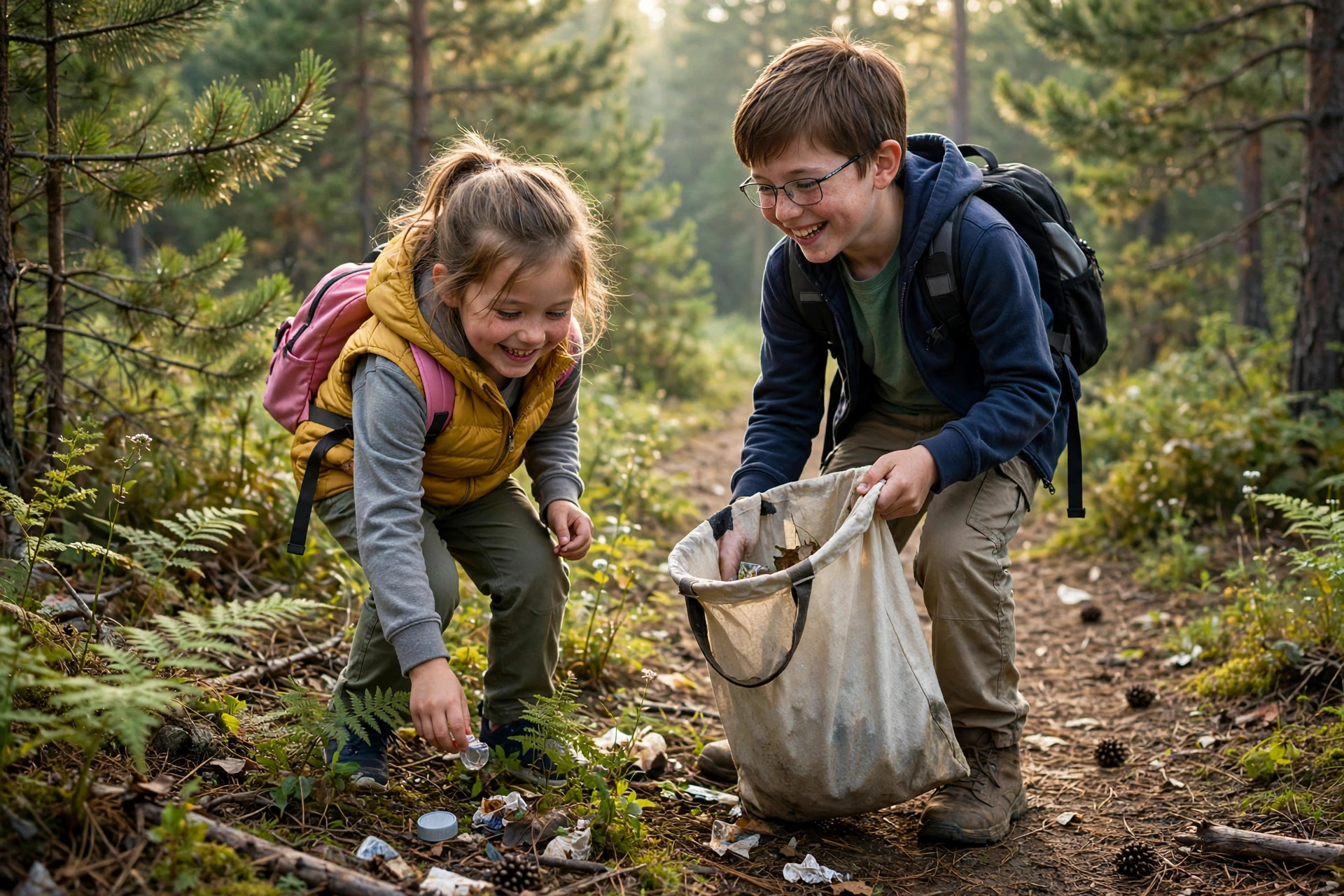
Make it fun: Give each child their own small trash bag and announce the Trash Treasure Hunt: one point for every piece of litter, five points for micro-trash, and a bonus point for any litter that is not yours (the famous “leave it better” bonus). End-of-day scores get announced at dinner with ceremony. We have watched siblings crawl through campsites on all fours hunting bottle caps. The campsite has never been cleaner.
Pro tip: do a final campsite sweep at kid-eye level before you drive off. You will be amazed what you spot.
Principle 4: Leave What You Find — The Nature Photographer’s Promise
Rocks, feathers, flowers, antlers, and cool sticks all belong where they are. Every interesting thing is part of someone else’s discovery — and part of the ecosystem. This is often the hardest principle for kids, because collecting is how children explore.
Make it fun: Appoint your child the family Nature Photographer. Their job is to “collect” the coolest finds with a camera or a sketchbook instead of their pockets. At the end of the trip, they present their top five discoveries. A photo of a feather they found is a keepsake; the feather itself left behind is a gift to the next kid who walks that trail.
Picking up litter is always fine — but never carve initials into trees, stack extra cairns, or build dams in streams. All of those leave a mark.
Principle 5: Minimize Campfire Impact — The Fire Safety Squad
Campfires are the heart of family camping, but they scar the ground, consume dead wood that wildlife needs, and can escape in dry conditions. The principle: use established fire rings, keep fires small, burn wood to ash, and make sure the fire is dead out before bed.
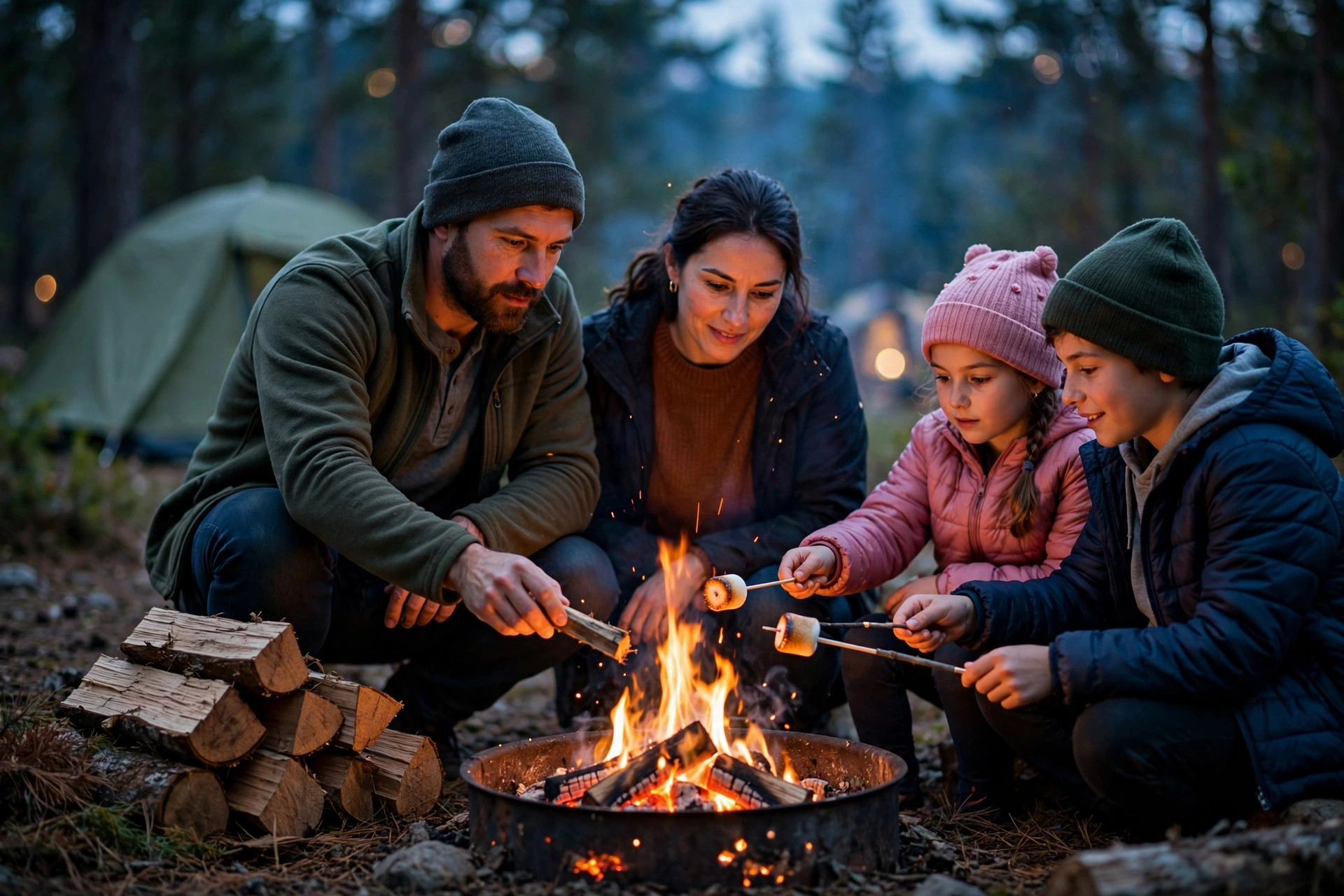
Make it fun: Kids love being on the Fire Safety Squad. Assign roles: one child is the Wood Collector (only dead, downed wood, and only pieces they can break by hand — never strip bark or branches from living trees), another is the Ash Inspector (in the morning, they check that yesterday’s fire is cold to the touch). Teach them the “drown, stir, feel” routine — drown the fire with water, stir the ashes, and check for heat. If it is too hot to touch, it is too hot to leave.
And when fire danger is high, show kids that skipping the fire is the adventure: lantern-lit storytelling and stargazing become the new tradition.
Principle 6: Respect Wildlife — The Animal Detective
Watching animals is thrilling for kids — and the temptation to feed, chase, or get close is strong. The rule: observe from a distance, never feed wildlife (it makes animals sick and aggressive), and store food so animals cannot reach it.
Make it fun: Turn your child into an Animal Detective with a simple mission: spot wildlife without being spotted. Binoculars help enormously — a cheap pair transforms a distant deer into a close encounter. Keep a wildlife log: species, time, distance, behavior. Kids who are busy logging a chipmunk from twenty feet away are not chasing it.
Explain the “why” in kid terms: “That chipmunk’s tummy can’t handle our crackers — it would make him sick.” Empathy works better than rules. Also teach them about food storage and campsite safety if you camp in bear country — it protects both your family and the bears.
Principle 7: Be Considerate of Others — The Trail Kindness Mission
The outdoors belongs to everyone. This principle covers yielding to other hikers, keeping noise down (sound travels far in the mountains), taking breaks off the trail, and respecting quiet hours at campgrounds.
Make it fun: The Trail Kindness Mission: your child’s job is to spot other hikers and step aside with a cheerful “hello!” before you even ask. Count the smiles. Kids also love being the “quiet hours” enforcers at camp — ours once shushed us at 9:55 p.m. with great ceremony. Yielding to uphill hikers becomes a game of manners they are proud of.
Also teach kids what to do if separated on the trail — our safety plan for getting lost hiking with kids covers it.
Your Leave No Trace Family Packing List
A little preparation makes every principle easier. Here is what to toss in the car so your family can leave every place better than you found it:
| Item | Why it matters | Kid job |
|---|---|---|
| 2–3 reusable trash bags | Pack out all waste, including other people’s litter | Trash Treasure Hunt captain |
| Reusable water bottles + plates | Skips dozens of single-use items per trip | Personal bottle guardian |
| Trowel + toilet paper in a bag | Catholes 6–8 inches deep, 200 feet from water | Holds the “bathroom kit” (older kids) |
| Binoculars | Wildlife watching without getting close | Animal Detective gear |
| Camera or sketchbook | “Collect” memories instead of souvenirs | Nature Photographer |
| Bucket or water jug | Drowning campfires properly | Fire Safety Squad equipment |
| Biodegradable soap | Washing dishes/hands 200 feet from streams | Dish-duty helper |
| Headlamps | Seeing the site for your final litter sweep | Sweep-team leader |
5 Mistakes Kids Make (And Gentle Fixes That Work)
Even the most enthusiastic junior rangers slip up. Here is how to handle the classics without turning the trip into a scolding marathon:
- Pocketing “souvenirs.” Trade the rock for a photo or a sketch. Start a “nature museum” photo album at home instead of a shelf of stolen stones.
- Wandering off trail. Give them a trail job — map reader, blaze spotter, step counter — so walking the path feels like participation, not restriction.
- Feeding animals. Redirect with the Animal Detective log and explain that human food can genuinely hurt wildlife. Most kids switch from feeding to protecting fast.
- Loud voices at camp. Introduce the “owl ears” game: who can hear the most nature sounds in two minutes of silence? Volume drops instantly.
- Leaving food scraps “for the animals.” Teach that even apple cores and banana peels are litter — they do not belong in that ecosystem and can take months to decompose. Scrape plates into the trash bag.
Leave No Trace for Kids: FAQs
At what age can kids start learning Leave No Trace?
Start as early as age 3–4 with the simplest ideas: trash goes in the bag, stay on the trail, look at animals but do not touch. Toddlers learn by copying you, so narrate what you are doing (“I’m picking up this wrapper so the forest stays clean”). By 6–8, kids can take real jobs like the Trash Treasure Hunt, and tweens can learn the full seven principles by name.
What is the single most important Leave No Trace habit for families?
Packing out all trash — including micro-trash and food scraps. It is visible, kids can do it themselves, and it makes an immediate difference. Do a final campsite sweep at kid-eye level before you leave; it takes five minutes and catches the bottle caps and wrappers adults walk right past.
Should kids use the bathroom outdoors? How?
Yes — it is a normal part of camping, and teaching it right is part of Leave No Trace. Use a trowel to dig a cathole 6–8 inches deep, at least 200 feet (about 70 adult steps) from trails, camps, and water. Pack out toilet paper in a sealed bag. For younger kids, a portable camp toilet or a wag bag (recommended by REI’s Leave No Trace guide) is often the easiest option.
Are campfires okay with kids around?
Yes, with care. Use existing fire rings, keep fires small, and never leave them unattended. Teach kids the “drown, stir, feel” check and make the cold-out test their official job. In dry or windy conditions — or during fire bans — skip the fire entirely and make lantern time the new tradition. Check current fire restrictions on recreation.gov before you go.
How do you teach Leave No Trace without lecturing?
Give every principle a mission and a title: Trash Detective, Trail Guardian, Animal Detective, Fire Captain. Kids protect what they feel responsible for. Keep explanations short, praise the behavior you want to see, and model it yourself — they are watching you more than listening to you.
What should we do if we see other campers ignoring Leave No Trace?
Model the right behavior and, if it is safe and friendly, pick up the litter yourself — kids notice quiet leadership. Do not confront strangers. If you see serious damage (cut trees, trash dumps, illegal fires), report it to the campground host or ranger station. Rangers would much rather hear from you than discover it later.
The Takeaway
Leave No Trace for kids is not about seven rules to memorize — it is about raising children who see wild places as something they are part of, not just passing through. Start with one mission this weekend: a Trash Treasure Hunt at your local park. Watch how seriously they take it. Then add the next mission on your next trip. Before long, your kids will be the ones reminding you to pack out the orange peels — and honestly, that is the whole point.
Ready for your next trip? Check the best time to book campsites soon — the good sites go fast — and we will see you out there.
