This post contains affiliate links. If you buy through them, TravelAle may earn a small commission at no extra cost to you. Read our Affiliate Disclosure.
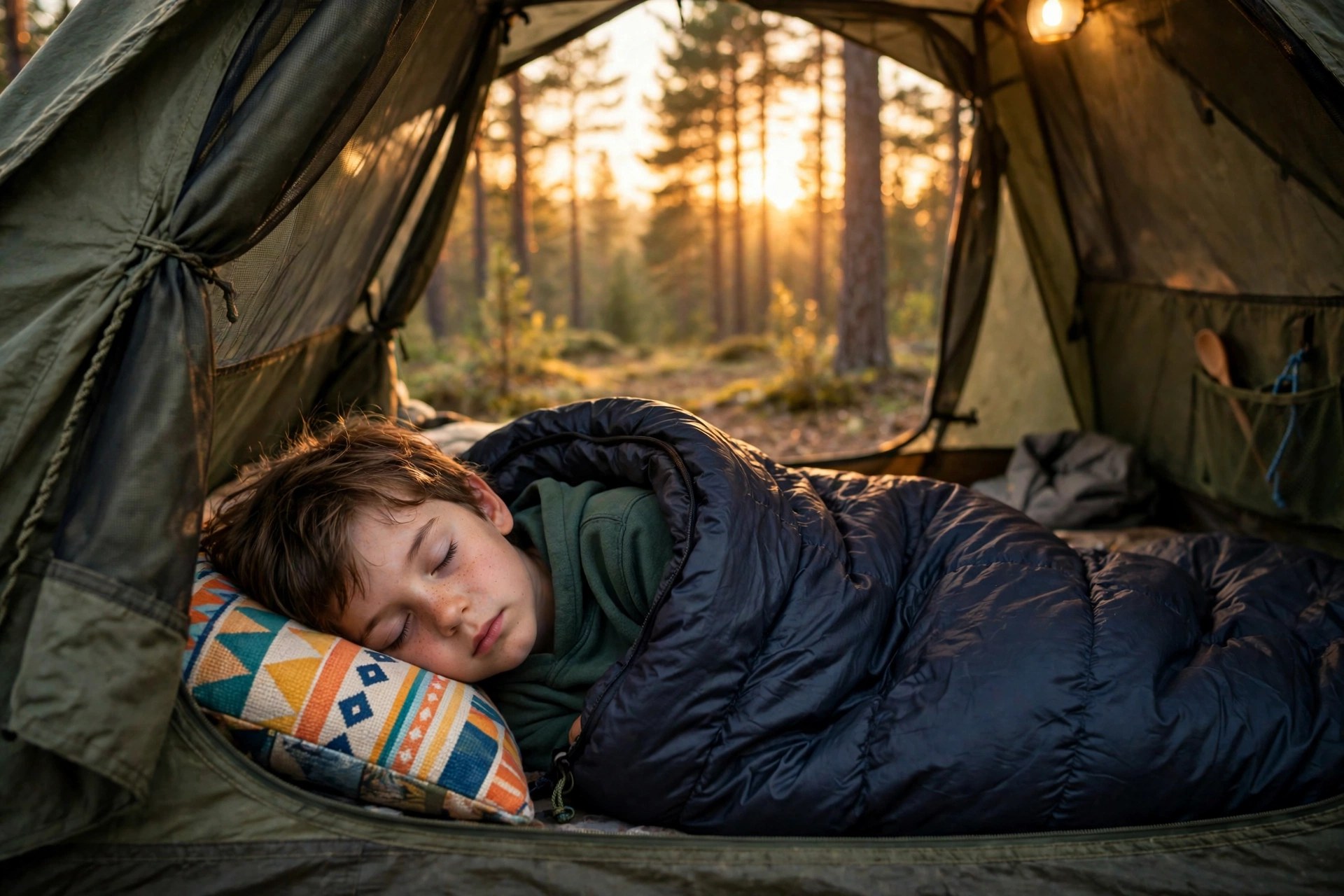
A good night’s sleep can make or break a family camping trip. Kids who sleep well wake up happy and hike further. One of the simplest upgrades to a child’s camp sleep setup is also one of the cheapest: a pillow made for camping — in a size that actually fits a kid.
Our Top Picks on Amazon
Therm-a-Rest Compressible Pillow (Small) — Best for older kids and tweens who want a real-pillow feel; soft foam that packs down small. Check Price on Amazon
Wise Owl Outfitters Camping Pillow — Best budget pick for families buying one per kid; memory foam, washable cover, and a stuff sack included. Check Price on Amazon
Genius Earth Inflatable Camping Pillow — Best ultralight option for hiking families; inflates in a few breaths and packs down to pocket size. Check Price on Amazon
Prices change often — check Amazon for the current price. Affiliate Disclosure
The keyword is kid-sized. Most camping pillows are built for adults: too thick, too wide, and too heavy for a small camper. A pillow that is too tall bends a child’s neck at an awkward angle all night. This guide covers the three main types of camping pillows, how to match one to your child’s age, and what to check before you buy.
Why Adult Camping Pillows Don’t Work for Kids
It is tempting to hand your child a spare adult pillow. The problem is proportion: an adult camping pillow is usually 14 to 18 inches wide and 4 inches thick, but a 6-year-old’s shoulders are barely 12 inches across. That pillow lifts the head too high and leaves the neck bent for eight hours — a stiff neck, restless sleep, and a grumpy kid at breakfast.
Kids also toss, turn, and migrate across the tent at night. A smaller, lighter pillow stays put better and is easier for a child to drag back into place in the dark — and at under 12 ounces, your child can even carry it in their own daypack.
The 3 Types of Camping Pillows for Kids
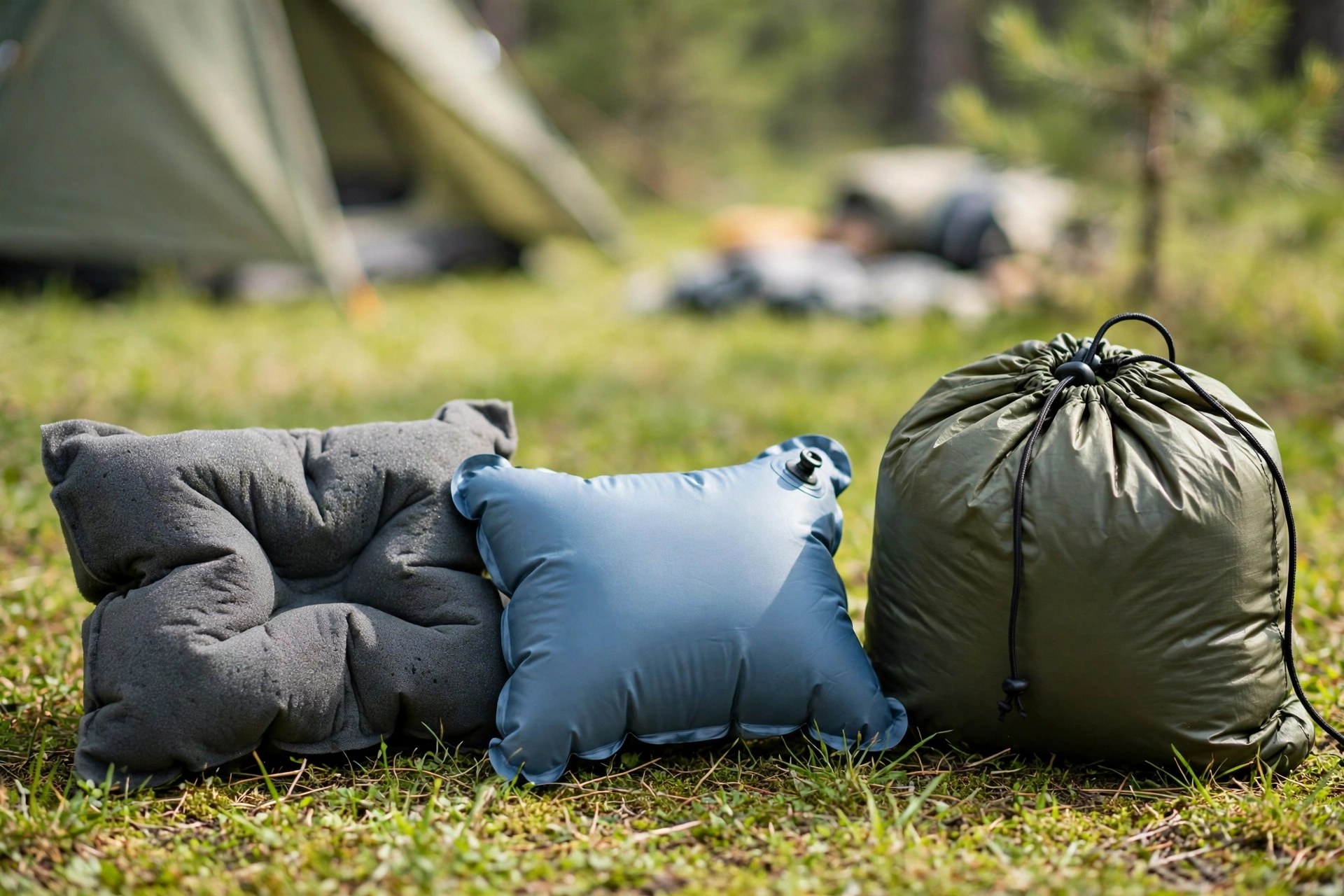
Almost every kids camping pillow falls into one of three families. Each has a clear trade-off between comfort, weight, and fuss.
1. Compressible Foam Pillows
These are the closest thing to a real bed pillow. Shredded or solid foam squashes down into a stuff sack and fluffs back up when you pull it out — no blowing, no valves, no waiting. Most are 12 by 16 inches and weigh 7 to 12 ounces. They are the best choice for car camping and for kids who want familiar comfort. The downside is bulk: even compressed, they are bigger than an inflatable.
2. Inflatable Pillows
Inflatable pillows are small air mattresses for the head. Deflated, they fold to the size of a phone and weigh as little as 2 to 3 ounces — the lightest option by far. Most inflate in two or three breaths, and many let you adjust firmness by letting a little air out. They are the right call for hiking families and older kids who carry their own gear. The trade-offs: they can feel bouncy, they can leak if punctured, and younger kids may struggle to inflate them.
3. Stuff-Sack Pillows (and the Clothes Trick)
The simplest option costs nothing: a stuff sack filled with soft clothes. Some families buy a dedicated stuff-sack pillow — a soft fleece sack with a foam insert — while others just use the sack their sleeping bag came in. This is a fine backup and a good way to test whether your child even wants a pillow before you spend money. But it is the least comfortable option for a full night. Think of it as a trial run, not a long-term solution.
| Type | Best for | Packed size | Weight | Watch out for |
|---|---|---|---|---|
| Compressible foam | Car camping, comfort-first kids | Small stuff sack | 7–12 oz | Bulkiest to pack |
| Inflatable | Hiking, backpacking, tweens | Pocket-size | 2–4 oz | Can feel bouncy; can puncture |
| Stuff-sack / clothes | Testing the idea, backup | Already in your pack | 0 oz extra | Least comfortable; clothes get used |
Best Camping Pillow by Age: What Actually Fits
Age is the fastest way to narrow the choice — a toddler and a tween have very different necks and patience for gear.
Toddlers (Ages 2–5): Small, Soft, and Low
For this age, low loft matters more than anything. Look for a pillow around 12 by 14 inches and no more than 3 inches thick, with a washable cover — toddlers are messy campers, so a removable, machine-washable cover is a requirement. Avoid inflatable pillows for toddlers: the valve and the bouncy feel usually frustrate them. One safety note: children under 2 should not use a pillow at all. If your youngest is still in that range, skip the pillow and let them sleep flat on their camping cot or pad.
Kids (Ages 6–9): The Sweet Spot for Foam
School-age kids are the easiest to shop for. A small compressible foam pillow — 12 by 16 inches, about 4 inches of loft — fits most of them well. A fun color or a pillow they picked themselves genuinely helps: a kid who chose their pillow will actually use it instead of demanding yours at 2 a.m. If your family hikes to camp, a lightweight inflatable is a reasonable alternative — but let them try inflating it at home first.
Tweens (Ages 10+): Let Them Choose the Type
By 10, most kids are close enough to adult sizing that a small or medium adult pillow works fine. Hand over the decision: foam for comfort, inflatable for weight savings on backpacking trips.
What to Check Before You Buy
Before you click buy on any pillow, run through this quick checklist.
- Size when open: 12×16 inches suits most kids under 10; 14×18 inches suits tweens. Bigger is not better.
- Packed size: Check the compressed dimensions, not just the open ones — can it fit in your child’s daypack?
- Weight: Under 12 ounces is a good ceiling; under 4 ounces if they will carry it on a hike.
- Washable cover: Camp pillows get dirty. A removable, machine-washable cover is worth paying a little extra for.
- Loft and firmness: Side sleepers need a little more loft; back sleepers need less. Adjustable firmness is a real plus.
- Material: Look for a breathable cover (cotton, micro-suede, or brushed polyester). Hot sleepers will sweat on vinyl-feeling fabrics.
- Durability: Check the seams and the valve — a pillow that splits on night two is worse than no pillow at all.
Our Top Picks, Up Close
Here is how the three picks from the box above fit different families — including who each one is not for.
Therm-a-Rest Compressible Pillow (Small) — Best for Comfort-First Campers
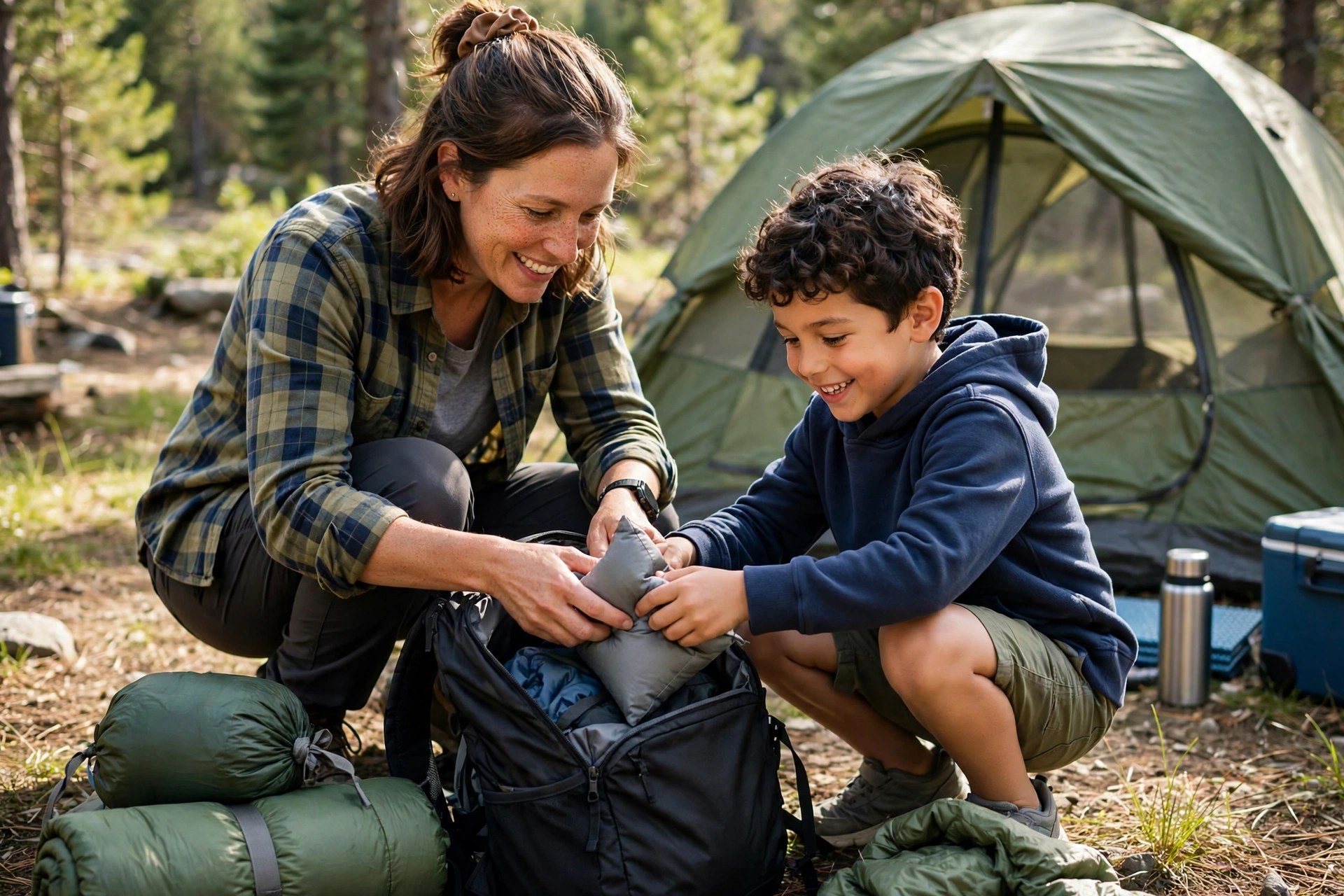
This is the pillow to buy when comfort is the priority and you are car camping. The Small size measures 12 by 16 inches when open and weighs about 7 ounces — a good fit for kids from about age 6 up through tweens. Upcycled foam compresses into its own stuff sack and springs back to a full 4 inches of loft the moment you pull it out, and the cinch cord lets you adjust firmness. Who it is not for: toddlers under 5 will find it a little too thick, and ultralight backpackers will find it too bulky.
Wise Owl Outfitters Camping Pillow — Best Budget Pick for the Whole Family
If you need one pillow per kid without spending a fortune, this is the practical choice. A small memory-foam pillow that fluffs up to about 4 inches thick out of its included waterproof stuff sack, with a micro-suede cover that comes off and goes in the washing machine. It weighs under 12 ounces and works well for kids from about age 5 up. Who it is not for: weight-conscious hikers, since it is noticeably heavier than an inflatable, and kids who sleep hot may find memory foam too warm on summer nights.
Genius Earth Inflatable Camping Pillow — Best Ultralight Pick
For families who hike to their campsite, weight and packed size rule everything — and this pillow wins on both. It weighs under 3 ounces, folds to about the size of a phone, and inflates in two or three breaths. Because you control the air, you control the firmness. Who it is not for: younger kids who cannot inflate it themselves, restless sleepers who will roll off a bouncy air pillow, and anyone camping over sharp rocks — a puncture means a flat pillow.
Packing and Care Tips That Actually Help
A pillow is only useful if it arrives at camp in good shape.
- Use a pillowcase from home on the first trip. A familiar-smelling case helps younger kids settle in a strange tent. It also keeps the pillow cleaner.
- Keep inflatables away from the campfire. Heat and sharp sticks are the two fastest ways to kill an air pillow. Store it inside the tent, not by the fire ring.
- Wash covers between trips. Camp pillows pick up dirt, sunscreen, and bug spray. A quick wash after every trip keeps them fresh.
- Air-dry foam pillows fully before storing. Packing a damp pillow away invites mildew. Leave it out in the sun for an hour after you get home.
Sleep Setup: The Pillow Is Only One Piece
A great pillow cannot fix a bad sleep setup. It works as part of a system: a well-fitting sleeping pad underneath and a sleeping bag rated for the night’s temperature. If your child is still waking up cold, the problem is usually the pad or the bag, not the pillow — check our guide to family sleeping bags. And if tent clutter is the real enemy of sleep, our tent organization systems will help the whole family settle faster. If you are still choosing a campground, you can browse and book family sites on Recreation.gov.
A Quick Note on Safety
Pillows are safe for most children over age 2, but a few rules apply at camp. Never put a pillow in the sleep space of a baby under 2, and keep pillows away from tent heaters and the campfire. If your child has breathing issues or allergies that affect sleep, talk to your pediatrician before the trip. Always air out a damp pillow in the morning instead of packing it away wet. The National Park Service’s camping pages are a good place to check campground rules and safety guidance before you go.
Frequently Asked Questions
What age can a child use a camping pillow?
Most children can use a small, low pillow from about age 2, following the same guidance pediatricians give for pillows at home. Under 2, no pillow. If you are unsure, ask your pediatrician.
Are inflatable pillows comfortable for kids?
For older kids and tweens, yes — especially on hiking trips where weight matters. For younger kids, usually not: they find inflatables bouncy and hard to stay on. If your child is under 8, a small foam pillow is the safer bet.
Can kids just use a regular pillow from home?
For car camping, yes — a small pillow from home works fine and smells familiar, which helps younger kids settle. The problem is size and mess: a full-size home pillow is too big for a child’s neck and too bulky for a packed car. A dedicated small camping pillow with a washable cover is the better long-term solution.
How do you wash a camping pillow?
Most foam pillows have a removable cover that goes in the washing machine on a gentle cycle — check the care label first. The foam insert should be spot-cleaned and air-dried, never machine-washed. Inflatable pillows just need a wipe-down with a damp cloth.
Do kids need a pillow when camping, or is a sleeping bag enough?
Kids can sleep without a pillow, and many do on their first trip. But a small pillow improves neck alignment and helps kids fall asleep faster in an unfamiliar tent. If you are short on space, a stuff sack filled with soft clothes is a decent stand-in for one night.
What is the best camping pillow for a toddler?
A small, soft, low-loft foam pillow with a washable cover — around 12 by 14 inches and under 3 inches thick. Skip inflatables for toddlers, and skip pillows entirely for children under 2.
The Bottom Line
The best camping pillow for your kid is the one that fits their age, their sleep style, and the way your family camps. Car campers should start with a small compressible foam pillow — it feels most like home and needs zero effort at bedtime. Hiking families should look at a lightweight inflatable that disappears into a daypack. And if you are buying for three kids at once, a budget-friendly memory-foam pillow with a washable cover is the smartest spend. Let your child try it at home first: one practice night on the living-room floor tells you more than any product page ever will.
