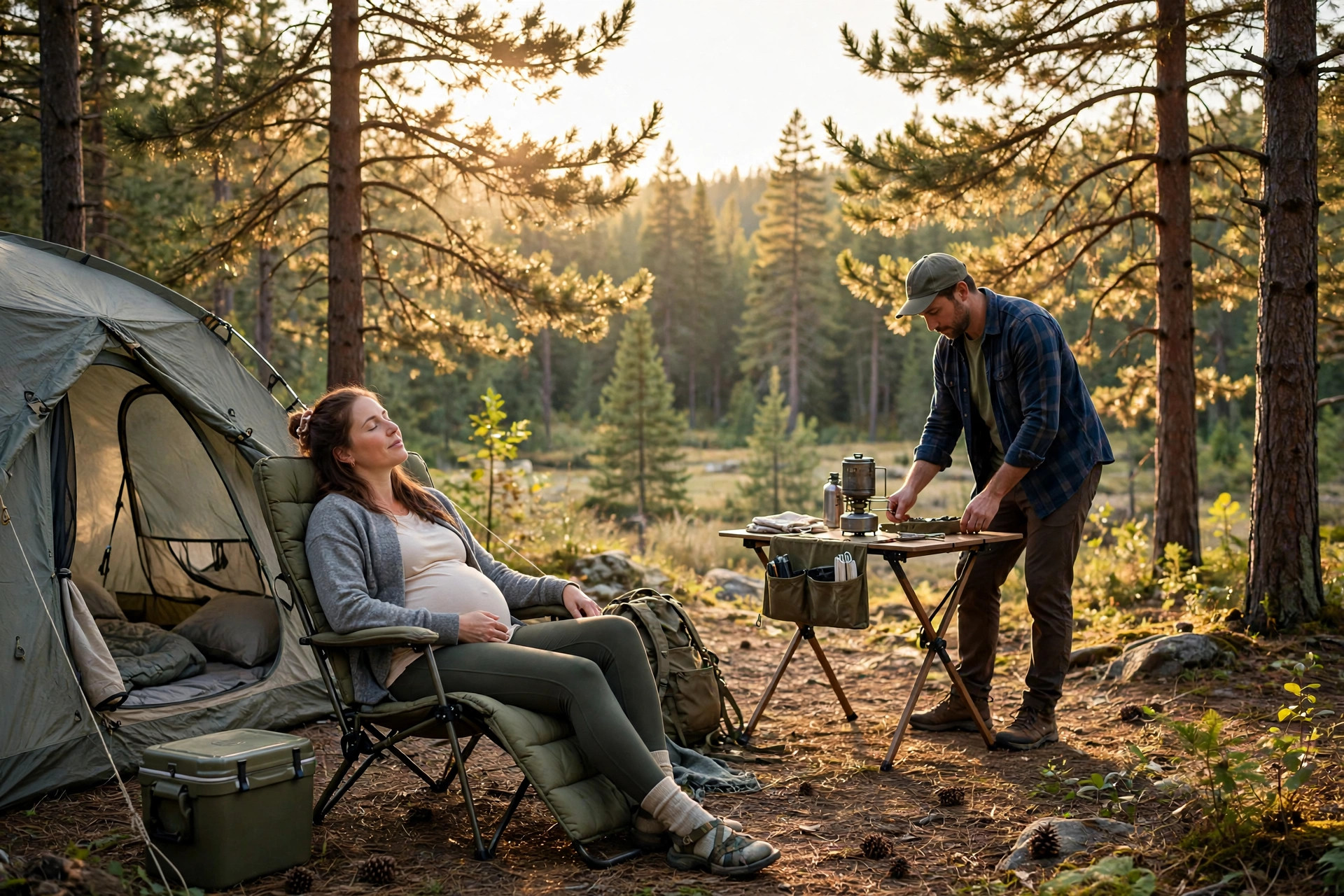
Yes, you can go camping while pregnant — with the right timing, the right campsite, and a comfort-first plan. For many expecting parents, a quiet weekend under the trees is the reset they need before a newborn arrives. But pregnancy changes how your body handles heat, altitude, long walks, and a night on the ground, so this is not the trip you would plan any other year.
This guide covers when camping is most comfortable, how to pick a campsite for your changing body, what to pack, which activities to enjoy and which to skip, and the warning signs that mean it is time to head home. Everything here is general information, not medical advice — check with your doctor or midwife before you book. If you are already thinking ahead to camp life with a little one, our guide to breastfeeding while camping covers nursing outdoors once your baby arrives.
Is It Safe to Go Camping While Pregnant?
For a healthy, low-risk pregnancy, camping is generally considered safe by most doctors — with adjustments. Uneven ground, limited bathrooms, distance from medical care, and weather you cannot control are all manageable when you plan for them, but it is a very different trip from a hotel stay.
The goal is a relaxed weekend where you sleep well, eat well, and never feel far from help: a drive-up campground with real restrooms, near the nearest town, at a slower pace. Decide early who does the heavy work — tent setup, hauling water, and lifting coolers are someone else’s jobs on this trip.
Talk to Your Doctor Before You Book
Before you reserve a site, talk to your doctor or midwife. Bring the details: where you plan to camp, how far it is from the nearest hospital, the elevation, and how many nights you will stay.
Mention any of the following, because they can change the advice you get:
- History of miscarriage or preterm labor
- Placenta previa, preeclampsia, or high blood pressure
- Gestational diabetes or twins
- Severe morning sickness, dehydration, or anemia
- Bleeding, cramping, or reduced fetal movement
- Medications needing refrigeration or a strict schedule
Ask three questions: how far from care is too far, what symptoms should send you home early, and whether anything about your pregnancy rules out camping. Write the answers down and carry a copy of your prenatal records. The American College of Obstetricians and Gynecologists publishes general guidance on travel during pregnancy — a good starting point.
The Best Time to Camp: A Trimester-by-Trimester Guide
Timing matters more than gear — the trip that feels wonderful at 20 weeks can feel miserable at 34 weeks.
First Trimester (Weeks 1–13): Possible, But Often Uncomfortable
Nausea, fatigue, and frequent urination hit hardest now. Camping is possible if you feel up to it, but keep it to one night close to home, at a site with a real bathroom. Pack bland snacks for nausea (crackers, ginger tea, dry cereal), and plan for plenty of rest. Avoid heat waves, and stay out of hot tubs and saunas entirely.
Second Trimester (Weeks 14–27): The Sweet Spot
This is the window most doctors point to. Morning sickness has usually eased, energy is back, and your bump is not yet big enough to make sleeping on the ground a struggle. If you take one camping trip during pregnancy, aim for this trimester. Keep it gentle even now: a drive-up site, easy trails, no ambitious hikes. Your center of gravity is shifting and your joints are looser, so uneven ground is a real tripping risk — wear supportive, closed-toe shoes.
Third Trimester (Weeks 28–40): Stay Close to Home
Late pregnancy brings back fatigue, back pain, frequent bathroom trips, and poor sleep. Most doctors advise staying within an hour of your hospital from around week 36, and many advise against overnight trips away from home in the final weeks. If you do camp early in the third trimester, make it one night, very close to home, with flush toilets and cell service. Or choose a cabin with a real bed — same fresh air, far better sleep.
Choosing a Pregnancy-Friendly Campsite
Your campsite choice does more for your comfort than any piece of gear:
- Drive-up access: park within a few steps of your tent.
- Real restrooms nearby: a flush toilet within a two-minute walk — you will be up in the night.
- Flat, even ground: a level tent pad means less tripping and easier exits.
- Cell service: check coverage maps first. No signal? Bring a satellite communicator or pick another site.
- Close to medical care: know the drive time to the nearest hospital and save the address offline.
- Moderate altitude: avoid sleeping above about 8,000 feet unless you are acclimated — ask your doctor.
- Shade and water: a shaded site and a potable water tap make hot days far more bearable.
Book through Recreation.gov for national forest and national park campgrounds, where you can filter for restrooms and drive-up access, and use the National Park Service camping pages to research campgrounds first. Skip dispersed or backcountry camping while pregnant — the long walk in, no facilities, and distance from help turn small problems into real ones.
What to Pack for Camping While Pregnant
Pack for comfort first and weight second. You are car camping, so bring the good stuff. Our camping packing list for families is a useful base — then add the pregnancy-specific items below.
| Category | What to bring | Why it matters |
|---|---|---|
| Sleep | Thick air mattress or camp cot, pregnancy pillow, warm bag plus a blanket | Support protects your back and hips |
| Seating | Camping chair with armrests and good back support | Armrests make standing up easier |
| Clothing | Stretchy maternity layers, sun hat, supportive closed-toe shoes, compression socks | Swollen feet need support |
| Bathroom | Portable camping toilet or bedpan, headlamp, slip-on shoes, unscented wipes | Nighttime trips should be short, safe, and private |
| Health | Prenatal vitamins, prescribed medicines, antacids, first aid kit, prenatal records, insurance card | Bring extras — no pharmacy may be nearby |
| Food & water | Reusable water bottle, electrolyte packets, bland snacks, cooler with ice | Fights nausea and fatigue |
| Sun & bugs | Pregnancy-safe sunscreen, insect repellent approved by your doctor, after-bite cream | Pregnant skin burns and reacts more easily |
Pack health items in a separate, easy-to-reach bag. If you need a medication at 2 a.m., you should find it in the dark.
Sleeping Comfortably in a Tent While Pregnant
Sleep is the make-or-break part of a pregnancy camping trip — and the one thing you can largely solve with the right setup.
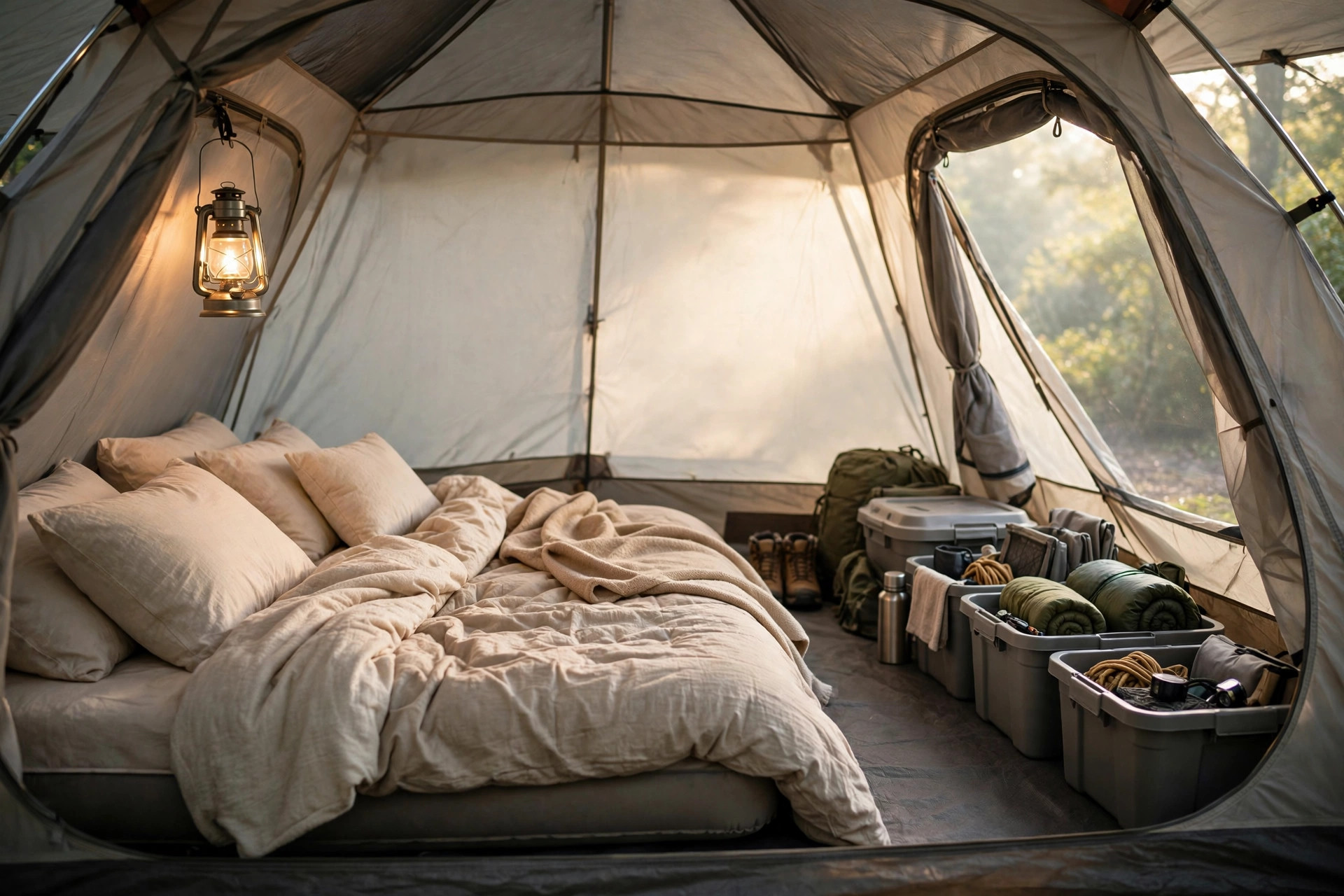
Start with height: a tall air mattress or a camp cot beats a thin pad — getting up from ground level several times a night is hard with a bump. Layer a foam pad underneath for insulation and insurance against a slow leak. Bring your pregnancy pillow — or two regular pillows, one for your head and one between your knees. Side sleeping is recommended later in pregnancy, and a pillow between your knees keeps your hips aligned.
Keep the tent door, shoes, headlamp, and portable toilet within easy reach — fewer obstacles between you and the bathroom at 3 a.m. is better. Set up camp early, while you still have energy. And if you already sleep poorly at home, be honest: a tent will not fix it. A cabin or camper is the better call.
Food, Water and Staying Hydrated
Pregnancy raises your fluid needs, and outdoor heat raises them further. Dehydration is one of the most common reasons pregnant campers feel unwell — headaches, dizziness, and cramping can be early signs. Sip water steadily all day, and keep a bottle in your hand, not in the car.
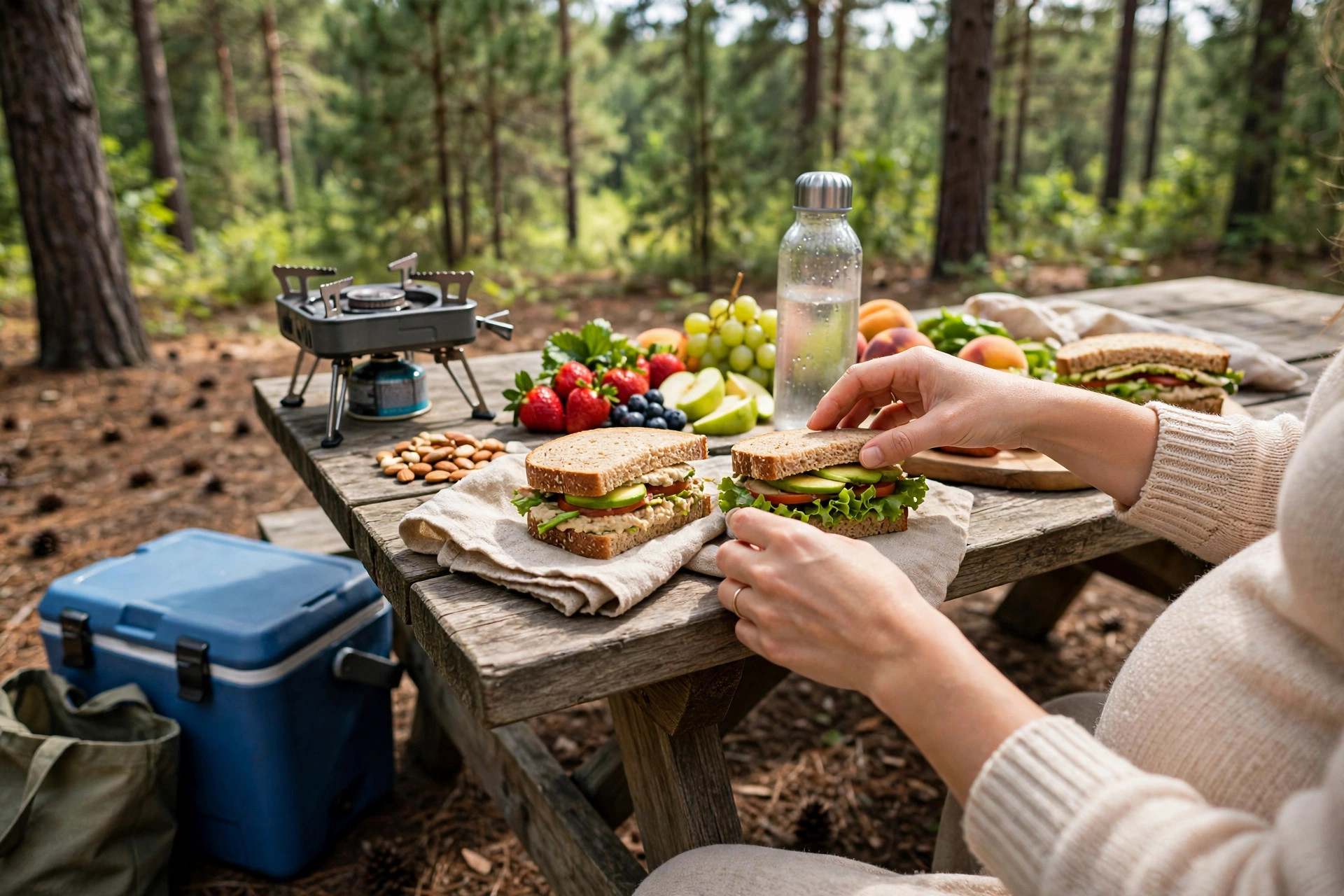
Food safety matters more during pregnancy because your immune system works differently. Keep perishables below 40°F, cook meat thoroughly, wash hands before eating, and skip risky foods — undercooked meat, unpasteurized cheese or juice, and anything left out in the heat. When in doubt, eat what you brought from home.
For easy meals, our no-cook camping meals for families fit well — sandwiches, wraps, and fruit that need no stove. Pack extras for nausea and the middle of the night: crackers, granola bars, dried fruit, and ginger chews. Eat small amounts often — a big campfire dinner after a hot day means heartburn.
One more food rule: store everything in your car or a bear box, never in the tent — our bear safety guide for families covers food storage and wildlife at camp. For bugs, use a repellent your doctor has approved and keep the tent zipped — it is your best bug screen.
Activities: What Works and What to Skip
A pregnancy camping trip is a slow trip — pick activities that let you enjoy being outside without pushing your body.
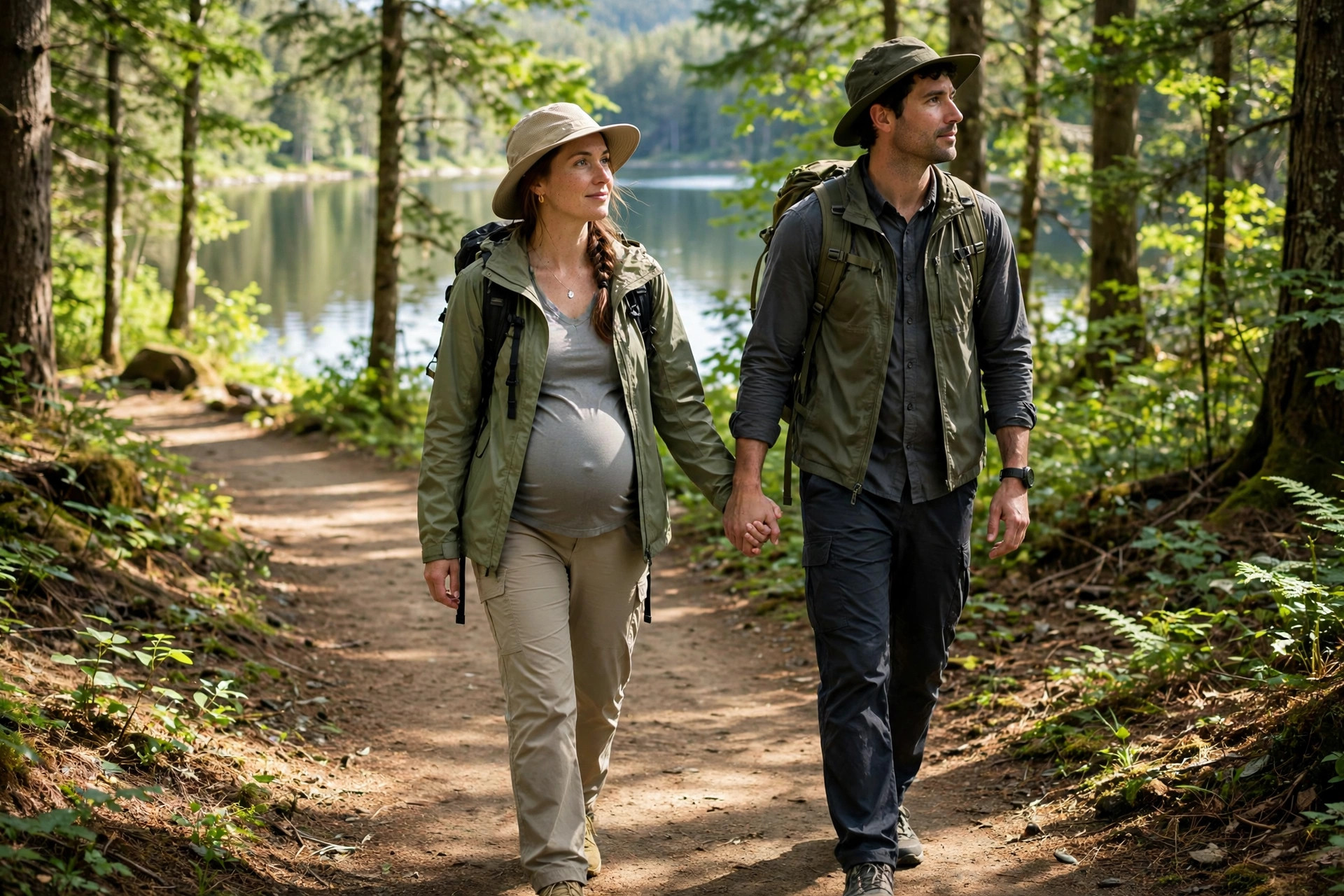
Great choices: short, flat nature walks with rest stops; birdwatching or stargazing from your chair; wading in a shallow, calm lake (if your doctor is fine with it); campfire cooking; reading in a hammock; and photography. Keep walks under an hour, carry water, and turn back at the first sign of fatigue.
Skip or postpone: strenuous hikes with big elevation gain, scrambling over rocks, kayaking or canoeing in moving water, mountain biking, horseback riding, hot springs and hot tubs, and anything with a fall risk. Your balance has changed, and a fall that would have been a bruise last year can be a real problem now. The same goes for lifting heavy gear — let someone else carry the cooler.
If you are camping with older kids, plan activities they can do with one parent while you rest. Our guide to camping with a toddler has ideas for keeping little ones busy at a relaxed pace — agree in advance who takes the kids on the bigger adventure.
Warning Signs: When to Head Home
Most pregnancy camping trips go perfectly well. But know the signs that mean the trip is over — do not wait to see if they pass.
| Warning sign | What to do |
|---|---|
| Vaginal bleeding or leaking fluid | Get medical care immediately |
| Regular contractions or strong cramping | Seek care right away |
| Severe headache, vision changes, or sudden swelling | Get checked the same day |
| Reduced fetal movement (after you normally feel it) | Contact your provider immediately |
| High fever, vomiting that will not stop, or inability to keep fluids down | Dehydration risk — seek care promptly |
| Dizziness, fainting, or shortness of breath at rest | Stop, rest, and get medical advice |
| Heat exhaustion signs (heavy sweating, nausea, weakness, confusion) | Move to shade, cool down, sip water — seek care if it does not improve |
Before you leave, save the nearest hospital’s address and your provider’s after-hours number — and write them on paper too, in case your phone dies. Share your itinerary and return date with someone at home. These five minutes are the cheapest insurance you will ever buy.
Frequently Asked Questions
Can I go camping in my first trimester?
Yes, if you feel up to it and your doctor agrees. The first trimester is usually the hardest because of nausea and fatigue, so keep the trip to one night, close to home, at a site with real restrooms. If morning sickness is severe, wait for the second trimester.
What is the safest trimester for camping?
The second trimester (weeks 14–27): morning sickness has usually eased, energy is back, and the bump is not yet large enough to make sleeping difficult. Most doctors call it the best window for travel.
How far along is too far along to camp?
There is no single cutoff, but most providers advise staying within an hour of your hospital from around week 36, and many advise against overnight trips away from home in the final weeks. Ask your own provider — it depends on your pregnancy.
Can I sleep in a tent while pregnant?
Yes, with the right setup: a thick air mattress or camp cot so you are not at ground level, pillows for side sleeping, and the bathroom setup within easy reach. If getting up from the ground is already hard, a cot or a cabin is the better choice.
Is campfire smoke bad during pregnancy?
Limit exposure: sit upwind of the fire, keep campfire time reasonable, and step away if the smoke is thick. Smoke irritates lungs and eyes, and pregnant people are often more sensitive to it. A propane stove gives you cooking without the smoke.
What should I do if I feel unwell at the campsite?
Rest in the shade, sip water, and eat something small and bland. Mild symptoms that pass quickly mean you can usually carry on slowly. But for any warning sign — bleeding, fluid leaking, regular contractions, severe headache, reduced fetal movement, or fever — get medical care right away and call your provider. When in doubt, go.
Camping while pregnant is a gentler version of the trips you did before — better planning, more rest. Pick the second trimester if you can, choose a comfortable drive-up site, let someone else do the heavy lifting, and keep your doctor’s number close. The trees, the stars, and the quiet will still be there. Next year, you will be back — with a very small camper in tow.
