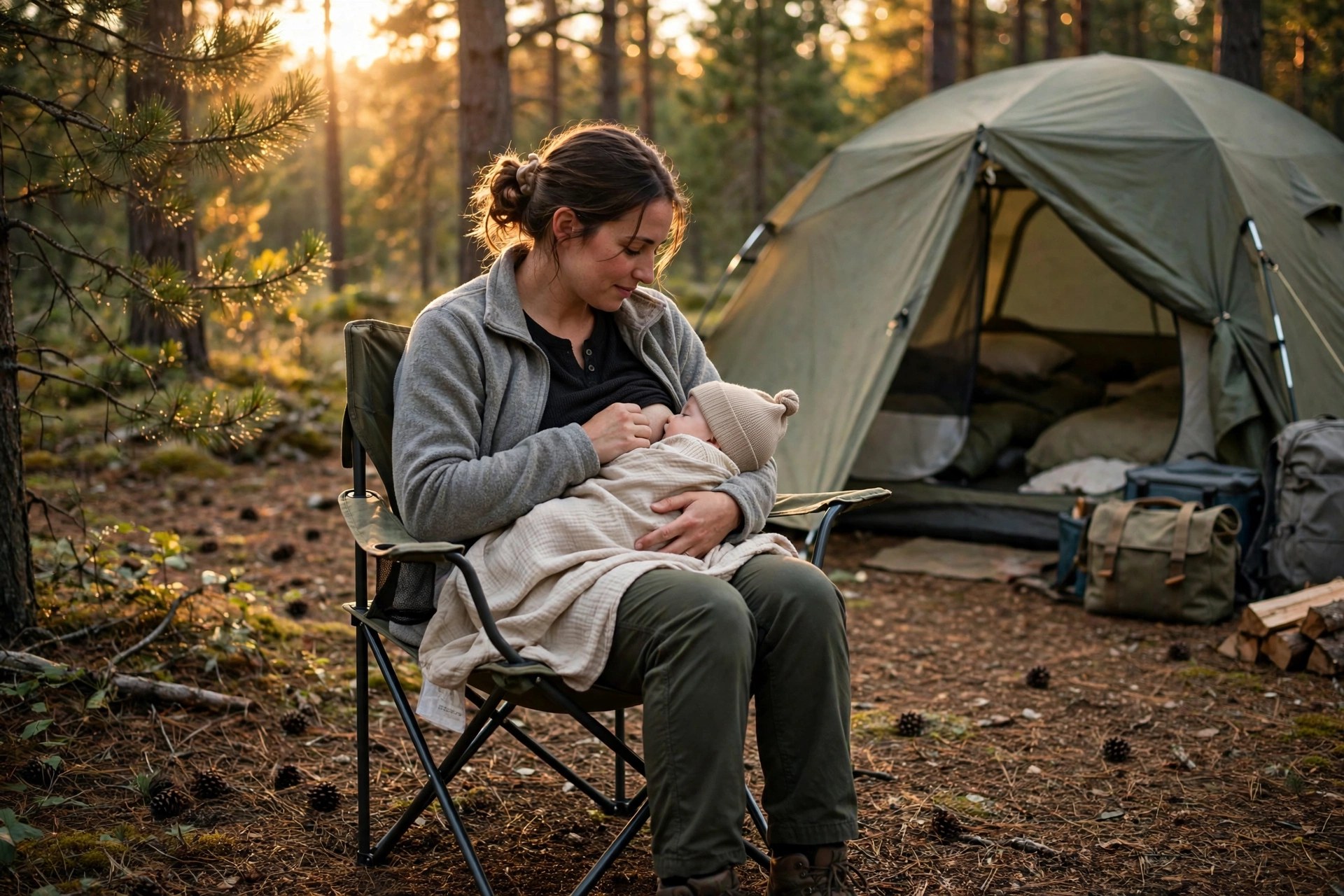
Breastfeeding while camping sounds harder than it is. There is no kitchen, no fridge, and no nursery chair at 2 a.m. — but there is also no washing-up pile, and a baby who is usually calmer outdoors than at home. This guide covers what a nursing mom actually needs: picking the right campsite, what to pack, nursing on the trail and in the tent, pumping and storing milk off-grid, and night feeds.
Quick note: this is practical, general information from experienced camping families, not medical advice. If you have questions about your milk supply or your baby’s health, talk to your pediatrician or a lactation consultant before you go.
Why Breastfeeding Makes Camping Easier
Bottle-feeding parents must pack formula, clean bottles, boil water, and keep everything cold. A breastfeeding mom carries the whole feeding system with her — nothing to wash or refrigerate. Breast milk is always the right temperature, and it comforts a baby unsettled by new sounds and smells. Extra comfort feeds on day one are normal, and usually mean a baby who settles faster at night.
Before You Leave: 7 Steps That Make the Trip Work
- Do a backyard practice run. Set up the tent and nurse in your camp chair. In ten minutes you will learn whether the chair is too low and whether your top works with your carrier.
- Test your pump on battery power. Run a full session on the pack you will take — a pump dying mid-session at camp is a problem you do not want.
- Freeze your cooler gear the night before. Freeze ice packs solid and chill the cooler overnight — a cold cooler stays cold far longer.
- Pick your campsite with nursing in mind. It matters more than any piece of gear — details below.
- Pack your nursing kit as one bag. One grab bag means no hunting through the car at 3 a.m.
- Charge everything. Pump, battery pack, phone, lantern — all of it, the night before.
- Know where the nearest town is. Note the drive time to the nearest shop, pharmacy, and clinic. You will probably never need it, but knowing the number takes the worry away.
Choosing a Campsite That Works for Nursing Moms
For your first trip with a nursing baby, pick a site with more services than you would have chosen before the baby arrived. Comfort beats adventure — you can go wilder next time.
What to look for
- Running water and toilets nearby. Washing hands and pump parts is far easier with a tap than with a jug.
- Shade. Mature trees give you a cool, private spot to nurse, and shade keeps your cooler working.
- A flat, roomy tent pitch. You need space to feed at night without climbing over gear. A bigger tent than you think you need is the right call.
- Short walks to the car. Two minutes to the car matters when you need something from the nursing bag or want a private feed in the back seat.
- A quiet loop. A family loop beats a site next to the group area.
Our how to camp with a toddler guide uses the same rule for slightly older kids: services first, adventure second.
What to Pack: The Nursing Kit
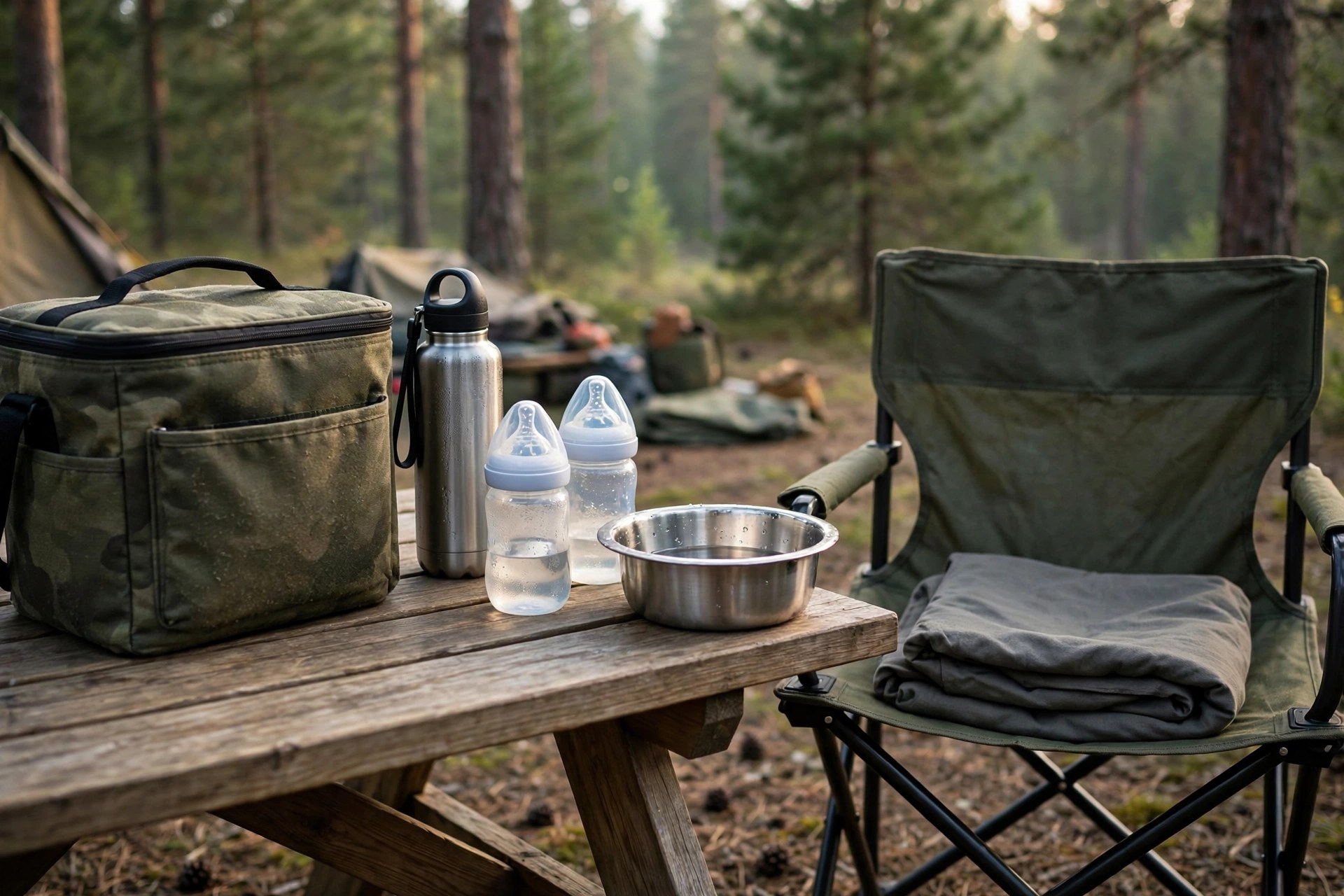
| Item | Why it matters at camp | Tip |
|---|---|---|
| Nursing tops or a nursing cover | Quick, discreet access without undressing | Pack two — one will get milk on it |
| Camp chair with arms | Arm support saves your shoulders during long feeds | Test it at home; a low chair ruins your posture |
| Insulated cooler + frozen ice packs | Keeps pumped milk cold without a fridge | Freeze packs solid; pre-chill the cooler |
| Battery pump + manual pump backup | Power runs out; a hand pump never does | Charge everything; pack spare batteries |
| Pump wipes + collapsible wash basin | Cleaning parts without running water | Wipes between washes, basin for a proper wash |
| Water bottle just for you | Nursing moms need far more water than usual | Keep it in the nursing bag, not the car |
For the rest of the family packing list, see our camping checklist with kids, and the sleep gear in our portable travel crib guide.
Nursing at Camp: Comfortable Spots and Positions
You do not need a special chair or a special place. You need a spot where your back is supported, your feet can rest, and you are not being bitten.
In camp
Your camp chair is your nursing chair. Sit with your feet on a log or cooler so your knees come up — that brings the baby to the right height without you hunching. A rolled towel under your elbow takes the weight off your arm. In strong sun, sit in the shade; a hot, sweaty feed is miserable for both of you.
If you want privacy, the tent vestibule or the back seat of the car both work well. Breastfeeding in public is legal across the United States — but your comfort is what matters, so choose the spot that lets you relax.
On the trail
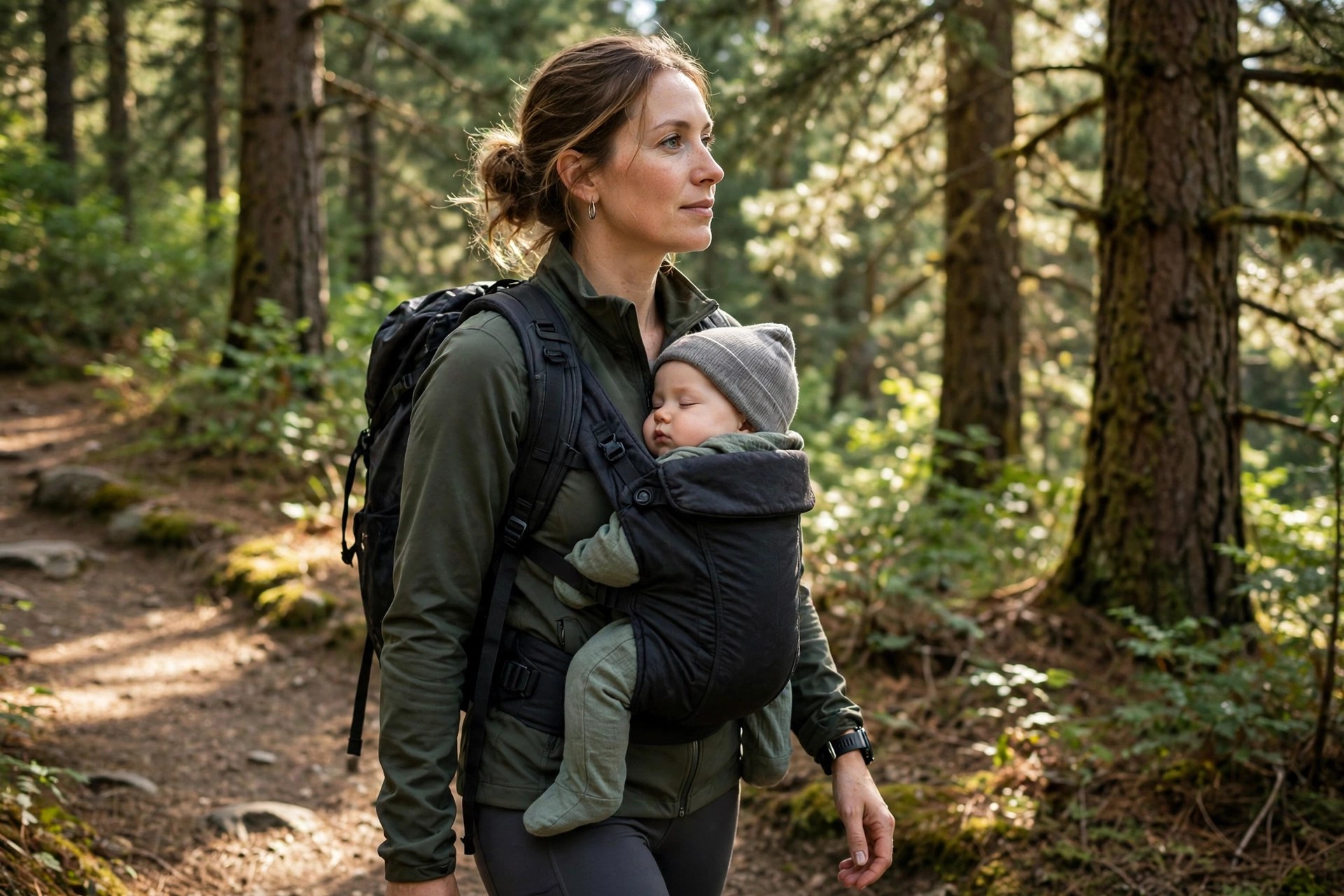
Feed at the trailhead before you set off, so you start with a full, happy baby. On the trail, stop when the baby asks — do not push through to the next viewpoint. Find a flat rock or fallen log and take the break properly. Nursing while walking is possible with a soft carrier, but it takes practice; try it at home first.
Wear a stretchy top you can lift easily, or a nursing top under a zip-up fleece. You will be warm from walking while the baby sits in the carrier, so add a layer to the baby when you stop.
Night Feeds in the Tent
Night feeds worry most moms, and they are usually the easiest part once you have a system.
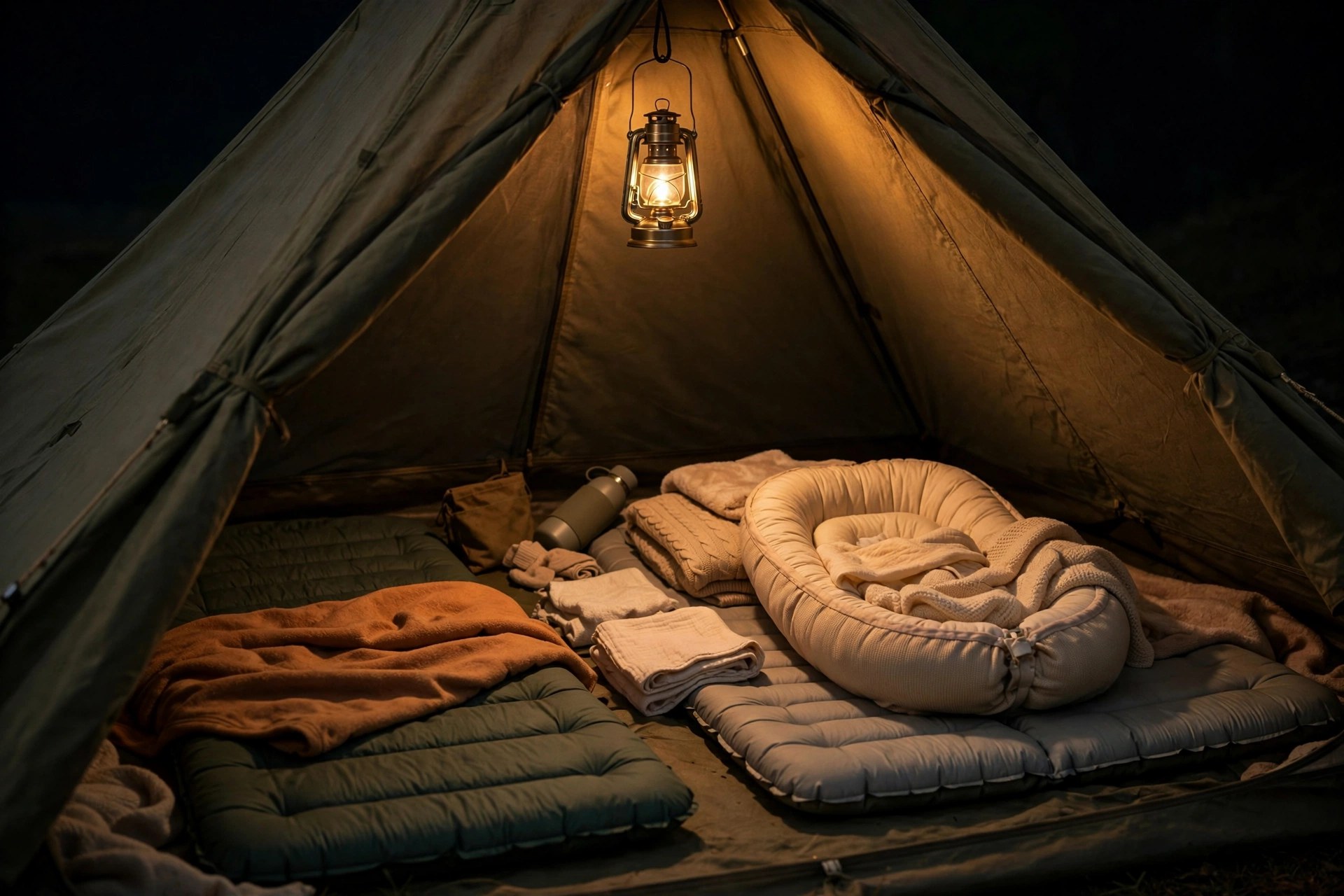
- Sleep the baby within arm’s reach. A travel crib beside your sleeping pad means you can lift the baby, feed, and settle them without getting up or turning on a light.
- Keep everything within reach. Water bottle, muslin cloth, a snack, and a small lantern go in a stuff sack beside your head — no crawling to the gear pile at 2 a.m.
- Use a dim light. A lantern on its lowest setting, or a headlamp pointed at the tent ceiling, is enough to latch safely without waking the whole tent.
- Stay warm together. Babies lose heat fast at night. If you bed-share at home, the same approach in the tent usually works on a firm, flat surface. Sleep in your nursing top, put yourself between the baby and the tent door, and keep loose blankets away from the baby’s face. Side-lying is the easiest night position for many moms — practice it at home first.
Pumping Off-Grid: Power, Cleaning, and Storage
If you pump, you need a plan for power, cleaning, and storage.
Power
A battery-powered pump is the obvious choice, and most run several sessions on one charge. Bring a fully charged power bank as backup, and a manual hand pump as the backup to the backup — it weighs almost nothing and needs no power. If you are car camping, pack a car charger too.
Cleaning pump parts without running water
Pump wipes clean parts between sessions well enough to get you through the day. For a proper wash, use your collapsible basin with warm water and a drop of dish soap, then rinse and air-dry on a clean muslin cloth. Bring extra pump parts if you have them so you are not washing the same set after every session.
Storing breast milk without a fridge
Freshly expressed milk keeps for around four hours at room temperature, and for about a day in a good cooler with frozen ice packs — keep the cooler closed, out of the sun, and open it as rarely as you can. For hiking days, freeze single-serving bags before the trip and carry them in a small insulated pouch; warm them in warm water when the baby is ready. Once thawed, use within 24 hours and do not refreeze. Label every bag with the date and time.
The La Leche League Canada camping tips page is a solid, mom-tested reference written for exactly this situation.
Keeping Yourself Fed, Hydrated, and Comfortable
You are feeding two people, and camping is physical work. Most nursing moms need roughly an extra litre of water a day, more on hot or active days. Keep a water bottle in the nursing bag and sip through every feed.
Eat properly. Pack food you can eat one-handed during a feed: granola bars, trail mix, dried fruit, cheese, and wraps. Plan one proper hot meal a day and keep the rest simple — our no-cook camping meals for families are a good starting point. Sunscreen and insect repellent are important for you outdoors, but keep them away from your breasts.
Bugs, Sun, and Weather
For babies under six months, sun and bug protection is mostly shade and clothing: sunscreen and insect repellent are generally not recommended for very young babies, so use a shady spot, a sun hat, and light long sleeves. A mosquito net over a baby’s play tent works well at a buggy campsite. For yourself, sunscreen and repellent are essential.
If the weather turns, feed in the tent or the car and wait it out — cutting a hike short is always the right call with a baby. Anything that smells like food — milk, dirty diapers, used pump parts — belongs in the car or hung well away from the tent, never inside it. Our bear safety for kids guide explains the full food-storage system.
When to Talk to Your Doctor First
Most healthy moms and babies can camp happily, but check with your pediatrician or lactation consultant first if your baby was born prematurely, is under six weeks old, has a medical condition, or is struggling to gain weight; if you are dealing with mastitis, low supply, or cracked nipples; or if you are camping somewhere remote, at high altitude, or in extreme heat. These are not reasons to cancel — they are reasons to get a quick professional opinion. For national park trips, the National Park Service camping pages and Recreation.gov are the best places to check facilities, water, and reservations.
Breastfeeding While Camping: Packing Checklist
- Two nursing tops + nursing cover or muslins
- Camp chair with arms + small pillow or rolled towel
- Insulated cooler, frozen ice packs, milk storage bags, marker pen
- Battery pump, charger, power bank + manual hand pump
- Pump wipes, dish soap, collapsible wash basin, clean muslin cloths
- Water bottle for you + one-handed snacks
- Small lantern or headlamp for night feeds
- Warm layer and socks for night feeds
- Zip bags (clean and dirty), nappy bags for pack-out
- Nearest town, pharmacy, and clinic details
Frequently Asked Questions
Can I breastfeed while camping with a newborn?
Yes — it is often easier than bottle-feeding at a campsite because there is nothing to wash or keep cold. For a first trip, choose a site with running water and toilets, keep the trip short, and check with your pediatrician first if your baby is under six weeks old or was born early.
How do I keep breast milk cold while camping?
Use a good insulated cooler with frozen ice packs, pre-chilled, kept closed and out of the sun. Pumped milk stays good for about a day in a cooler with ice packs. Freeze single-serving bags for hiking days, and label every bag with the date and time.
How do I wash pump parts at a campsite?
Use pump wipes between sessions, and wash properly once or twice a day in a collapsible basin with warm water and a drop of dish soap, then rinse and air-dry. Bring extra pump parts so you are not washing the same set every time.
Can I nurse while hiking with a baby carrier?
Some moms can, with a soft-structured carrier and a stretchy top, but it takes practice — try it at home first. Most find it easier to stop, sit on a log or flat rock, and feed properly. Feed at the trailhead first, and plan stops around the baby.
What if my baby wants to feed more often at camp?
That is normal. New places, sounds, and smells mean more comfort feeds, especially on day one. Feed on demand, keep yourself hydrated, and do not hold the baby to the home schedule. Most babies settle into a rhythm by day two.
Do I need a nursing cover at a campground?
Only if you want one. Breastfeeding in public is legal across the United States, and most family campgrounds are relaxed about it. A cover, a muslin cloth, or a quiet spot by the tent are all fine — pick whatever lets you relax.
The Bottom Line
Breastfeeding while camping is not a problem to solve — it is one of the few parts of a family trip that is genuinely simpler than the same job at home. Pick a site with water and shade, pack one dedicated nursing bag, practice in your backyard, and feed on demand. Take the practice run, pack the kit, and go.
