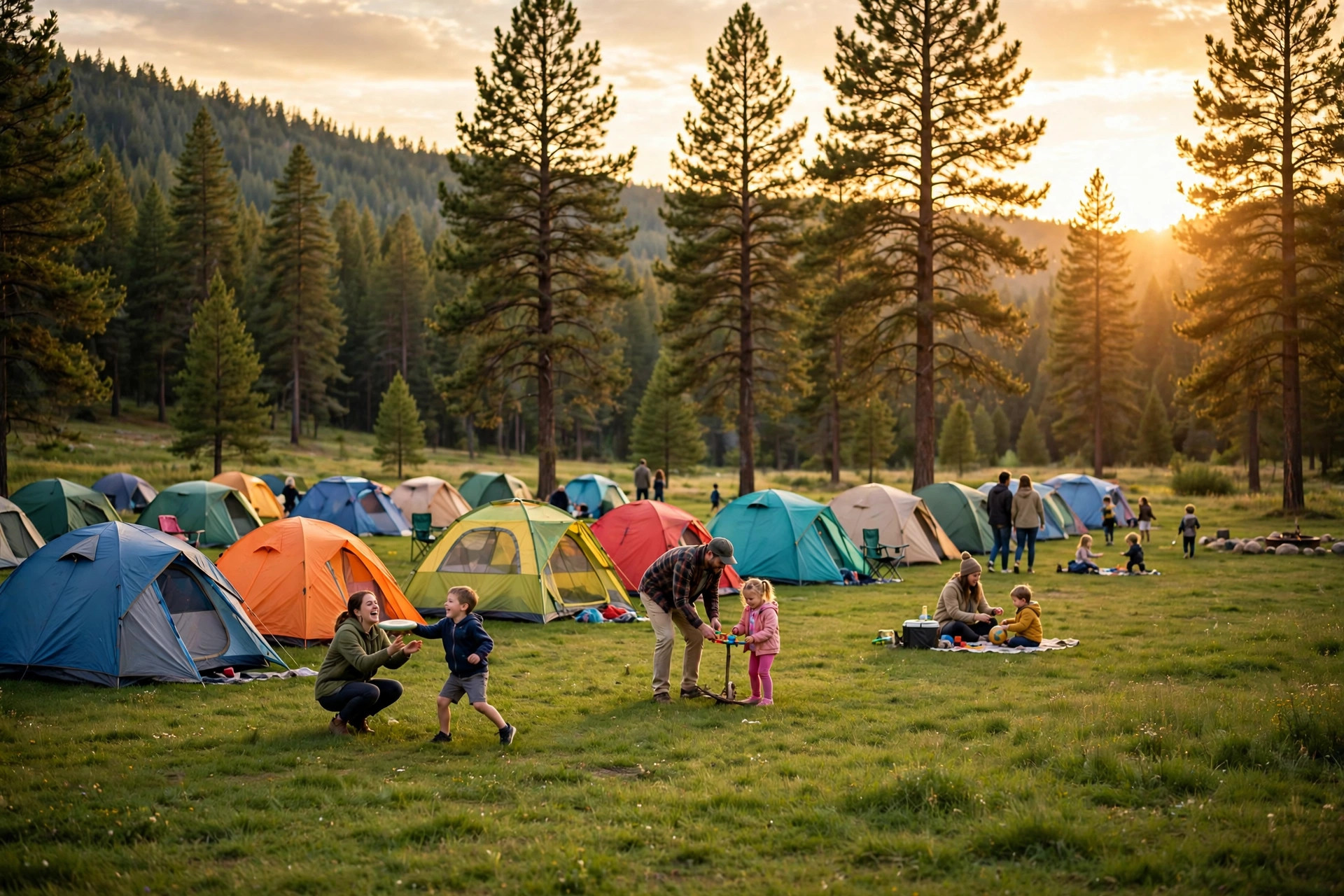
If you’re planning a family camping trip, you’ve probably imagined the perfect version: kids roasting marshmallows, sunsets, stars. Here’s the thought that keeps most first-time camping parents up at night: will we be THAT family — the one the whole campground wishes would leave?
The good news: campground etiquette isn’t complicated, and it’s not about being silent monks in the woods. It’s about 10 simple, mostly unwritten rules that keep everyone — your kids included — happy. Learn them once, teach them to your children once, and you’ll never have to stress about it again.
Why Campground Etiquette Matters More With Kids
Campsites are close together — often 20 to 30 feet apart. Sound travels. Kids are loud (it’s their job), and that’s fine. But a few predictable habits — late-night tent setup, off-leash dogs, a blazing floodlight pointed at the neighbor’s tent — are what turn a peaceful campground into a tension-filled one. Follow the rules below and your family will be the one neighbors chat with over coffee, not the one they complain about.
10 Unwritten Campground Rules Every Family Should Follow
1. Treat quiet hours as sacred (and start winding down an hour early)
Almost every campground has posted quiet hours — usually 10 PM to 6 AM — but with kids, the real rule is to start tapering off by 9 PM. That means: campfire conversations drop to a murmur, music goes off, generators get shut down, and the tent zipper stops doing its famously loud work at midnight.
Kid-friendly trick: make 9 PM “whisper voices” time. Kids love a game, and whispering in a tent feels like an adventure, not a rule. If you arrived late and still need to set up the tent, do it quickly and quietly — and apologize to immediate neighbors the next morning. It goes a long way.
2. Stay on your own site — teach kids where the invisible fence is
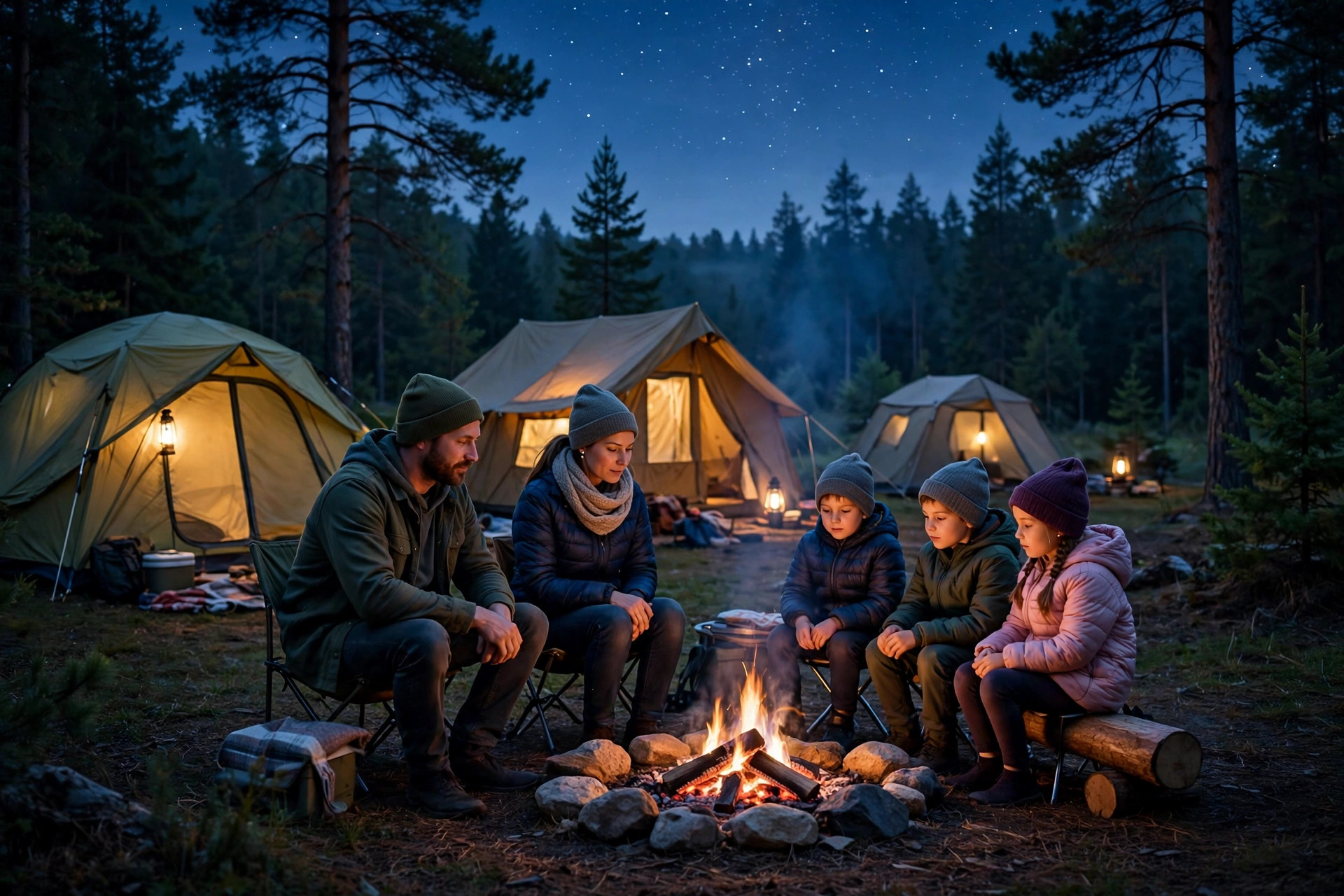
Your reservation buys you one site, not the three around it. Kids naturally wander, so mark your boundaries physically: string a rope between trees, set up camp chairs in a row, or place solar path lights along the edge. Walk the “fence line” with your kids on arrival day and make it official.
Bikes and scooters should use campground roads, not cut through other sites. And if your child’s ball lands in a neighbor’s camp — the child goes with an adult to ask for it back, every time. This tiny habit teaches respect and usually starts a friendly conversation.
3. Leave your site cleaner than you found it
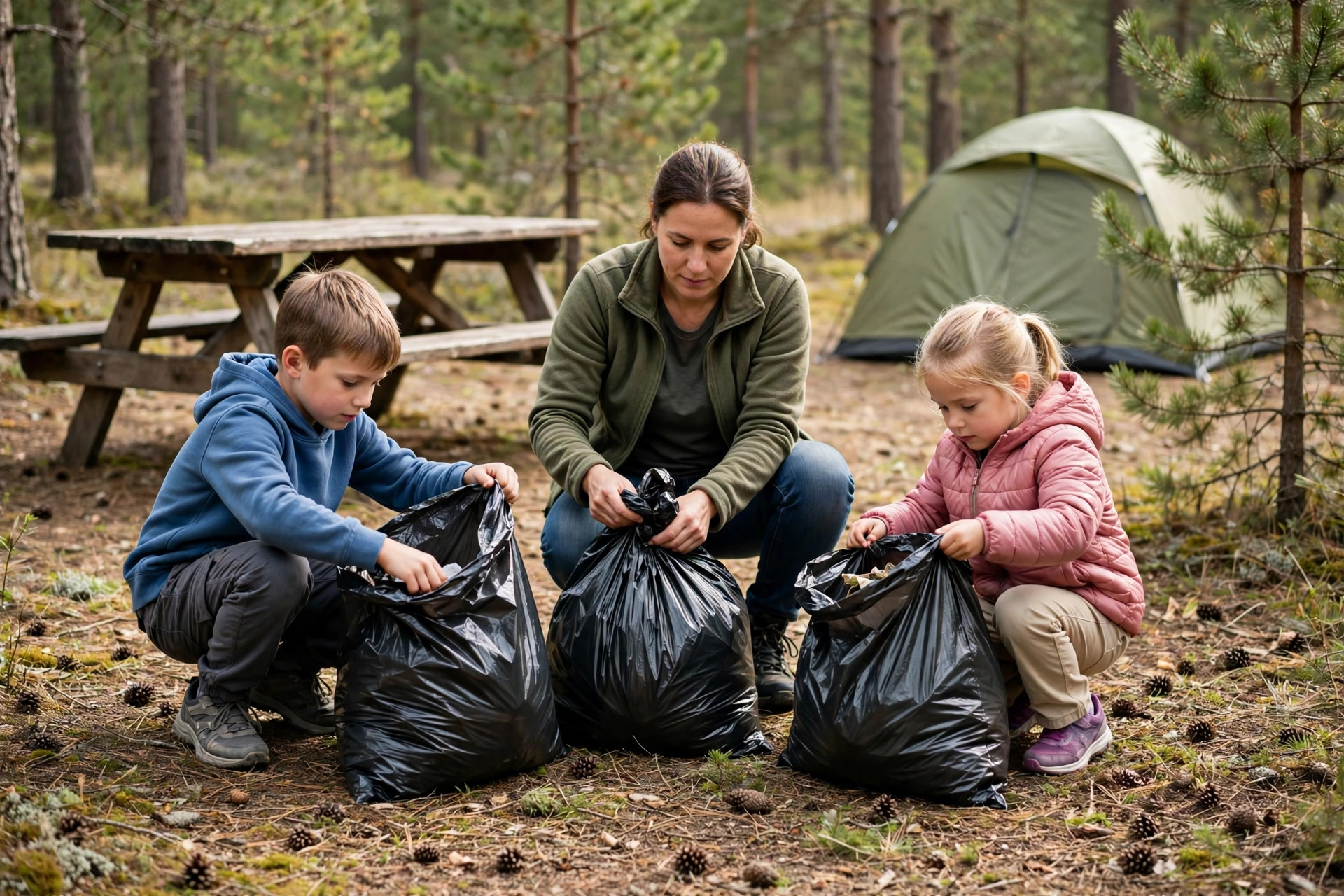
You don’t need to memorize the seven Leave No Trace principles on day one — just adopt the spirit: pack out everything you packed in, including the tiny stuff. Bottle caps, candy wrappers, twist ties, and glow-stick connectors are the micro-trash kids drop without noticing.
Try the 5-minute sweep: before you leave camp for a hike and again before checkout, everyone grabs five pieces of litter — yours or anyone’s. Kids compete over who finds the weirdest piece, and the campground stays spotless. For a deeper dive into making this fun, see our guide on teaching Leave No Trace principles to kids.
4. Keep campfires small, safe, and smoke-conscious
A campfire is the heart of camping — but never burn trash, plastics, or treated wood, and keep fires modest. A roaring bonfire sends smoke straight into your neighbor’s tent downwind, and floating embers can land on someone else’s gear.
Practical rules:
- Use the fire ring provided — never build a new one.
- Buy firewood locally (moving firewood spreads tree-killing pests; many parks require it).
- Check current fire restrictions before your trip at recreation.gov or the park’s own site.
- Fires must be dead out before bed — cold to the touch, not just “looks out.”
- Never leave a fire unattended with kids around, even for a minute.
5. Keep dogs leashed — even the friendly ones
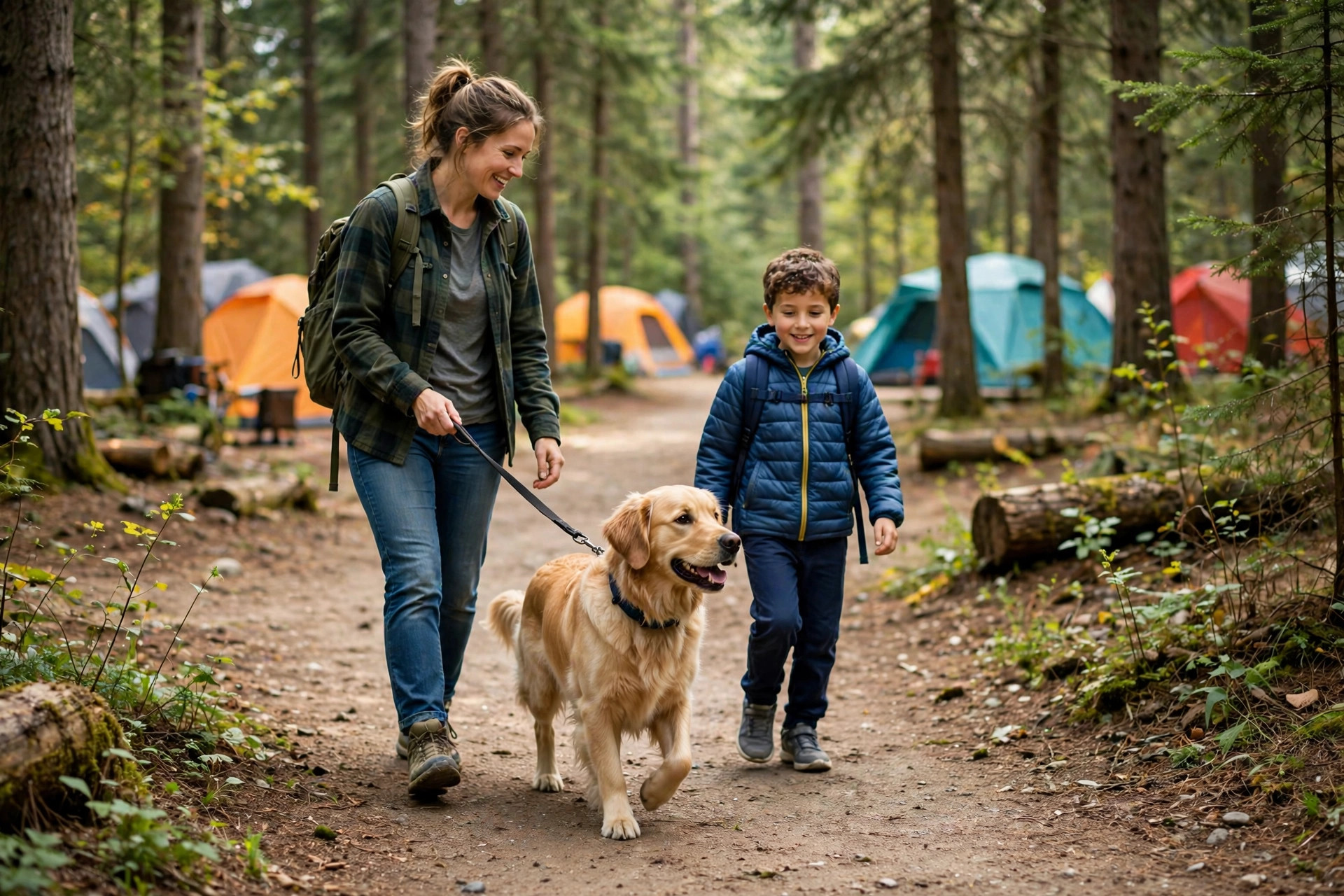
“He’s friendly!” is the sentence every nervous camper dreads hearing. Campground rules almost always require dogs on a leash no longer than 6 feet, and this is one of the most violated rules in family camping. Not every kid (or adult) loves dogs, and not every dog loves every kid.
Also: pick up waste immediately — even far from your site — and never leave a barking dog alone at camp while you go sightseeing. If your dog is a vocal one, consider whether a campground trip is the right vacation for them.
6. Practice light discipline after dark
Nothing ruins stargazing — or sleep — like a neighbor’s blinding white headlamp sweeping across your tent at 11 PM. After sunset:
- Switch headlamps and lanterns to red or low mode when moving around.
- Never aim bright lights at other sites; angle them downward.
- Skip the string of floodlights around your whole campsite. One or two warm lanterns are plenty.
- Turn off decorative lights at quiet hours.
Many experienced campers plan trips around dark skies — your light discipline lets everyone enjoy them.
7. Don’t cut through other people’s sites
The path to the bathroom looks shorter through the neighbor’s camp. Don’t. It’s their rented living room for the weekend. Teach kids from day one: roads and trails are for walking; sites are for the people who paid for them. This is rule #2’s twin, and parents break it more often than kids do — so model it.
8. Store food properly — for bears, raccoons, and ants alike
This is a safety rule disguised as an etiquette rule. Food left out attracts wildlife to everyone’s area, not just yours. In bear country this is serious — a food-conditioned bear can become dangerous, and rangers may have to relocate it.
The standard: use provided bear boxes where available, lock coolers in the car at night, and never keep food or scented items in the tent — that includes toothpaste and sunscreen. Our family camp kitchen setup guide covers a food-storage routine that keeps both critters and neighbors happy.
9. Share facilities like you’d want them shared
Spigots, dishwashing stations, dump stations, and bathhouses are communal. Rinse the spigot area when you finish, don’t monopolize the water tap to fill a kiddie pool, and clean up after your kids in the bathhouse — wet toilet paper on the floor is someone’s morning surprise.
At dishwashing stations, scrape food into the trash first (never pour grease down the drain), and keep it quick during busy times. Small courtesies here are noticed more than anywhere else in the campground.
10. Honor check-in and check-out times
Check-in and check-out times are real, and violating them is one of the most complained-about behaviors on camping forums. Rolling in at 11 PM with headlights blazing, or lingering until 3 PM when checkout was noon, directly affects the family waiting for your site.
Parent hack: pack the car the night before checkout, and do the full tent strike in the morning. If you want one last hike, move the car to the day-use lot first so the next family can move in on time.
Quiet Hours by Campground Type (Quick Reference)
| Campground type | Typical quiet hours | What to know |
|---|---|---|
| National parks (NPS) | 10 PM – 6 AM | Strictly enforced; generators often restricted to a few daytime hours. See the NPS camping page for park-specific rules. |
| State parks | 10 PM – 7 AM (varies) | Rules differ by state — check the park’s site before you go. |
| Private campgrounds / RV resorts | 10 or 11 PM – 7 or 8 AM | Often more social, but family sections are quieter — ask when booking. |
| Dispersed / boondocking | No official hours | No rules doesn’t mean no etiquette — sound still carries for miles. |
Make It Stick: The “Good Camper Pledge” for Kids
Rules stick when kids own them. On your first camping morning, read this short pledge together and have everyone sign a scrap of paper (or the back of the campground map):
- 🔇 I use whisper voices after 9 PM.
- 🚫 I stay on our site and use roads for walking.
- 🧹 I pick up 5 pieces of trash every day.
- 🔥 I never touch the fire without a grown-up.
- 🐕 I ask before petting any dog that isn’t ours.
- 💡 I point my flashlight down, not at people.
Parents report this single ritual cuts rule reminders by half within one trip. Pair it with our stress-free first camping trip plan for a weekend that actually feels like a vacation.
Choosing a Campground Sets You Up for Success
Etiquette is easier when the campground fits your family. Family-oriented campgrounds with playgrounds, pools, and defined family loops are more forgiving of kid noise than quiet adults-only sites — and you’ll be happier there too. Before you book, read our guide on how to choose a family-friendly campground, which covers the questions that reveal a campground’s real vibe.
FAQs: Campground Etiquette for Families
What are quiet hours at most campgrounds?
Most campgrounds observe quiet hours from 10 PM to 6 or 7 AM. During these hours, keep voices low, turn off music and generators, and avoid noisy setup or teardown. With kids, start winding down around 9 PM so the transition is gradual, not sudden.
Can kids ride bikes at campgrounds?
Yes — bike riding is a classic campground activity. Kids should ride on campground roads and designated paths, not through other people’s sites, and wear helmets. Be extra careful at dusk when visibility drops and drivers may not expect small riders.
Is it okay to let kids play on an empty campsite?
No — an empty site may be reserved for someone arriving that afternoon, and it’s still someone’s paid space. Treat empty sites the same as occupied ones. Use playgrounds, fields, and common areas for play instead.
What should I do if neighboring campers are too loud?
Start friendly: a polite, face-to-face request (“Hey, our little ones are trying to sleep — would you mind keeping it down?”) works most of the time. If it doesn’t, contact the camp host or ranger rather than escalating. Most campgrounds will enforce quiet hours for you.
Are generators allowed at campgrounds?
Often yes, but with strict limits — national parks commonly restrict generator use to a few hours (e.g., 8–10 AM and 4–7 PM), and many campgrounds ban them during quiet hours entirely. Check the specific campground’s rules before relying on one. Solar chargers and battery banks are a quieter alternative.
How do I handle it if my kids break a rule?
Apologize briefly and fix it — that’s it. Neighbors forgive quickly when parents take responsibility. “I’m so sorry, we’ll keep them on our site” paired with actually doing it earns more goodwill than any excuse. Most experienced campers remember their own kids’ loud phases.
The Bottom Line
Campground etiquette for families comes down to one idea: act like your neighbors are watching — because they are, and they’ll remember. Follow these 10 rules, teach them to your kids with the Good Camper Pledge, and you’ll spend your trip enjoying the campfire instead of worrying about the family next door. And if you’re still building your camping skills, our kids’ trail safety guide is the perfect companion read before you hit the road.
