
Great Smoky Mountains National Park is America’s most-visited national park, and it is also one of the most toddler-friendly — if you know how to play it right. We have taken toddlers to the Smokies in three different seasons, and the difference between a great trip and a meltdown-filled one rarely comes down to the park itself. It comes down to choosing the right trails, the right timing, and the right expectations.
This is our honest guide to visiting the Great Smoky Mountains with a toddler: what genuinely works for little legs and short attention spans, and what to skip without regret.
What Works in the Smokies with a Toddler
1. Short, easy trails with a payoff
Toddlers are not built for mileage; they are built for wonder. In the Smokies, the best toddler trails share a formula: under a mile round-trip, a clear payoff at the end, and something sensory along the way — water, a waterfall, an old cabin to peek into.
Our top picks:
- Cataract Falls (0.8 miles round trip) — A flat, wide, easy walk from the Sugarlands Visitor Center to a 25-foot waterfall. You can push a sturdy stroller on the first stretch, and the falls arrive quickly enough to hold a toddler’s attention.
- Laurel Falls (2.6 miles round trip) — This is the paved trail. The full distance is too much for a toddler to walk, but it is ideal with a hiking carrier backpack: paved means no tripping, and the 80-foot falls at the end are genuinely spectacular. Know your realistic limits — our toddler hiking distances by age guide breaks down how far little legs actually go.
- Gatlinburg Trail (3.8 miles round trip) — A gentle riverside walk, and one of the very few trails in the park where leashed dogs are allowed. You will not hike all of it; walk until the snacks run out, then turn around. No shame in that.
- Sugarlands Valley Nature Trail (0.5-mile loop) — Paved, short, with waysides about the CCC. Perfect for the under-two crowd.
The National Park Service trail page for Great Smoky Mountains lists current conditions and closures — check it the morning of your hike, because storm damage closes Smokies trails more often than visitors expect.
2. Waterfalls without the hike: the viewing decks
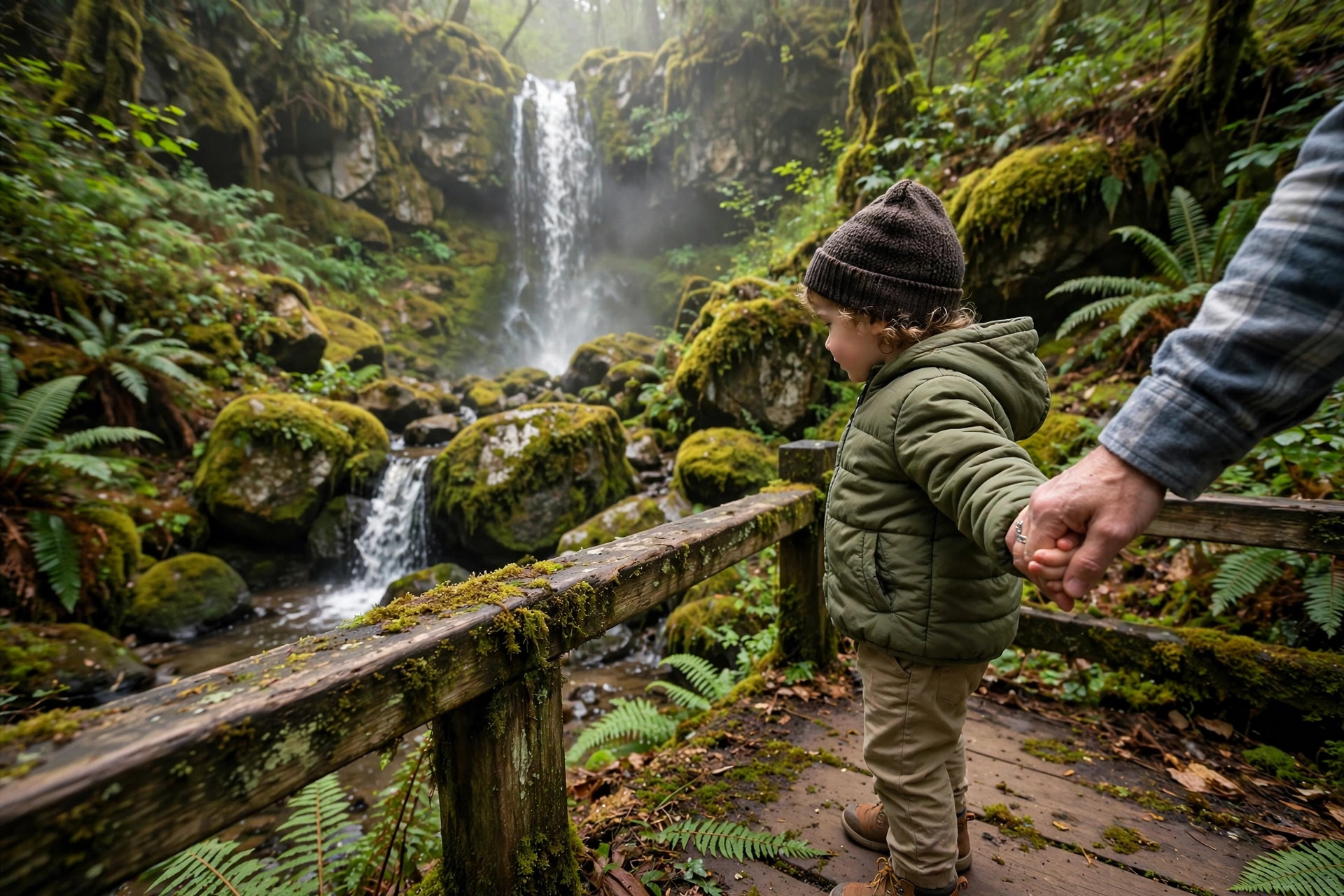
Here is a secret many families miss: you do not need to hike to see a Smokies waterfall. The Mingo Falls (162 steps, 0.4 miles round trip) and the viewing area at The Sinks give you the waterfall moment with a fraction of the effort. For a toddler who just wants to see the water, that is the whole ballgame.
3. Cades Cove: the park by car, with wildlife
The 11-mile Cades Cove Loop Road is one of the best toddler experiences in the entire National Park System. You drive. The toddler stays strapped in with snacks. And the odds of spotting black bears, wild turkeys, deer, and coyotes — especially in the early morning — are genuinely high. There are historic cabins to hop out and explore, and the wide meadows give tired legs a safe place to run around under watchful eyes.
Go at sunrise or on vehicle-free Wednesday mornings (seasonal — check the NPS calendar), when the loop is closed to cars and open to bikes and pedestrians. It is the calmest the park ever feels.
4. The visitor centers and the Junior Ranger program
Sugarlands (Tennessee side) and Oconaluftee (North Carolina side) visitor centers are underrated toddler stops: restrooms, water, indoor exhibits, and a film room for a midday cool-down. For toddlers and preschoolers, the Junior Ranger booklet activities — coloring, matching animals — can be adapted for little ones, and older siblings will love earning the badge.
5. Roaring Fork Motor Nature Trail
This 5.5-mile one-way driving loop near Gatlinburg is Cades Cove’s quieter cousin: waterfalls you can see from the road, old homesteads, and old-growth forest — all from the car with the toddler buckled in. On rainy days, this trail is a trip-saver.
What Doesn’t Work (Say It With Us: Skip It)
1. Ambitious day hikes
Alum Cave Trail is one of the Smokies’ most famous hikes — and with a toddler, the full 4.4-mile round trip to the bluffs is too long, too exposed at the top, and too crowded on weekends. The first mile to Arch Rock is doable as a carrier hike, but many families are happier skipping it entirely. There is no prize for summiting with a crying three-year-old.
2. Rigid schedules
The Smokies reward flexibility. Traffic on Newfound Gap Road, full parking lots at trailheads, and sudden afternoon storms will all bend your plans. Families who lock in a strict hour-by-hour itinerary with a toddler tend to have the worst time. Pick one anchor activity per day, keep everything else optional, and build in a real midday break. For more on handling the unexpected on trails, our step-by-step safety plan covers what to do if things go sideways with kids in tow.
3. Trying to “do” both sides of the park
The Smokies span Tennessee and North Carolina, and driving Newfound Gap Road end-to-end takes over an hour without stops. With a toddler, base yourself on one side — Gatlinburg/Pigeon Forge in Tennessee or Cherokee in North Carolina — and explore that side deeply. The other side will still be there on your next trip.
4. Arriving at popular trailheads at midday
Laurel Falls, Alum Cave, and Clingmans Dome parking lots routinely fill by 10–11 a.m. on weekends and in peak season. Either arrive before 9 a.m., visit on a weekday, or pivot to the quieter options above. Nothing ends a toddler’s day faster than a parent circling a full parking lot.
What Works vs. What Doesn’t: Quick Comparison
| Works with a toddler | Doesn’t work (skip without regret) |
|---|---|
| Trails under 1 mile with a payoff | Multi-mile day hikes (Alum Cave full length) |
| Cades Cove loop by car + wildlife spotting | Trying to cover both TN and NC sides |
| Visitor centers for breaks + Junior Ranger | Rigid hour-by-hour itineraries |
| Roaring Fork Motor Nature Trail on rainy days | Midday arrivals at popular trailheads |
| Waterfall viewing decks (Mingo Falls, The Sinks) | Remote backcountry waterfalls |
| One anchor activity per day, flexible rest | Dawn-to-dusk packed schedules |
Timing Your Visit: When to Go with a Toddler
Not all seasons are equal in the Smokies with little ones:
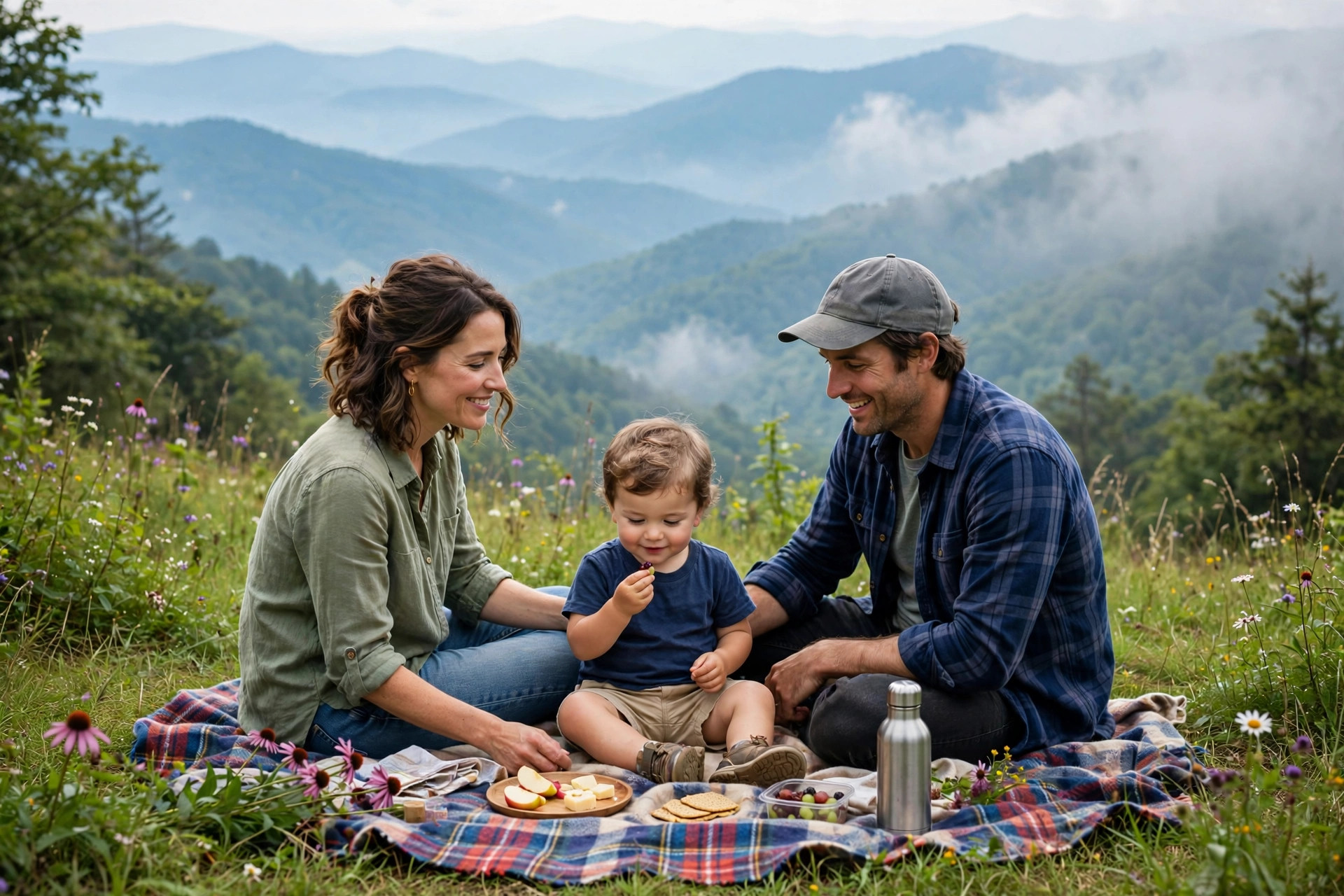
- Spring (April–May) — Wildflowers, mild weather, moderate crowds. Arguably the best season for toddlers: warm enough for short sleeves, cool enough that nap-time car rides don’t roast.
- Summer (June–August) — Beautiful but busy and humid. Go on weekdays, start early, and expect afternoon thunderstorms. This is the season when the car-break strategy matters most.
- Fall (September–October) — Peak leaf season is stunning and the most crowded time of year. Early September (before the color peaks) hits the sweet spot for families.
- Winter (November–March) — Cold at elevation, some roads close, but crowds vanish and lodging prices drop. Fine for cabin-based trips; less ideal for trail-heavy plans.
Where to Stay with a Toddler
Inside the park: frontcountry campgrounds
Three campgrounds work best for families: Cades Cove, Elkmont, and Smokemont. They have flush toilets and ranger programs in season. Note that most Smokies campgrounds are first-come or reservable depending on the season — recreation.gov handles reservations for the ones that take them, so book early for summer weekends. Our family camping checklist covers what to pack so your first campground night goes smoothly.
Cabins in Gatlinburg or Pigeon Forge
Many toddler families prefer a cabin over a tent: a kitchen for familiar meals, a crib corner, laundry, and a hot tub for the adults after bedtime. Gatlinburg puts you closest to the park entrance; Pigeon Forge is cheaper and has more kid-oriented attractions.
The North Carolina side: Cherokee
Quieter than the Tennessee side, with easy access to Oconaluftee and the Blue Ridge Parkway. A strong pick if crowds stress you out.
Toddler Packing Checklist for the Smokies
Beyond your normal family camping gear, these Smokies-specific items earn their weight:
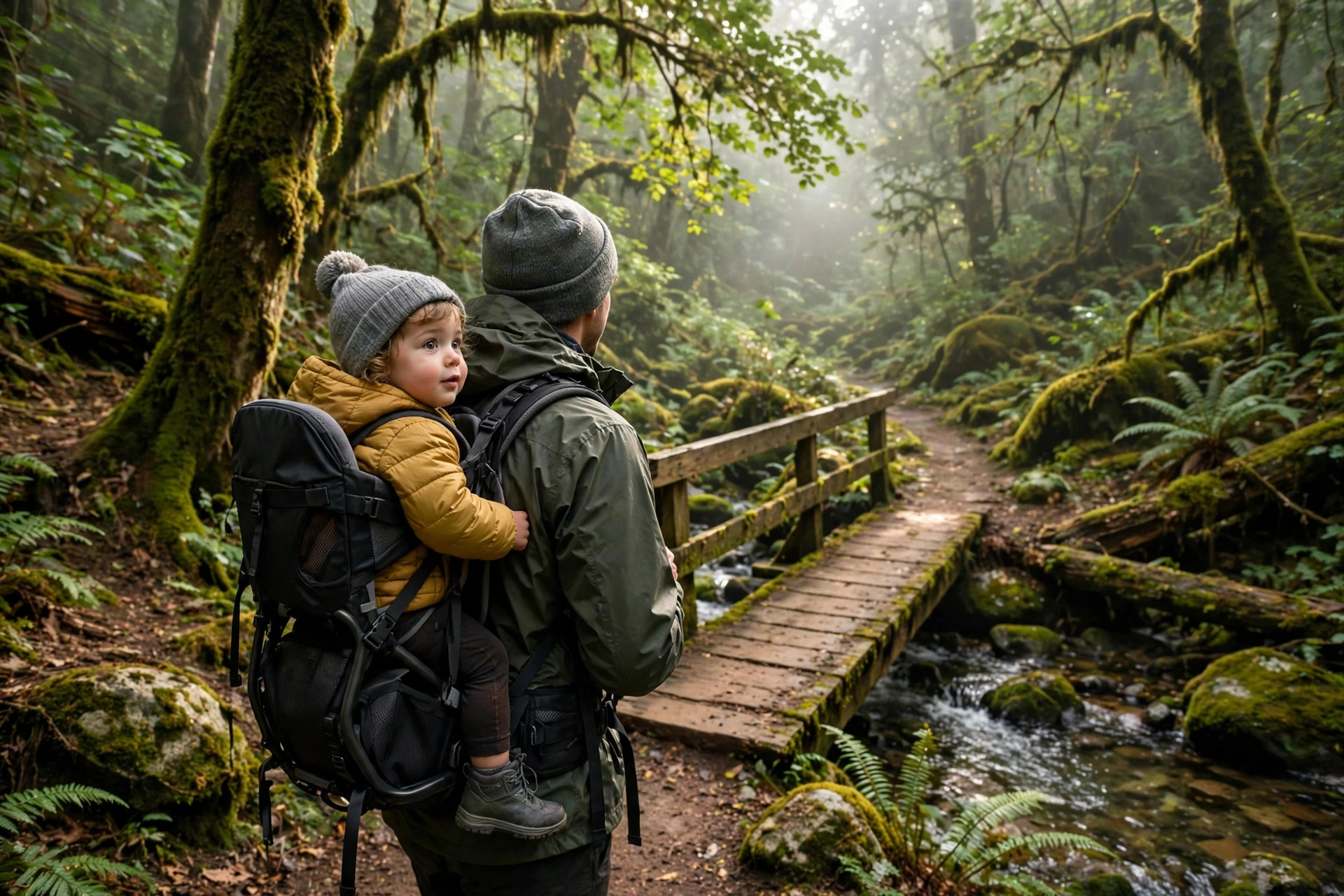
- Hiking carrier backpack — Not a soft carrier: a framed hiking carrier with sunshade, storage, and a kickstand. Essential for Laurel Falls and any trail over half a mile.
- Extra layers + rain gear for everyone — Mountain weather turns fast; Clingmans Dome can be 15°F cooler than Gatlinburg. A sudden downpour with a wet toddler is the trip-killer.
- Snacks, snacks, snacks — Trail mix, pouches, crackers. The Cades Cove loop can take 2–4 hours with stops.
- Sun protection — The UV index at elevation is real; bring the toddler sunscreen and a brimmed hat.
- A change of clothes per person, in the daypack — Creek splashing is inevitable. Lean into it.
- Binoculars for the toddler — A cheap pair turns the Cades Cove bear-sighting from “over there somewhere” into magic.
- Bear-aware food storage — If camping, everything scented goes in the car or the provided food-storage box at night. This is black bear country; teach the habit early, and our Leave No Trace for kids guide makes the “why” fun for little ones.
Safety Basics in the Smokies with Toddlers
- Black bears: They are common and generally shy, but never approach one and never leave food out. Keep toddlers close on trails — pick them up rather than letting them run ahead in bear country.
- Water: Smokies streams are beautiful and deceptively fast. Treat every creek as hands-only play, and keep toddlers arm’s-length from river edges, especially after rain.
- Elevation: Clingmans Dome sits at 6,643 feet. The air is thinner and the weather harsher than the valleys. Shorten visits if your toddler seems unusually fussy at the top.
- Sun and heat: Summer afternoons in the valleys get genuinely hot and humid. Schedule hikes for mornings and keep midday for visitor centers, drives, or naps.
Frequently Asked Questions
Can you take a toddler to Great Smoky Mountains National Park?
Absolutely — it is one of the best national parks for toddlers because so much of it works from the car, on short trails, and at visitor centers. The key is matching your plans to toddler energy: one anchor activity a day, early starts, and realistic trail choices.
What is the best trail for toddlers in the Smokies?
Cataract Falls (0.8 miles round trip, flat, from Sugarlands Visitor Center) is the single best first trail for toddlers. For a slightly bigger adventure with a carrier, the paved Laurel Falls trail to the 80-foot falls is the classic family pick.
Where should a family with a toddler stay near the Smokies?
Inside the park: Cades Cove, Elkmont, or Smokemont campgrounds. For non-campers: a rental cabin in Gatlinburg for park access, Pigeon Forge for value and kid attractions, or Cherokee on the quieter North Carolina side.
Are strollers allowed on Smoky Mountains trails?
There are no stroller bans, but most trails are too rocky and rooty for a stroller. Exceptions: the paved Laurel Falls trail, the Sugarlands Valley Nature Trail loop, and the wide flat start of the Cataract Falls walk. For everything else, a hiking carrier backpack is far better.
What is the best month to visit the Smokies with a toddler?
April and May are the sweet spot: wildflowers, mild temperatures, and moderate crowds. Early September is a close second. Avoid peak leaf season in October and summer holiday weekends if crowds stress your family out.
Can toddlers see bears in the Smokies?
Yes — and Cades Cove at dawn or dusk is the most reliable place for it. Black bears are common in the park. Keep a respectful distance (at least 150 feet), never feed them, store all food properly, and enjoy the moment from the car or the trail.
The Bottom Line
The Smokies with a toddler work beautifully when you play to the park’s strengths: short trails with big payoffs, wildlife drives at dawn, visitor centers for regroups, and cabins with kitchens for the evenings. Skip the summit ambitions, skip the rigid schedules, and skip the guilt about turning around early. The mountains will still be there — and so will your toddler’s memories of the waterfall, the bear, and the creek.
Want more ideas beyond the Smokies? See our roundup of easy hikes near national parks for families for your next trip.
