A family road trip does not have to drain your savings to be memorable. In fact, some of the trips children talk about for years are the simple ones: a tent pitched under tall trees, sandwiches eaten on a blanket at a rest stop, and a new swimming hole found by accident. If you are wondering how to road trip on a budget without cutting all the fun out of the holiday, the answer is not one big trick. It is a handful of small, deliberate choices made before you turn the key.
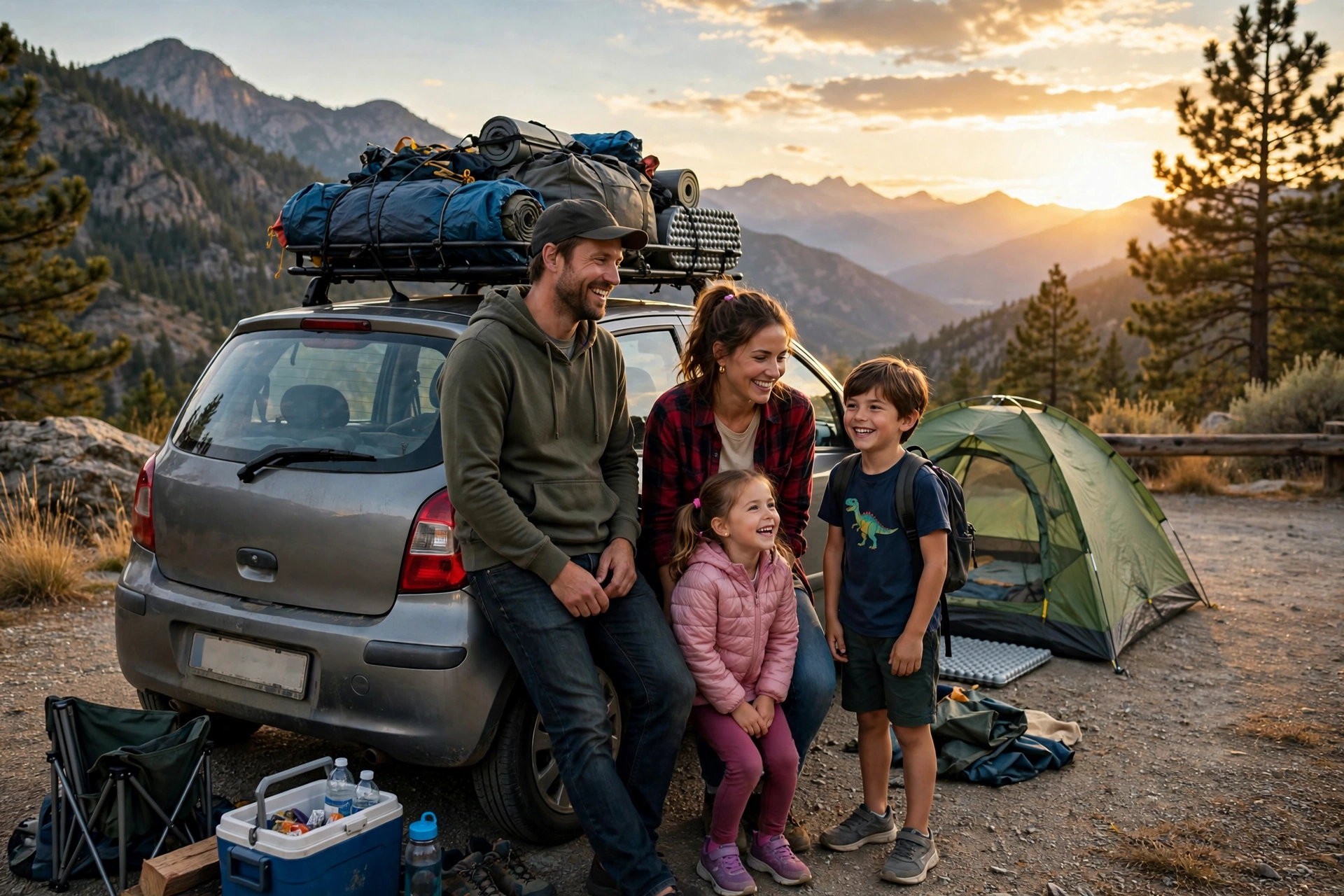
This guide walks through the system budget-savvy families use: set a realistic total first, choose a route that does not fight you on fuel, sleep in places that cost a fraction of a hotel, and treat food as your biggest savings lever. You will find a sample budget, a packing approach that stops constant small purchases, and the mistakes that quietly blow up an otherwise cheap trip. None of it requires extreme couponing. It just requires a plan.
Start With a Simple Road Trip Budget
Most road trips go over budget for a boring reason: there was never a single number to begin with. Families estimate the fuel, forget the food, guess at the campsites, and then feel surprised at the end. Flip that order. Decide your total first, then divide it into five buckets. Once each bucket has a number, every later decision gets easier.
| Budget bucket | Typical share | What it covers |
|---|---|---|
| Fuel and tolls | 25–30% | Petrol or diesel, toll roads, parking fees |
| Sleep | 25–30% | Campsites, budget motels, or a mix of both |
| Food and drink | 25–30% | Groceries, cooler food, plus a few planned meals out |
| Activities | 10–15% | Park passes, one paid attraction, small treats |
| Buffer | 5–10% | The flat tyre, the forgotten item, the rainy-day swap |
That buffer line matters. A trip with no buffer turns every small surprise into stress. Write your numbers down somewhere you will see them on the road — a notes app is fine — and do a two-minute check each evening.
Choose a Route That Saves You Money Before You Leave
The cheapest mile is the one you never drive. Long detours, backtracking to a town you passed yesterday, and zig-zagging between sights all burn fuel and daylight — and tired, hungry children in the back seat are how expensive impulse stops happen. Plot your route as a loop or a gentle line rather than a star shape, and group each day's stops so you are mostly moving in one direction.
Distance between overnight stops deserves honest thought, too. With young children, two to three hours of driving in a day is usually the sweet spot. Shorter driving days also mean you can sometimes take the slower, prettier road — which on many routes has no tolls and the kind of free viewpoints and picnic areas that never appear on the motorway.
Finally, be flexible on timing if you can. Travelling midweek and just outside peak school-holiday weeks makes campsites easier to book at standard rates and keeps popular stops quieter. Flexibility on dates is a powerful budget tool, and it costs nothing.
Save on Fuel Without Making the Drive Miserable
Fuel is usually the biggest single cost, so small habits add up quickly over a thousand miles. None of these require driving painfully slowly — they simply stop a car using more fuel than the journey needs.
- Fill up away from the motorway. Fuel at highway service stations is consistently pricier than fuel a mile or two into a nearby town.
- Keep tyres at the recommended pressure. Under-inflated tyres waste fuel and wear faster. Check them cold, before you set off.
- Pack light and pack inside the car. Roof loads hurt aerodynamics noticeably at highway speeds.
- Drive smoothly. Gentle acceleration and holding a steady speed rather than surging and braking make a real difference over a long day.
- Combine stops. One stop that covers fuel, toilets, a leg stretch and a snack from the cooler is cheaper — and faster — than three separate stops where something gets bought each time.
A quick pre-trip service check also pays for itself. A breakdown far from home is the fastest way to destroy a budget, and basic checks — oil, coolant, tyres including the spare, wipers, and lights — catch most culprits before they become roadside bills.
Sleep for Less: Campsites, Cabins and Smart Hotel Nights
Where you sleep will likely be your second-biggest cost, and it is where the biggest savings hide. A single hotel night for a family can cost the same as three or four nights on a campsite pitch, which is why so many budget road trips are built around camping for most nights. State park and national forest campgrounds are usually the best value of all: beautiful settings, basic but clean facilities, and prices that are a fraction of commercial sites. Many can be booked through Recreation.gov, the official reservation service for federal lands in the United States.
Mixing your nights works well. Two or three campsite nights, then one budget motel or cabin night to shower properly, do laundry, and reset, keeps costs low without anyone feeling worn down. When you do book a hotel, look for inclusions that save money elsewhere: free parking, breakfast included, a fridge and microwave, and a pool — a free afternoon of entertainment for most children.
If camping is new to you as a budget sleep strategy, start with our roundup of the best family camping spots in the USA and the ultimate camping checklist so you buy or borrow the right gear once. Borrowing a tent for your first trip, or buying second-hand, is a sensible way to test whether your family enjoys it.
Food: The Easiest Place to Save Real Money
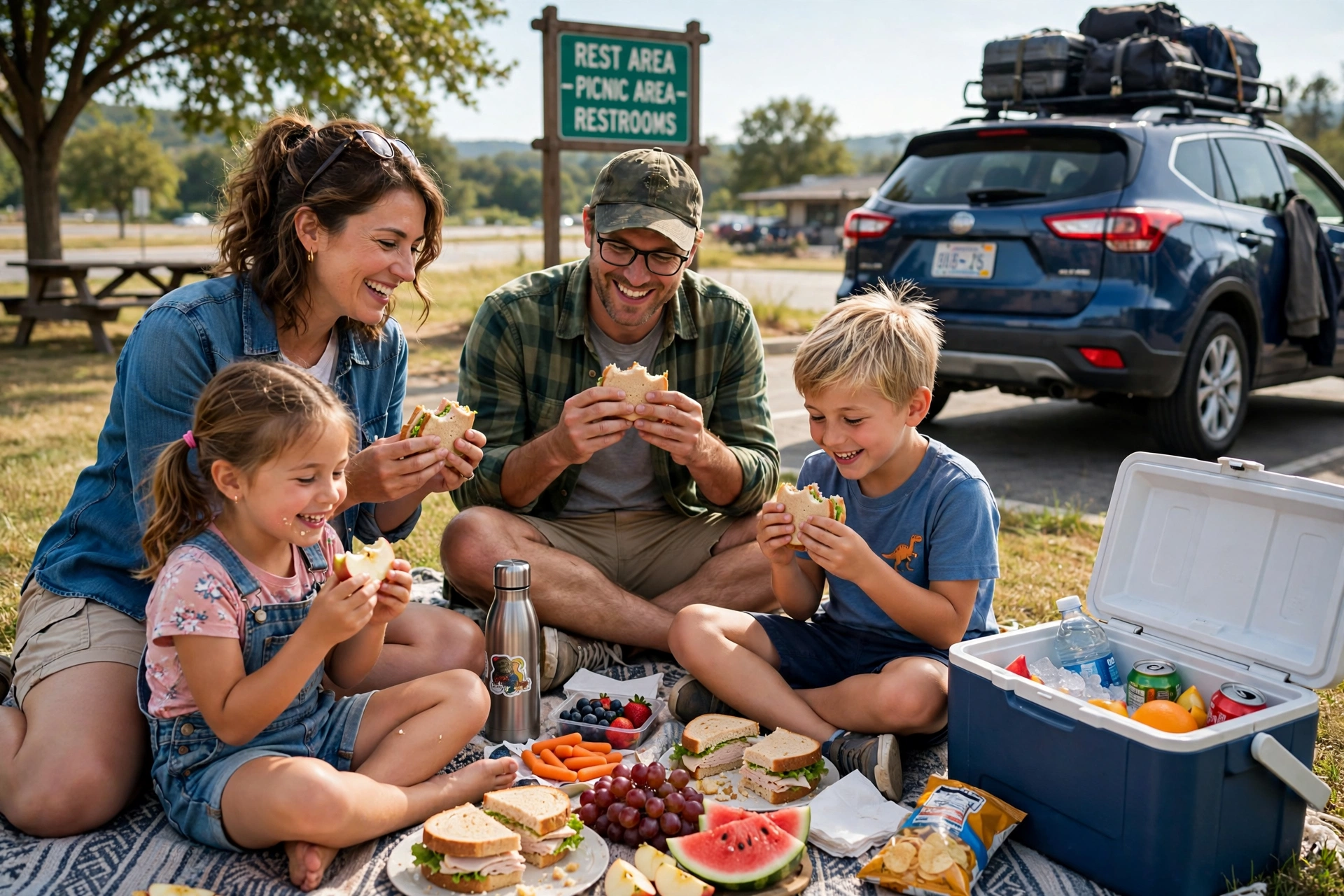
Ask any family that road trips regularly where their money used to leak away, and the answer is almost always food — not one big restaurant bill, but the steady drip of snacks, drinks and "quick" meals bought at every stop. The fix is not to ban eating out. It is to make the cooler do most of the work, then enjoy one or two planned meals out properly, without guilt.
Build your food system around three parts. First, a cooler with breakfast and lunch staples: yoghurt, cheese, fruit, sandwich fillings, wraps, and multipack drinks. Second, a dry-snack box everyone can reach at stops, filled with options from our guide to the best snacks for camping. Third, simple dinners you can cook on a camp stove or make without cooking at all; our collection of the easiest camping meals for kids is a good starting point.
A few habits make the system stick. Shop at larger supermarkets in bigger towns rather than convenience stores near attractions, where prices climb. Refill reusable water bottles instead of buying drinks one at a time. Keep one "emergency" easy meal in reserve for the evening everyone is too tired to cook — still far cheaper than the default takeaway it replaces. And keep perishables properly chilled; when in doubt, throw them out.
Free and Low-Cost Stops Kids Actually Love
A budget road trip lives or dies on whether the days feel full, and children rarely rank stops by price. A shallow river to paddle in, a small-town playground, a beach, a short waterfall walk — these are the moments that fill photo albums, and most are free. Plan one anchor stop per day and let the rest be simple.
National and state parks deserve a special mention. Entrance fees are modest, and an annual pass often pays for itself within a few visits. The National Park Service also runs designated fee-free days each year, listed in its fee-free parks information, and many parks run free junior ranger programmes — hours of engagement for no cost at all.
Resist the pull of one paid attraction per day. Choose the single paid experience your family will genuinely love — a boat trip, a wildlife park, a historic railway — and let it be the highlight. Trips feel richer, not poorer, when the paid moments are chosen rather than constant.
Pack Once, Buy Less on the Road
Every forgotten item becomes a roadside purchase at the worst possible price. A simple packing list, checked off as things go into the car, is unglamorous and extremely effective. Pack in systems: a sleep bag, a clothes bag per person, the food system above, a small first-aid and toiletries kit, and an entertainment bag with trip-only toys and books, which keeps them feeling new.
Think through the items people forget most: phone chargers, medication, sunscreen, insect repellent, a first-aid kit, wet wipes, bin bags for the car, and a change of clothes for each child kept within reach. Entertainment deserves the same thinking — films and audiobooks downloaded before you leave save both data charges and the misery of no signal and nothing to watch.
A Sample 4-Day Family Road Trip Budget
Here is an illustrative long-weekend budget for a family of four driving roughly 600 miles, camping three nights with one simple meal out. Your numbers will differ, but the shape — food and fuel controlled, sleep mostly campsites, one chosen treat — is what keeps the total low.
| Item | How it was kept low | Illustrative cost |
|---|---|---|
| Fuel (600 miles) | Town fill-ups, steady driving | $90 |
| Campsites (3 nights) | State park pitches, booked ahead | $75 |
| Groceries and cooler food | Supermarket shop before leaving | $110 |
| One meal out | Lunch special, water not soft drinks | $55 |
| Park entry / pass use | Two parks, junior ranger (free) | $30 |
| Treats and small extras | Ice creams, one souvenir each | $30 |
| Buffer (unused if all goes well) | Held in reserve | $40 |
| Total | $430 |
Compare that shape with the same trip done by default — three hotel nights, meals bought as you go, a paid attraction each day — and the total can pass double without a single luxurious purchase. The budget version is not a lesser trip, just the same roads with spending pointed at what matters.
Mistakes That Quietly Blow a Budget Road Trip
Most blown budgets come from the same handful of habits. Driving far out of your way for a single sight, then paying premium prices nearby because everyone is tired and hungry, is the classic one. Booking nothing in peak season and finding only expensive rooms left is another. So is the daily service-station habit: drinks and snacks at every stop can add up to the price of a whole extra day of travel.
Two quieter mistakes deserve mention. The first is underestimating tolls and parking, which on some routes can become a real cost; checking your route beforehand removes the surprise. The second is having no rainy-day plan, then panic-spending on the nearest indoor attraction at full price. One pre-researched cheap wet-weather option per stop solves it.
Frequently Asked Questions
How much should I budget per day for a family road trip?
Many families manage on $100–$150 per day by camping most nights, cooking most meals, and choosing free activities, not counting a long driving day's fuel. Use the five-bucket method above with your own local prices rather than copying anyone else's total — fuel and campsite prices vary a lot by region and season.
What is the cheapest way to sleep on a road trip?
Campgrounds, especially state park and national forest sites, are usually the cheapest comfortable option by a wide margin, followed by budget motels slightly outside town centres. Mixing mostly campsite nights with an occasional motel night keeps both costs and tiredness down.
How can I save money on food without cooking every meal?
Make breakfast and lunch your cooler meals — they are the easiest to self-cater — and choose one meal out per day or every other day to enjoy properly. Buy drinks and snacks in multipacks from supermarkets, refill water bottles, and keep an emergency easy meal in reserve.
Is it cheaper to road trip or fly for a family?
For families of three or more travelling a few hundred miles, driving is usually far cheaper than multiple flights plus a hire car, and you keep your own gear with you. The gap narrows for very long distances once you add extra nights on the road, so price both options honestly for journeys over about 800 miles each way.
How do I keep kids entertained in the car without spending much?
Rotate a small bag of trip-only toys and books, download audiobooks and films before you leave, and build in a proper run-around stop every couple of hours — a playground or a short walk costs nothing and makes the next stretch dramatically easier.
A budget road trip is not about doing without. It is about spending on purpose: money saved on forgettable meals and overpriced rooms, pointed instead at the swim, the viewpoint and the one special day out your children will still be describing next year.
