When I first moved to Salt Lake City over a decade ago, I had no idea how to dress for winter hiking. My first few times out on a snowy trail, I made the classic rookie mistake: bundling up in heavy ski clothes, only to end up a hot, sweaty mess by mile two. Utah winters taught me the hard way that staying warm is not about wearing more — it is about wearing smarter.
After years of trial and error across dozens of winter hikes, I have finally dialed in a layering system that works. Here is exactly what to wear winter hiking — the layers, the fabrics, the accessories, and the mistakes to avoid — so you can head out confidently in the winter 2026–27 season.
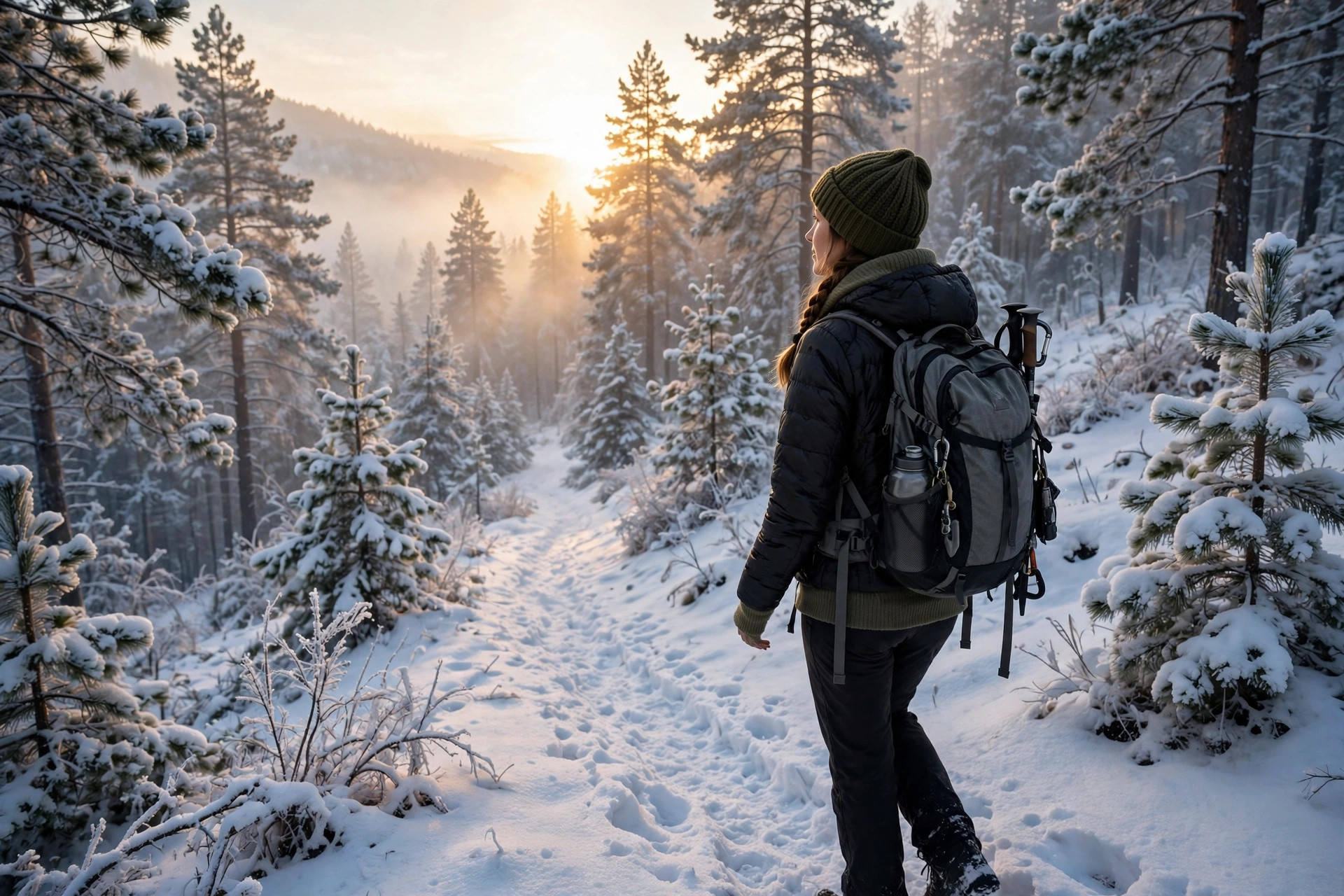
Why Layering Beats One Big Jacket Every Time
Winter hiking presents a unique challenge: you need to explore while staying comfortably warm and safely protected. The problem with a single warm insulated jacket is that it feels perfect when you are standing still at the trailhead — and becomes a liability the moment you start climbing. Your body heats up, you sweat, and that moisture trapped against your skin is exactly what makes you cold the instant you stop moving.
Layers solve this. Several thinner pieces you can add or remove let you manage heat and moisture in real time. Yes, it means stopping to adjust, and yes, it takes a few hikes to learn which layers work for your body. But preventing a soaked base layer is the single most important skill in winter hiking safety — wet clothes in cold air will chill you faster than almost anything else. If you want the full head-to-toe picture, my companion guide to a winter hiking gear list covers the non-clothing essentials too.
The Winter Hiking Layering System
1. Base Layer: Your Moisture Manager
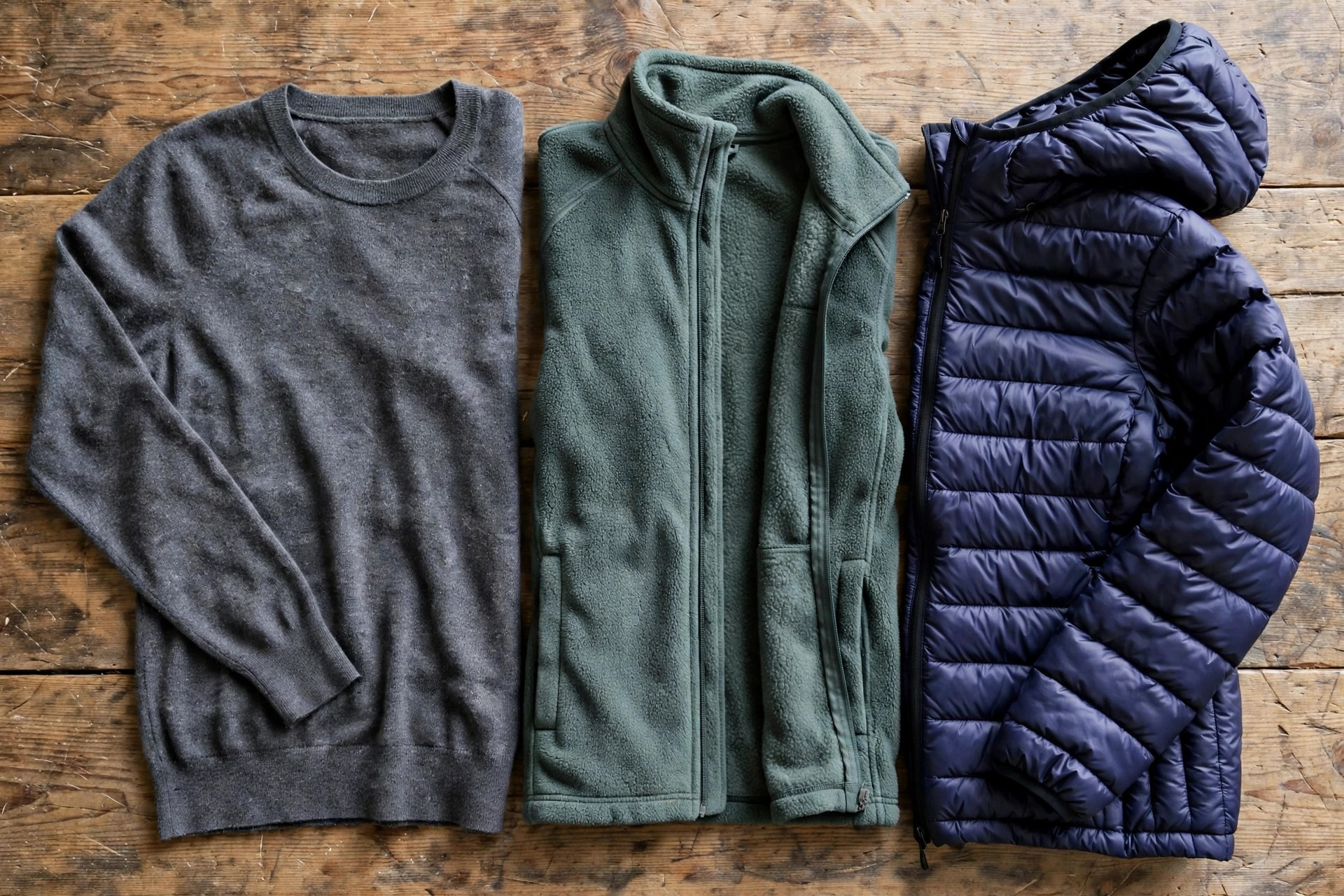
Your base layer sits against your skin and its only real job is moving sweat away from your body. Merino wool and synthetic polyester are the two reliable options — merino regulates temperature naturally and resists odor on multi-day trips, while synthetics dry slightly faster and cost less.
Choose a snug but not tight fit, midweight (around 200 g/m²) for most winter days, and lightweight for milder outings or high-output hikes. The one fabric to never wear: cotton. It holds moisture against your skin, loses all insulating value when wet, and is a genuine hypothermia risk.
2. Mid Layer: Your Insulation
The mid layer traps warm air around your core. Fleece is the workhorse here — a breathable fleece jacket or vest keeps you warm while letting moisture escape. For colder days or long lunch stops, add a puffy jacket: down offers the best warmth-to-weight ratio and packs tiny, while synthetic insulation keeps warming even when damp, making it the better choice in wet, snowy conditions.
3. Outer Shell: Your Weather Shield
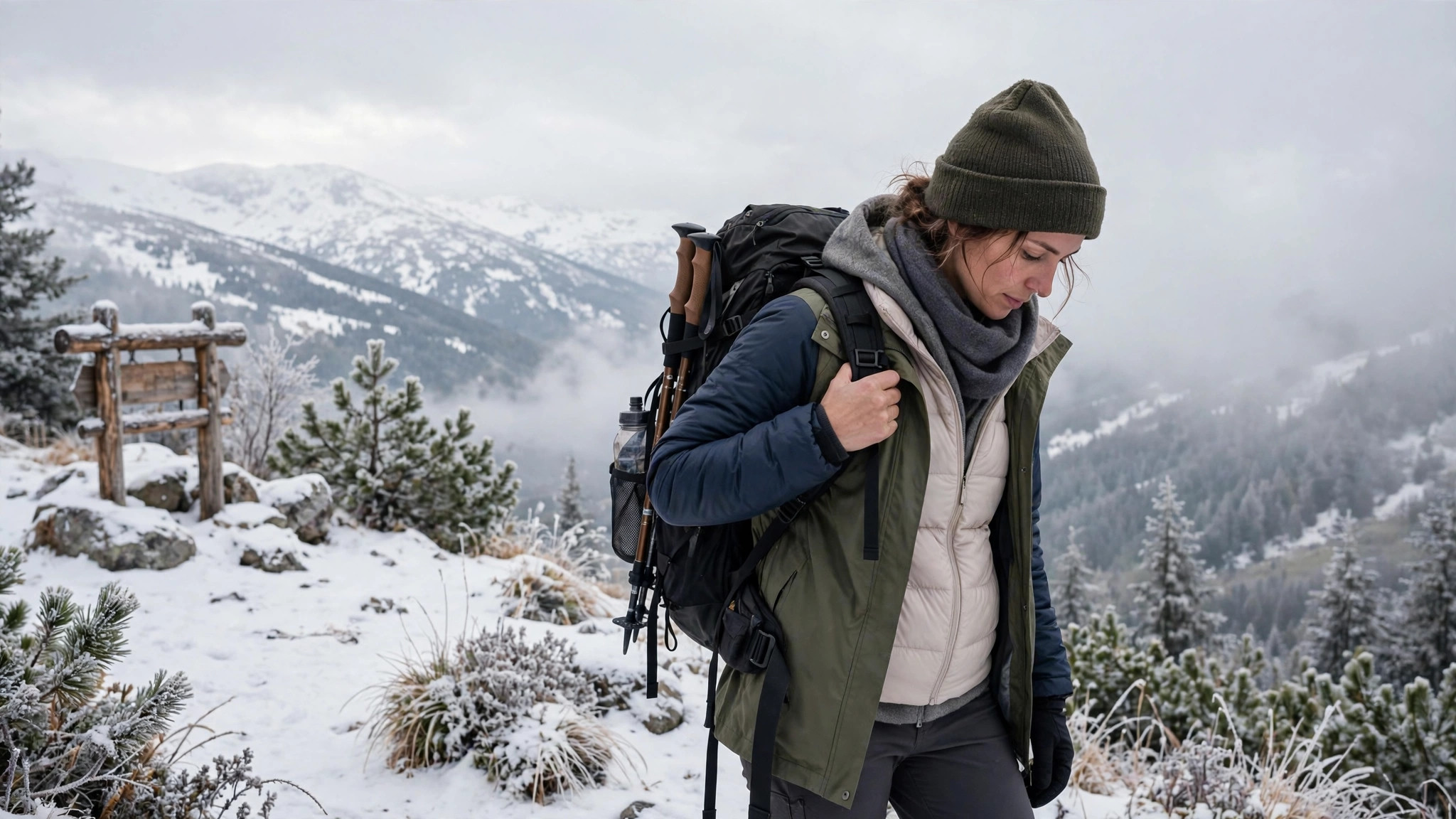
A waterproof, windproof shell protects you from the elements you cannot control. Look for a packable 2.5- or 3-layer shell with an adjustable hood, pit zips for dumping heat on climbs, and sealed seams. You may not wear it all day — on calm, sunny days it stays in your pack — but when a storm rolls in over a ridge, you will be glad it is there.
What to Wear by Temperature
Not every winter day is the same. Here is how I adjust the system as the thermometer drops:
| Temperature | Upper body | Lower body | Extras |
|---|---|---|---|
| 30–40°F (−1 to 4°C) | Lightweight base + fleece | Hiking pants or fleece-lined tights | Light gloves, beanie in pack |
| 15–30°F (−9 to −1°C) | Midweight base + fleece + shell-ready | Base layer + fleece-lined pants | Insulated gloves, beanie, neck gaiter |
| Below 15°F (−9°C) | Midweight base + puffy + shell | Base layer + insulated shell pants | Balaclava, heavy mittens, hand warmers |
These ranges assume moderate activity. Running cold? Bump one category warmer. Running hot? Start lighter and carry the rest. The National Park Service also reminds hikers to check mountain weather forecasts before heading out — conditions change fast above treeline.
Lower Body: Do Not Neglect Your Legs
Your legs generate plenty of heat while moving, so they need less insulation than your core — but they still need protection. My setup:
- Base layer: Merino or synthetic thermal leggings for cold days; skip on milder outings.
- Pants: Fleece-lined softshell pants for true winter; standard hiking pants layered over thermals for shoulder season.
- Shell pants: Lightweight rain or hardshell pants live in my pack for rain, wet snow, or post-holing through deep drifts.
Accessories That Make or Break a Winter Hike
Small gear, outsized impact. Do not leave these behind:
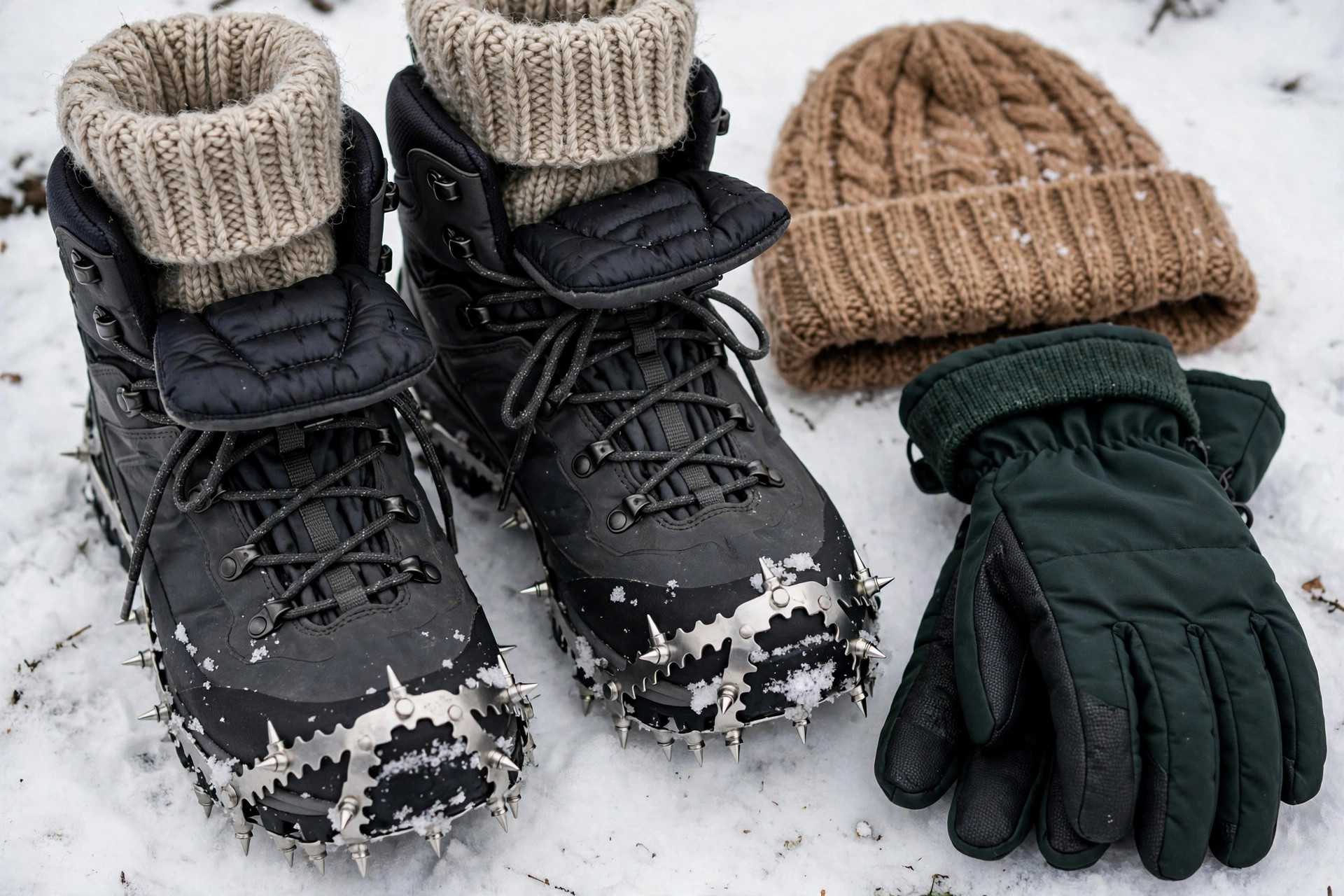
- Beanie or balaclava: You lose a disproportionate amount of comfort through an uncovered head in wind. A snug wool beanie works to about 20°F; below that I switch to a balaclava.
- Neck gaiter or buff: Seals the gap between jacket collar and beanie where cold air sneaks in.
- Gloves: Two-pair system — a thin liner pair for dexterity on moderate days, plus insulated waterproof gloves or mittens for cold or wet conditions. Mittens are genuinely warmer than gloves for the same insulation.
- Wool socks: Midweight merino hiking socks. Bring a spare pair — changing into dry socks at lunch is one of winter hiking’s great luxuries.
- Sunglasses or goggles: Snow glare is real. Polarized lenses with side coverage protect against snow blindness on bright days.
Footwear: Insulated Boots and Traction
Cold feet will end a hike faster than almost anything. Insulated, waterproof hiking boots with a higher cuff keep snow out and warmth in — pair them with gaiters in deep snow. For icy trails, slip-on traction devices like microspikes turn a sketchy descent into a non-event, and snowshoes keep you afloat on fresh powder days. Check Recreation.gov for current trail and snow conditions at your destination before you go.
Critical Mistakes to Avoid
- Wearing cotton. The “cotton kills” saying exists for a reason — it stays wet and steals body heat.
- Overdressing at the trailhead. Start slightly cool; you will warm up within ten minutes of moving. At extreme cold (well below 0°F), keep warmth from the start — it is easier to shed a layer than to recover from being cold.
- Skipping the shell. Clear skies at 9 a.m. mean nothing at noon in the mountains. A shell weighs almost nothing and saves trips.
- Forgetting to vent. Pit zips, neck zips, and unzipped collars exist to dump heat before you soak your base layer.
- No spare dry layer. Always carry one extra insulating layer in a dry bag or pack liner. REI’s layering guide makes the same point: your backup insulation is your safety margin.
Smart Packing Tips
Choose compressible gear — down jackets, thin fleeces, and packable shells take up little space, so there is no excuse to leave them behind. Prioritize ventilation features: pit zips, adjustable hoods, and side zips on pants all let you fine-tune temperature without full stops. And if you are hiking with little ones, the same layering logic applies at kid scale — see my guide on how to keep kids warm with a layering system. For a women-specific breakdown of cuts and fit, I also have a guide to winter hiking clothes for women.
Caring for Your Winter Hiking Clothes
Good layers are an investment, so treat them like one. Wash merino base layers on cold and hang them dry — heat is what shrinks wool and breaks down its fibers. Fleece mid layers go in the wash regularly to restore breathability, and down or synthetic puffies should be washed with a down-specific detergent and tumble-dried on low with dryer balls to restore loft. Re-waterproof your shell with a wash-in DWR treatment once water stops beading on the surface. For the full routine, see my guide on how to wash merino wool base layers.
Frequently Asked Questions
How many layers should I wear for winter hiking?
Three is the classic formula: a moisture-wicking base layer, an insulating mid layer, and a waterproof/windproof shell. Add or remove pieces based on temperature, exertion, and conditions — the point of the system is adjustability.
Can I just wear my ski jacket for winter hiking?
You can, but you will likely overheat. Ski jackets are built for lift rides and descents, not sustained uphill exertion. A layered system with a lighter shell handles the stop-and-go rhythm of hiking much better.
What is better for a winter hiking mid layer: down or synthetic?
Down wins on warmth-to-weight and packability; synthetic wins when conditions are wet, since it keeps insulating when damp. Many hikers carry a synthetic puffy for wet climates and a down puffy for dry cold.
Should I wear one or two pairs of socks?
One good pair of midweight merino wool socks beats two thin pairs, which can restrict circulation and actually make feet colder. Carry a spare dry pair in your pack instead.
How do I keep my hands warm while winter hiking?
Use a two-pair system: thin liners for dexterity and insulated waterproof gloves or mittens for warmth. Toss chemical hand warmers in your pack for emergencies — they are cheap insurance on very cold days.
