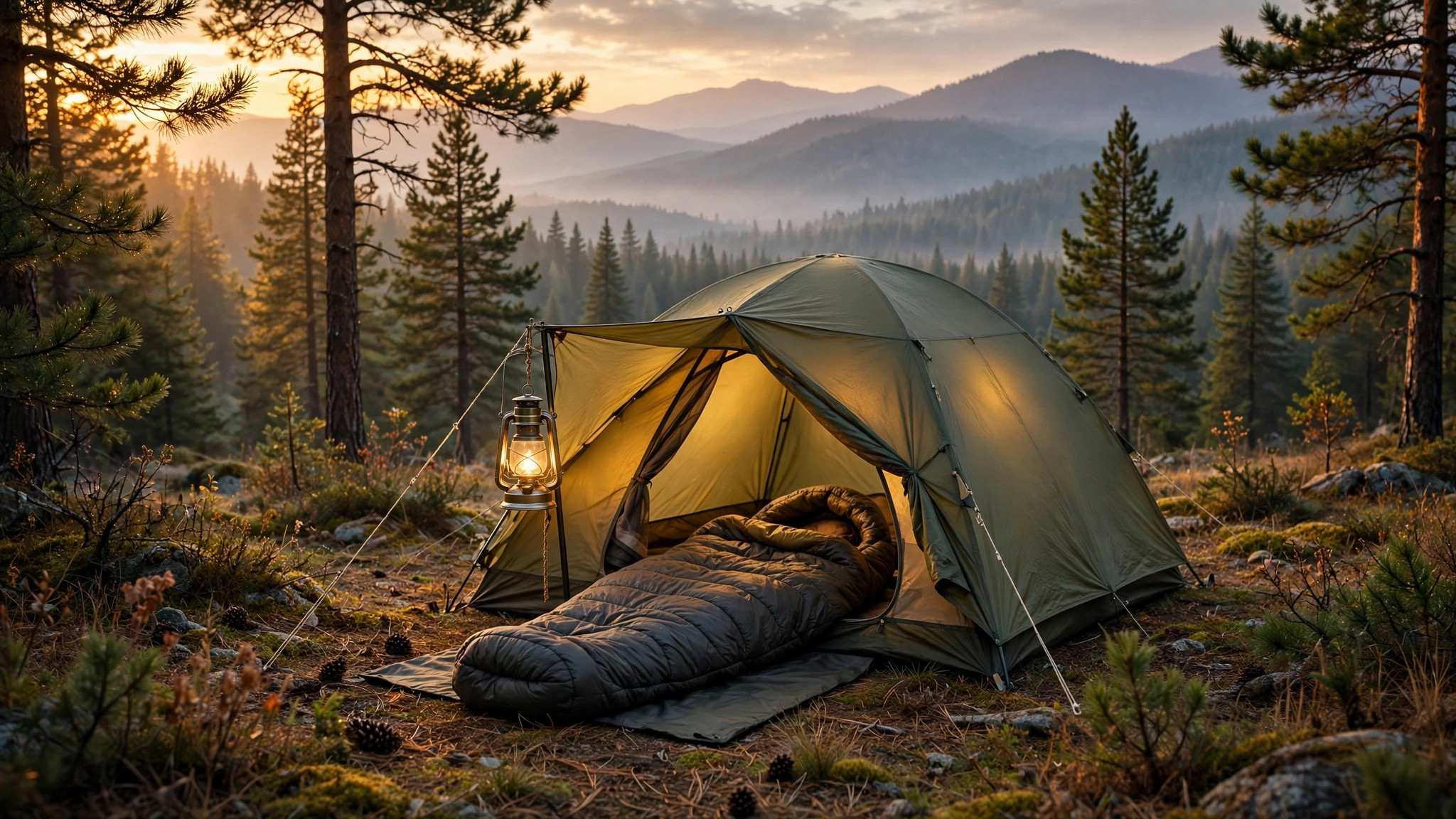
A good sleeping bag can turn a chilly, restless night into the best sleep of your trip. A bad one can do the opposite — leave you shivering at 3 a.m., counting the hours until sunrise. I learned that the hard way years ago when I brought a bulky car-camping bag on a backcountry trip and spent the whole night wrestling with it.
Picking the right bag doesn’t have to be complicated. It comes down to five decisions: the temperature rating, the insulation type, the shape and size, the weight, and a handful of features that actually matter in the field. Get those five right, and the rest is personal taste. This guide walks through each one — updated for 2026 with current materials and standards — so you can buy once and sleep well for years. And if your adventures lean more toward the trail than the campground, our backpacking sleeping setup guide pairs perfectly with this one.
The Short Answer
Choose a bag rated 10–15°F lower than the coldest night you expect. Pick down for cold, dry trips where weight matters, and synthetic for damp, humid, or budget-friendly trips. Mummy bags are warmest, semi-rectangular bags balance warmth and room, and rectangular bags are the comfiest for car camping. Always store your bag loose in a large sack — never compressed long-term.
Understanding Temperature Ratings (ISO 13537)
The temperature rating is the single most important number on the tag, and thankfully it’s no longer guesswork. Nearly all reputable brands now test to the ISO 13537 standard (which replaced the older EN 13537), so a 20°F rating means roughly the same thing across brands. The rating actually gives you three numbers:
- Comfort — the lowest temperature at which a cold sleeper stays comfortable. This is the number women and cold sleepers should shop by.
- Limit — the lowest temperature at which a warm sleeper can still sleep comfortably in a curled-up position.
- Extreme — a survival rating, not a comfort rating. Nobody should plan a trip around this number.
As a rule of thumb, buy a bag rated 10–15°F below the coldest temperature you realistically expect. If your mountain nights dip into the 30s, a 20°F bag is the safe pick — you can always unzip it or stick a leg out on warmer nights. For summer-only car camping in mild climates, a 30–40°F bag is plenty.
Remember that the rating assumes you’re using an insulated sleeping pad, wearing base layers, and sleeping in a tent. Your bag only traps the heat your body makes — on a thin summer pad, even a great bag will feel cold underneath, because the ground steals heat through compression of the insulation below you.
Down vs. Synthetic: Which Insulation Is Right for You?
This is the biggest fork in the road, and there’s no universally correct answer — only the right one for your trips.
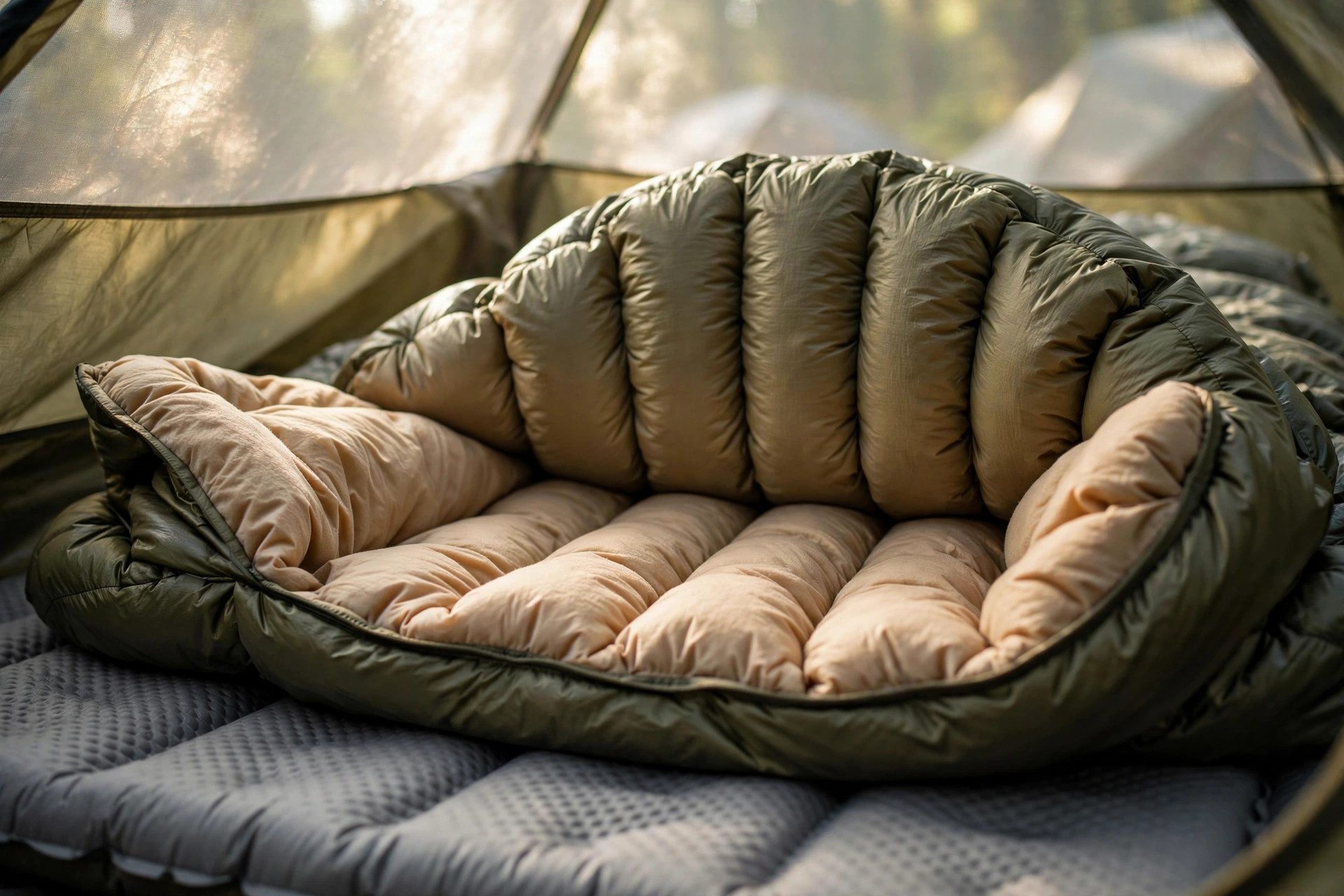
Down insulation
Down — the soft clusters under the feathers of geese or ducks — has the best warmth-to-weight ratio of any insulation on the market. A quality down bag packs down to the size of a water bottle, weighs far less than a comparable synthetic bag, and lasts for a decade or more if you treat it well. Fill power (600, 700, 800, 850+) tells you how fluffy the down is: higher numbers mean more loft per ounce, so the bag is warmer for its weight. For most three-season camping, 650–800 fill power hits the sweet spot of performance and price.
Down’s weakness is moisture. Classic down loses most of its insulating power when it gets truly wet — a real problem in rainy climates or on multi-day trips where gear never fully dries. Two things have changed the math in recent years: hydrophobic down treatments (now standard on most mid-range and premium bags) resist moisture far better than untreated down, and RDS (Responsible Down Standard) certification has made it easy to verify that the down was sourced without live-plucking or force-feeding. Look for the RDS logo on the tag.
Synthetic insulation
Synthetic bags use polyester fibers engineered to mimic down’s loft. They can’t match down’s packability, but they win on three fronts: price (often half the cost of a comparable down bag), wet-weather performance (they keep insulating even when damp and dry much faster), and easy care (machine washable, no special detergent needed). For families with kids, beginners, kayak or canoe trips, and the perpetually rainy Pacific Northwest, synthetic is usually the smarter buy. The trade-off is bulk and weight — a synthetic 20°F bag can be nearly twice as big as its down equivalent — and synthetic insulation gradually loses loft over years of use, even with perfect care.
| Factor | Down | Synthetic |
|---|---|---|
| Warmth per ounce | Excellent | Good |
| Packed size | Very small | Bulky |
| Wet-weather performance | Fair (good with hydrophobic treatment) | Excellent |
| Durability | 10+ years with care | 5–7 years |
| Price | Higher | Budget-friendly |
| Care | Special wash, careful drying | Machine washable |
My take: if you backpack in dry mountain weather, go down. If you car camp with the family, paddle, or camp somewhere it rains every afternoon, go synthetic and spend the savings on a better sleeping pad.
Weight and Packed Size
Weight matters most when you carry it. For backpacking, a three-season bag should ideally weigh under 3 pounds — ultralight options dip under 2 pounds — and pack small enough that it doesn’t swallow your whole pack. For car camping, weight is nearly irrelevant; grab the roomiest, comfiest bag your trunk can hold.
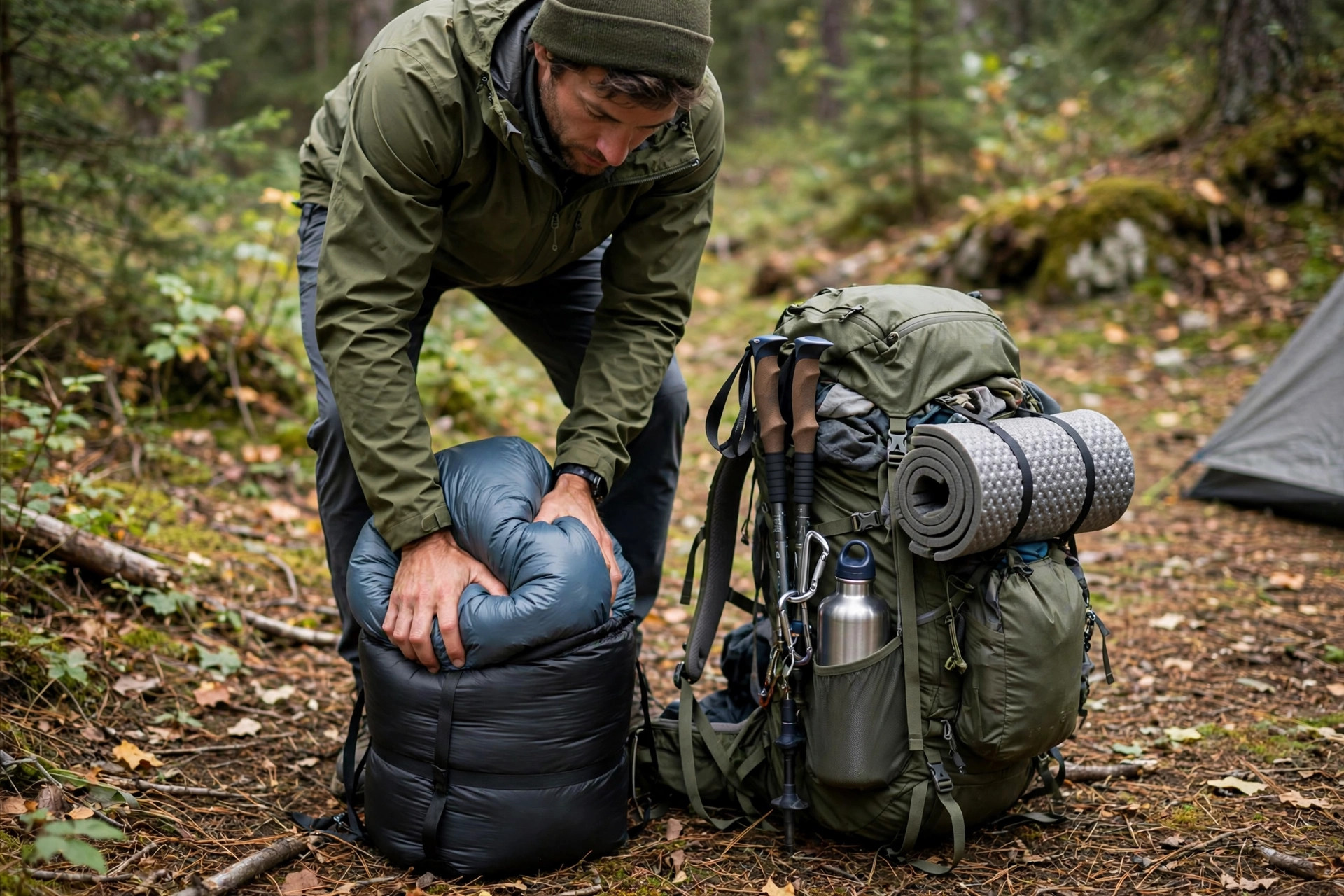
When comparing weights, always compare bags with the same temperature rating — a 2-pound 40°F bag and a 4-pound 15°F bag aren’t really comparable. Watch out for two common traps: buying too long a bag (extra fabric and fill you’re heating all night for no reason) and ignoring packed volume (a bag that doesn’t fit in your pack is useless, no matter how light the spec sheet says it is).
One more option worth knowing: backpacking quilts. These ditch the bottom insulation and zipper entirely (your pad handles the underside), saving significant weight. They’re beloved by thru-hikers but take practice to keep draft-free — a better second bag than a first. Backpackers choosing between quilts and full bags will find the trade-offs explored in REI’s backpacking sleeping bag guide.
Shape and Fit: Mummy, Semi-Rectangular, or Rectangular?
Shape controls the eternal trade-off between warmth and freedom of movement.
- Mummy: tapered from shoulders to feet with a snug hood. The most thermally efficient shape — less dead air for your body to heat. Best for cold weather and backpacking. Can feel restrictive if you’re a sprawler.
- Semi-rectangular (modified mummy): a little extra room at the hips and feet while keeping a hood. The sweet spot for most three-season campers — noticeably roomier than a mummy without giving up much warmth.
- Rectangular: maximum wiggle room, often zips fully open into a quilt for warm nights. The car-camping classic. Some rectangular bags zip together with a partner’s bag for a double.
- Double bags: built for two. Great for couples car camping; too heavy and inefficient for cold-weather backpacking.
A note on women’s-specific bags
For years, brands made separate men’s and women’s bags (women’s versions were typically shorter, roomier at the hips, and rated a touch warmer). As of 2026, the industry is moving toward gender-neutral sizing in multiple lengths and widths instead — so focus on the listed interior dimensions and the ISO comfort rating rather than the label. A practical rule: pick a bag whose interior length is at least 2 inches longer than your height, and check the shoulder and hip girth if you’re broad or curvy — insulation you compress flat against your body stops insulating.
Kids and families
Children lose heat faster than adults, so don’t just hand a kid an adult-sized bag — all that extra air space will stay cold. Look for youth-specific bags sized for their height, or for very young campers, consider dedicated sleep setups designed for little bodies. Our guide to what toddlers sleep in when camping covers wearable blankets, portable cribs, and kid sleep systems in detail. For family car camping, a set of affordable synthetic rectangular bags is usually the happiest compromise: warm enough, washable, and cheap enough that a spilled hot chocolate isn’t a tragedy.
Shell Fabrics and Water Repellency
The shell is the bag’s first line of defense. Most shells are ripstop nylon or polyester measured in denier (D) — lower numbers (15D–30D) are lighter but more fragile, while 40D+ shrugs off rough treatment. Ultralight bags use whisper-thin 7D–10D shells that demand gentle handling; family car-camping bags usually run 40D–75D and take abuse happily.
Nearly all shells carry a DWR (durable water repellent) coating that makes dew and light moisture bead up instead of soaking in. One genuinely new development worth knowing: as of 2026, most major outdoor brands have switched to PFAS-free DWR formulations. They work well, though they may need re-treatment a bit sooner than the old chemistry — an occasional spray-on DWR refresher after a season or two keeps the shell beading.
Don’t confuse DWR with waterproof. A DWR shell resists dew and tent condensation; it won’t save a bag left out in a downpour. Your tent and a dry bag or pack liner do the heavy lifting for real rain protection.
Features Actually Worth Paying For
- Draft tube: an insulated flap running behind the main zipper. Zippers are notorious cold spots, and a good draft tube is the difference between a bag that performs to its rating and one that doesn’t.
- Hood: a well-shaped, adjustable hood adds surprising warmth — you lose a lot of heat from your head. For winter bags it’s non-negotiable; for summer bags it’s optional weight.
- Zipper quality and placement: look for a two-way zipper (so you can vent the footbox on warm nights) with an anti-snag guard. As for left vs. right zip — match it to your dominant hand so you’re not fumbling at midnight, and if you’re a side sleeper, make sure the zipper won’t dig into you.
- Pad sleeve or pad straps: a sleeve on the bag’s underside (or straps) keeps you centered on your sleeping pad. Side sleepers and restless sleepers: this feature will change your life.
- Stash pocket: a small interior pocket for your phone, headlamp, or lip balm. Tiny feature, constant use.
- Draft collar: a padded tube around your neck that seals in warm air. Common on winter bags, lovely on any bag rated below 30°F.
Sleeping Bag Liners: Cheap Warmth and Easy Cleaning
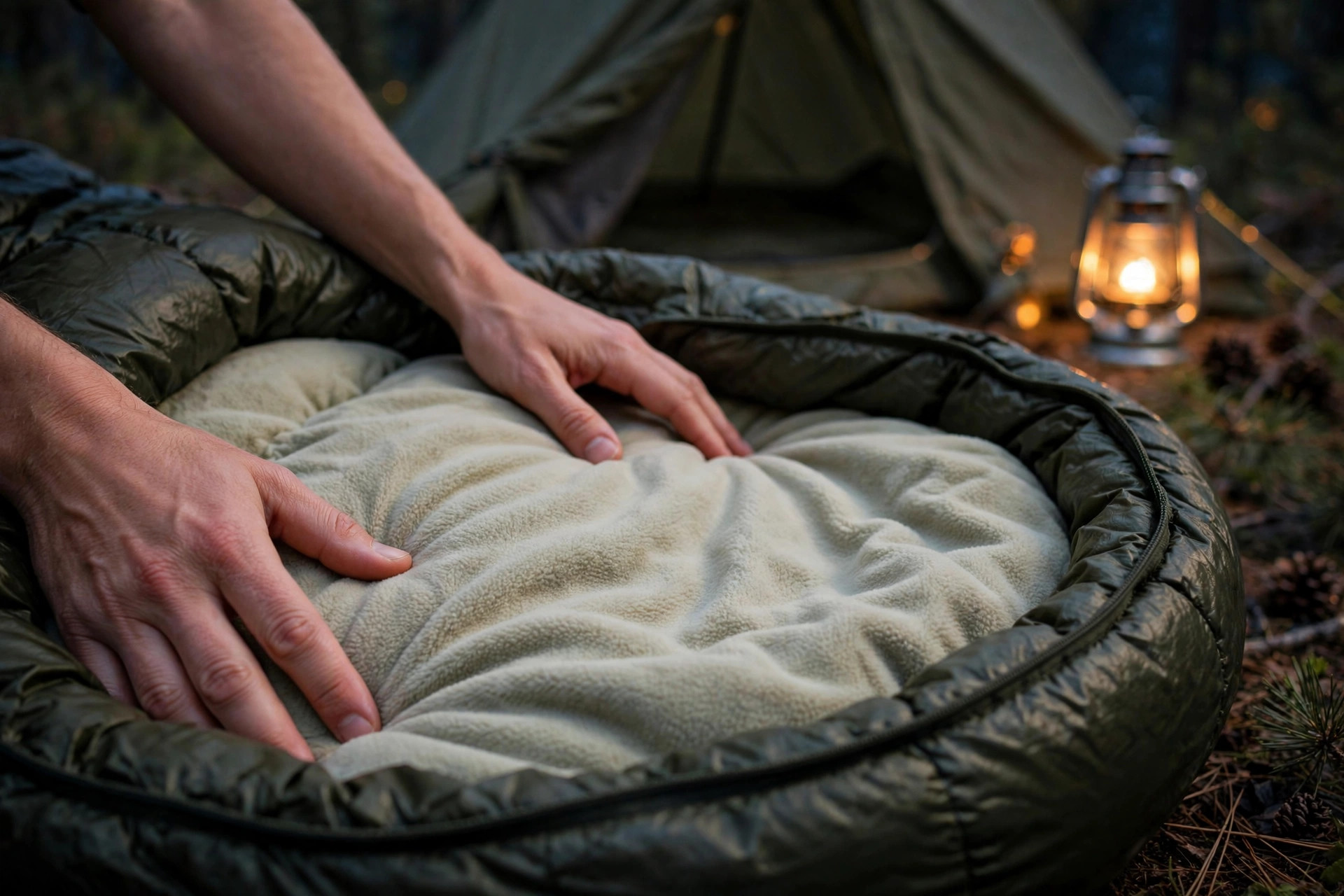
A liner is the highest-value accessory in all of camping. A silk or synthetic liner adds roughly 5–10°F of warmth to any bag (fleece liners add up to 15°F or more), keeps your bag’s interior clean so you wash it far less often, and doubles as a standalone sheet on hot nights when the bag itself is too much. They’re inexpensive, weigh almost nothing, and pack tiny. If your bag is marginal for an upcoming trip, a liner is a far smarter buy than a whole new bag.
Wet-Weather Strategy
If there’s a real chance of sustained rain, your sleeping bag choice is part of a system, not a solo decision. A synthetic bag is the forgiving choice, but even a down bag survives a wet trip with the right habits: pitch your tent with the door away from prevailing wind, keep the bag in a waterproof stuff sack or pack liner during the day, never bring wet clothes into the bag, and air the bag out in the morning sun whenever you get the chance. Condensation inside the tent is the sneakiest moisture source — vent the tent even when it’s cold. For families braving a rainy forecast, our guide to camping in the rain with kids covers tent placement, gear drying, and morale-saving tactics in detail.
Storage and Care: Make It Last a Decade
How you store your bag matters more than almost anything else. Never store a sleeping bag compressed in its stuff sack for weeks or months — crushed insulation loses loft permanently. Every bag comes with (or should come with) a large mesh or cotton storage sack; hang the bag or keep it loose in the big sack between trips, and only compress it into the stuff sack for travel.
Wash sparingly — most bags only need it every couple of seasons unless they’re visibly dirty or losing loft. Synthetic bags go in a front-loading washer on gentle with mild detergent. Down bags need a down-specific wash and thorough drying with tennis balls or dryer balls to break up clumps; a half-dried down bag will mildew. After washing, air-dry completely before storage.
Quick Buying Checklist
- ☐ Temperature rating 10–15°F below your coldest expected night (check the ISO comfort rating)
- ☐ Down for dry/cold/backpacking; synthetic for wet/family/budget trips
- ☐ Shape matches your trip style: mummy for efficiency, semi-rectangular for balance, rectangular for car-camping comfort
- ☐ Length = your height + 2 inches minimum; check shoulder and hip girth
- ☐ Weight and packed size fit your pack (compare only within the same temperature rating)
- ☐ Draft tube behind the zipper; two-way zipper with anti-snag guard
- ☐ RDS-certified down or PFAS-free DWR shell
- ☐ Large storage sack included (or bought separately)
- ☐ A liner for extra warmth and easy cleaning
FAQs
What temperature rating sleeping bag do I need for summer camping?
For typical summer camping where nights stay above 50°F, a 30–40°F bag is comfortable. If you’re camping at elevation where summer nights can dip into the 40s, step down to a 20–30°F bag. Remember the 10–15°F buffer rule: always buy a bag rated a bit warmer than you think you need.
Is down or synthetic better for camping with kids?
Synthetic, almost always. Kids are harder on gear, more likely to spill things, and less likely to keep a bag dry — synthetic bags survive all of that, wash easily, and cost far less to replace as kids grow. Save the premium down bag for your own backcountry trips.
How should I store my sleeping bag between trips?
Loose and breathing. Use the large mesh or cotton storage sack that came with the bag, or hang it in a closet. Never leave it compressed in its stuff sack for more than a few days — crushed insulation loses loft and warmth permanently.
Can I wash my sleeping bag in a washing machine?
Synthetic bags: yes, front-loader on gentle with mild detergent. Down bags: yes, but use a down-specific wash, a front-loader only (top-loaders with agitators can tear baffles), and dry thoroughly with dryer balls to restore loft. Wash as rarely as you can get away with — a liner dramatically extends the time between washes.
What size sleeping bag do I need?
Choose a bag with an interior length at least 2 inches longer than your height so your feet don’t compress the footbox insulation (a classic cold spot). Then check the shoulder and hip girth measurements — the bag should wrap you loosely, not squeeze you. If you’re between sizes, size up for comfort in car camping, or stay snug for maximum warmth on backpacking trips.
Are expensive sleeping bags worth it?
Up to a point. The jump from a $60 bag to a $200 bag buys you a real ISO-tested rating, better insulation, a draft tube, and a bag that lasts years. Beyond that, you’re mostly paying for lighter weight and smaller packed size — worth it for backpackers, unnecessary for car campers.
Final Thoughts
Choosing a sleeping bag is one of those gear decisions that pays dividends every single night of every single trip. Start with the temperature rating, pick your insulation based on where and how you camp, get the shape and size right for your body and sleep style, and don’t skimp on the unglamorous stuff — the storage sack, the liner, the draft tube. Do that, and you’ll wonder why you ever slept badly outdoors. For a deeper dive into camping-specific models and features, REI’s sleeping bag buying guide is an excellent companion to this article. Now get out there — the stars are waiting.

1 comment
[…] sheet over the whole setup, tucked in around the edges, keeps everything together. Our guide on how to choose a sleeping bag for camping explains temperature ratings and insulation in plain […]