The Wonderland Trail is a 93-mile loop around Mount Rainier in Washington’s Mount Rainier National Park — a journey past glaciers, alpine meadows, and milky glacial rivers that changes around every bend. Most hikers take 7–12 days to complete the loop; I thru-hiked it in 8 days in late July, tackling its famously steep ascents and descents along Rainier’s flanks.
Despite the challenge, the trail is well-maintained and makes an outstanding introduction to longer-distance backpacking. Add frequent wildlife sightings — marmots, mountain goats, even black bears at a safe distance — plus frontcountry stores, ranger stations, and food cache locations that simplify logistics, and you have one of the great thru-hikes in the American West.
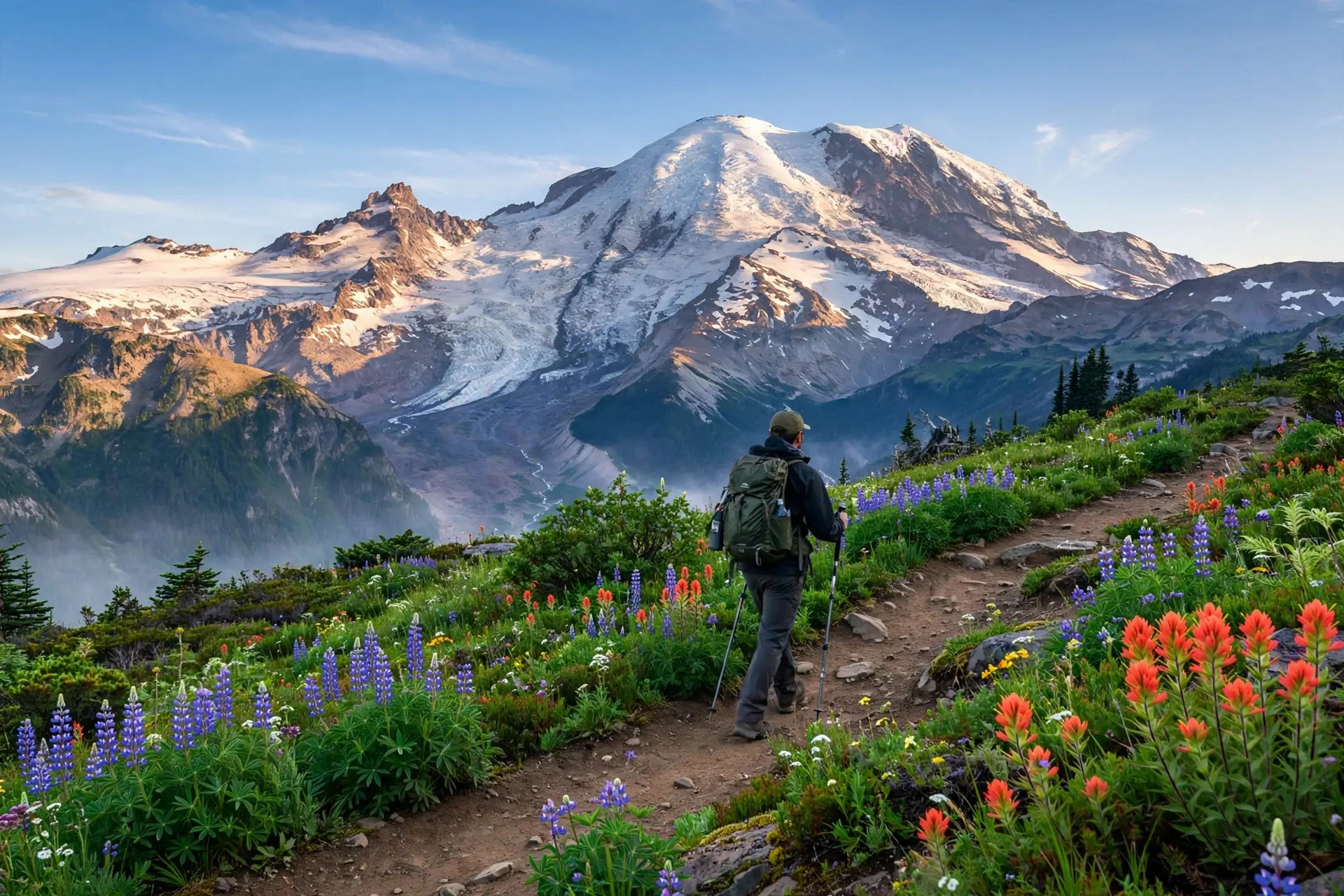
This guide is my complete 8-day itinerary: how the permit system works today, which backcountry camps are actually worth fighting for, the best time to hike, how to cache food, and the day-by-day route that worked for me. Whether you’re drawn by Rainier’s ever-changing angles or its serene lakes, this is the blueprint I wish I’d had before my trip.
| Trail Type | Loop |
| Total Distance | 93 miles |
| Elevation Gain | ~23,000 feet |
| Elevation Range | 2,370 ft (low) – 6,750 ft (high) |
| Typical Duration | 7–12 days (this itinerary: 8 days) |
| Difficulty | Strenuous |
| Permit Required | Yes — via Mount Rainier National Park on Recreation.gov |
| Camping Rules | Designated backcountry camps only, one campground per night |
| Key Highlights | Klapatche Lake, Indian Bar, Panhandle Gap, Summerland, Spray Park, Sunrise |
| Trailheads | Longmire, White River, Sunrise, Mowich Lake, and others |
Wonderland Trail 8-Day Itinerary: Permit Information
Understanding the Permit System
Wonderland Trail permits are managed by Mount Rainier National Park Wilderness through Recreation.gov, and the process has only gotten more competitive. Each winter the park runs an early-access lottery; winners get an assigned reservation window in spring to book their campsites for the summer. Since demand far outstrips supply, getting the exact itinerary you want requires both planning and luck — I learned this firsthand when applying for my hike. Popular campgrounds like Indian Bar and Summerland get claimed fast.
Permit windows and procedures shift slightly from year to year, so confirm the current season’s timeline on Recreation.gov before you apply — and if you’re planning a national-park trip further out, it pays to learn the best time to book campsites and how reservation windows work across park systems.
Campground Reservations & Group Size
Every night on the trail requires a campground reservation — camping is only allowed at designated backcountry camps, and most are small, with just 3–5 sites. Groups of 6 or more must use a group site, which exists at most but not all campgrounds.
When I planned my trip, I had to book camps night-by-night in a precise sequence, which narrowed my options fast — Indian Bar was already full by the time my early-access slot rolled around.
How to Get a Permit
The best way to secure a permit is to enter the early-access lottery as soon as applications open. If you win, you get a time slot to reserve your spots; after all slots are exhausted, leftovers open to the general public, but by then a full circuit is hard to assemble. When I checked availability during my late-July hike, many prime sites were long gone — timing really is everything. For the current season’s details, check Recreation.gov or call a wilderness ranger with questions.
Wonderland Trail 8-Day Itinerary: Walk-up Permits & Planning Tips
Securing Last-Minute Permits
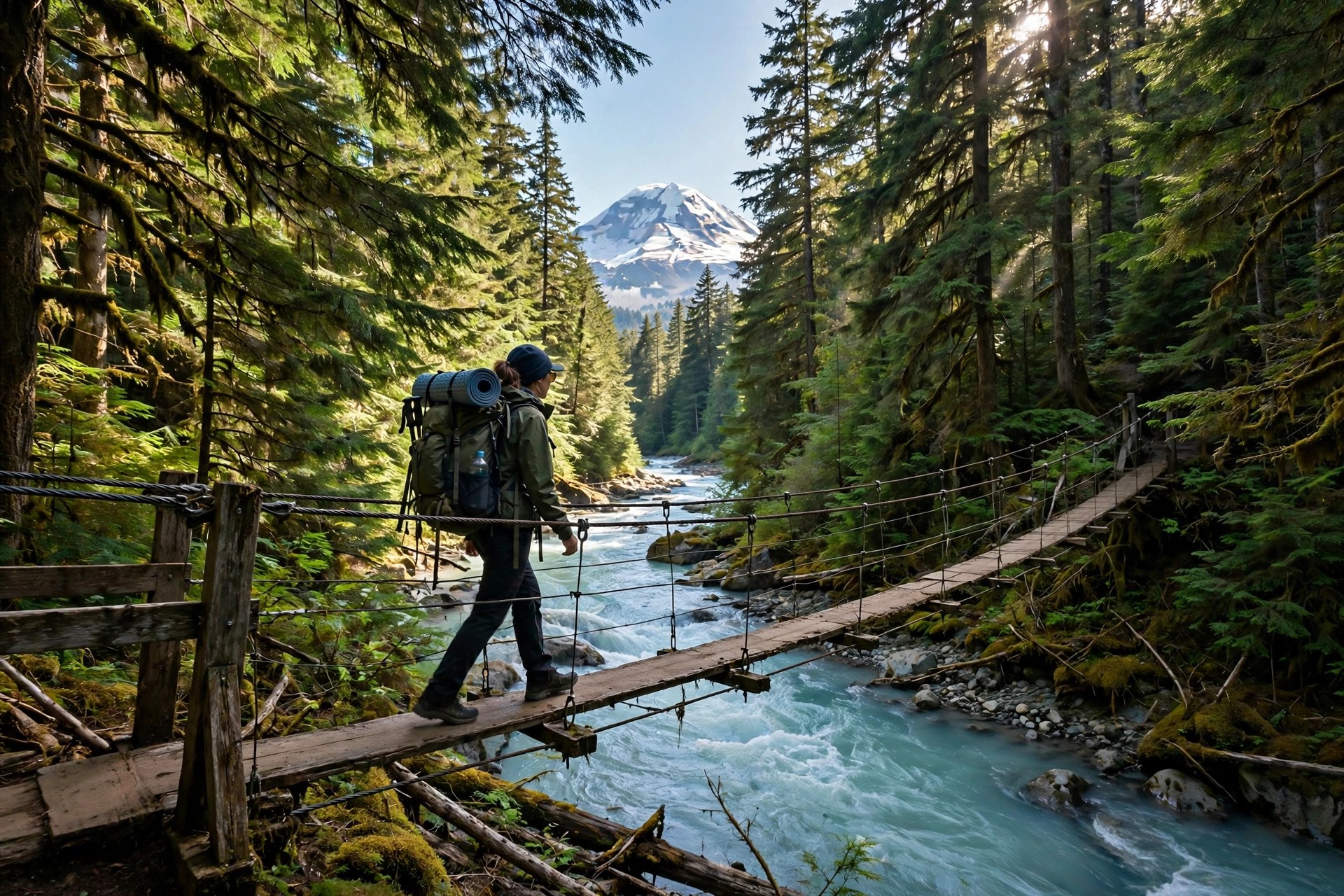
- About one-third of campsites are held for walk-up permits, available in person at a ranger station for trips starting the same day or the next day.
- Even if you’re first in line, there’s no guarantee — popular camps fill fast since most hikers book weeklong itineraries.
- Pro tip: if you win an early-access slot, check live campground availability on Recreation.gov during your window and build your itinerary around what opens up.
Flexibility Is Key
- You can modify your permit against the walk-up quota when you pick it up — we swapped Mystic Camp for Dick Creek on the spot.
- Have alternate itineraries ready; your first-choice campsite may already be booked online.
- Stay flexible: less popular campgrounds, different dates, or starting at trailheads like Mowich Lake can save the trip.
Planning Your Route
- The Hiking Tahoma Planner (a free tool by Shawn Hargreaves) generates sample itineraries with mileage and elevation gain calculated.
- Most hikers complete the 93-mile loop in 7–12 days — our 8-day hike averaged 11.6 miles per day.
- Prioritize daily mileage over trailhead amenities: we chose Mowich for logistics and treated ourselves to brunch at the National Park Inn mid-trip.
Key Takeaways
- Walk-up permits require in-person pickup and real flexibility.
- Always have backup itinerary options drafted before you arrive.
- Use free planning tools to sanity-check daily mileage and elevation.
- Less popular trailheads often mean better availability.
Best Wonderland Trail Backcountry Camps
Top-Rated Campgrounds
These premier camps offer the most spectacular scenery and are worth building your itinerary around:
- Summerland: Stunning alpine meadow with panoramic views of Rainier, bursting with wildflowers in July and August.
- Indian Bar: Dramatic valley with glacier views and cascading waterfalls.
- Klapatche Park: Seasonal lake with perfect Rainier reflections at sunset.
- Dick Creek: Peaceful spot with valley views and an icy creek for soaking tired legs.
- Sunrise Camp: Best sunrise views (short walk to viewpoints) with convenient bear lockers.
- Golden Lakes / Mystic Camp: Excellent lake access and tranquil settings.
Decent But Less Scenic Options
Functional camps when the top choices are full:
- River/creek camps: Paradise River, Maple Creek, Nickel Creek, Pyramid Creek.
- Forested sites: Granite Creek, Carbon River, Ipsut Creek.
- Spray Park alternate route camps: Cataract Valley, Eagle’s Roost.
- Other options: South/North Puyallup River, South Mowich River.
Camps to Avoid
Sites worth skipping if possible:
- Devil’s Dream: Notorious mosquito hell with no privacy — sites sit right on the trail.
- Frontcountry camps (Cougar Rock, Mowich Lake, White River): Feel less like wilderness since they’re car-accessible.
Hiking Direction Tips
- Clockwise is more popular, with gentler sustained uphills.
- Both directions are similarly strenuous overall — neither is “easy.”
- Consider your knees: some hikers prefer steeper uphills to pounding downhills.
My Recommended 8-Day Itinerary
A balanced clockwise route hitting the top camps:
- Day 1: Mowich Lake → Klapatche Park (17.9 mi, +5200/-4600 ft) — tough first day
- Day 2: Klapatche → Pyramid Creek (13.1 mi, +3600/-5400 ft)
- Day 3: Pyramid → Maple Creek (14.2 mi, +3000/-4000 ft)
- Day 4: Maple Creek → Indian Bar (10.4 mi, +4300/-2000 ft)
- Day 5: Indian Bar → Summerland (4.7 mi, +2100/-1200 ft) — easy scenic day
- Day 6: Summerland → Sunrise (10.5 mi, +2800/-2400 ft)
- Day 7: Sunrise → Dick Creek (12.4 mi, +2200/-5000 ft)
- Day 8: Dick Creek → Mowich Lake (9.8 mi, +4000/-3200 ft)
Pro tip: I actually hiked counter-clockwise to fit the top three campgrounds into my available dates. The Hiking Tahoma Planner helped optimize the daily mileage and elevation swings.
Spray Park Alternate Route
This alternate replaces the Ipsut Pass section. It adds roughly 800 feet of elevation gain but rewards you with:
- Gorgeous meadow wildflowers
- Close-up views of Rainier
- Better scenery than the main route
The extra climbing is absolutely worth it.
Best Time to Hike the Wonderland Trail
Monthly Breakdown of Trail Conditions
- June: Expect snow travel and potentially impassable rivers if bridge repairs aren’t complete. Best for experienced hikers with proper gear.
- Early July: Similar to June conditions — carry ice axes and watch for bugs emerging with the wildflowers.
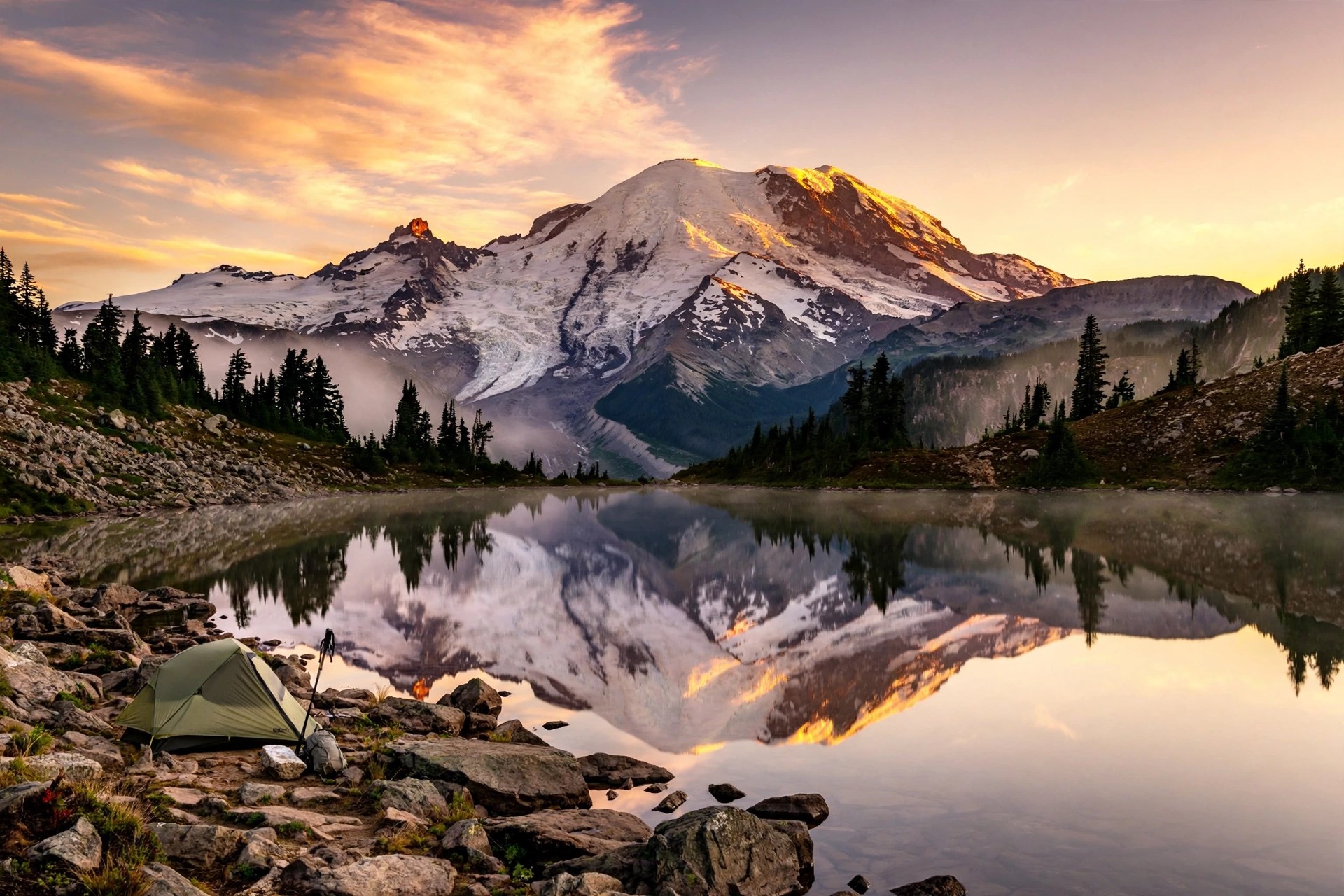
- Mid–late July: My preferred window (we went the last week of July): mid-60s to low-70s temperatures, abundant wildflowers, mostly melted snow, and only one rain day.
- August: Fewer bugs, but wildflowers start fading; by late August, fire-season smoke can become a concern.
- September: Less crowded with beautiful fall colors — but prepare for scarcer water sources, shorter daylight, and possible snow or foul weather.
Backcountry Camp Essentials
- The ~18 backcountry camps range from intimate (2 sites at Dick Creek) to larger (7+ sites).
- All sites are numbered with signposts but not individually assigned — first-come, first-served within your reserved campground.
- Most individual sites fit two 2-person tents comfortably (we squeezed in three tents for our group of four).
- Group sites (available at most campgrounds) can accommodate 6–12 people; some feature three-sided shelters — a true luxury in bad weather.
Food Storage Solutions
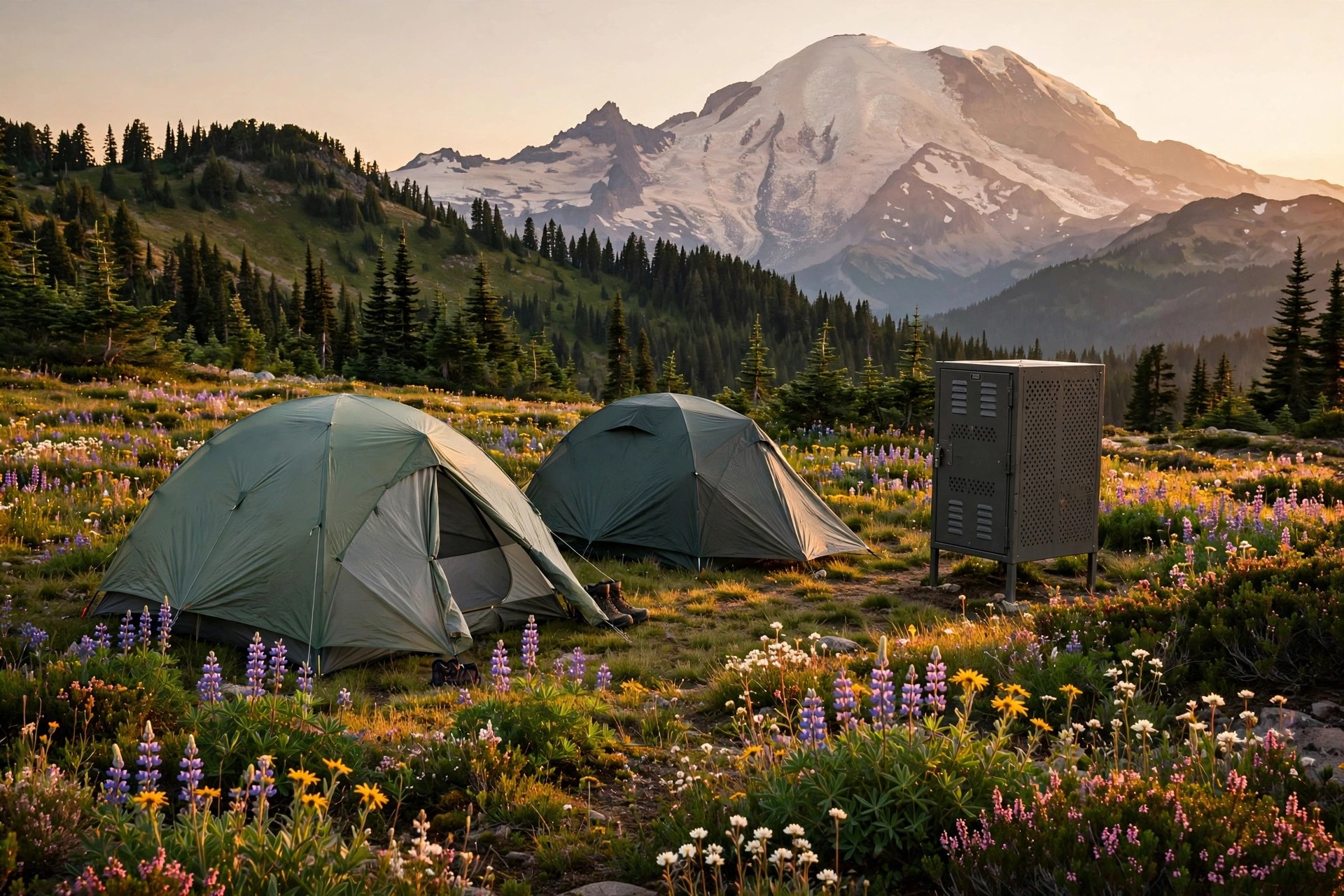
- Every campground provides bear poles or lockers — no bear canister needed.
- The tall metal poles with ridged rods require skill to hoist a food bag.
- Pro tip: practice before your trip; handling a loaded food bag on these poles is unwieldy.
Toilet Facilities
- Each camp has pit toilets a few minutes’ walk from the sites.
- Styles include enclosed (dark, can trap smells) and open-air elevated boxes (my preference — better ventilation).
- Notable examples: Summerland (standard), Cataract Valley (oddly back-to-back placement).
Water Source Considerations
- Most camps are strategically located near natural water sources.
- Seasonal changes: Klapatche Park’s Aurora Lake becomes a tadpole pond or dries up entirely by late season — the alternate source is St. Andrews Lake, 0.75 miles away.
- Devil’s Dream’s stream typically dries by August.
- Always verify water sources with rangers when you pick up your permit.
Key Recommendations
- July offers the most reliable weather and scenery.
- September hikers must monitor forecasts closely.
- Practice bear-pole use before your trip.
- Confirm water availability at ranger stations.
- Group sites book early for the best shelter options.
Wonderland Trail Food Caching Guide
Cache Locations & Logistics
The Wonderland Trail has three food cache locations — Longmire, White River, and Mowich Lake — strategically spaced so you never carry more than about three days of food. We used two caches starting from Mowich Lake, which cut our pack weight significantly. While you can ship caches ahead, we dropped ours off in person despite the 2+ hour driving distances between sites — worth it for peace of mind.
Cache Setup Essentials
All caches require hard-sided, lidded containers — we used standard 5-gallon plastic buckets from a hardware store, per NPS regulations. Our group of four split supplies into three buckets: two for our longer segment and one for the final 1.5-day segment.
Pro tip: time your cache pickup before harder hiking days, when you’ll appreciate real food from Sunrise Day Lodge or the National Park Inn (always check current hours!).
Food & Supply Strategies
For shelf-stable caching, think beyond freeze-dried backpacking meals:
- Treats: coconut water (ours was fridge-cold in shaded White River), plant-based milk, even alcohol.
- Real meals: tinned fish (use frontcountry trash cans for the cans), Trader Joe’s jars — Grecian-style eggplant was a hit.
- Non-food essentials: extra socks, a power bank, and toilet paper (though you can restock at frontcountry bathrooms).
Don’t miss the discard-bucket tradition — we swapped meals with other hikers and scored new favorites! And if you want your trail kitchen dialed beyond this trip, see this complete camp kitchen setup guide. A waterproof food bag with a handle is crucial for bear poles, and trekking poles made the steep terrain far more manageable. For more gear overlap, see my Wonderland Trail gear list.
Key Tips
- Ship caches 3+ weeks early if mailing.
- Mark buckets with bright tape for easy spotting.
- Put heavier items (like canned soups) in later caches.
- A squeeze water filter pairs perfectly with the abundant water sources.
Wonderland Trail Amenities & Services
Bathroom Facilities
While there are no public showers on the Wonderland Trail, you’ll find bathrooms with running water in the frontcountry areas. At White River and Cougar Rock, the campground bathrooms offer flushing toilets and sinks — perfect for a quick wash-up, or even a full wipe-down with paper towels and soap.
Longmire provides similar facilities near the National Park Inn for diners, while Sunrise and Box Canyon have options near the parking lot for day hikers. These stops became our go-to coping mechanism for inevitable body odor between cold-water swims. For related hygiene tips on longer treks, see how to stay clean while backpacking.
Connectivity & Visitor Centers
The Sunrise Visitor Center (just 0.5 miles off trail) was worth the detour for its exhibits, wildflower guides, and real food. For connectivity, Longmire’s Wi-Fi near the museum and usable cell service at Sunrise let us update family during resupplies.
Though I kept my phone on airplane mode while hiking, having these options in the frontcountry was reassuring. Don’t count on power outlets (though they exist at the National Park Inn, Cougar Rock bathroom, and the Sunrise restaurant area) — a portable battery pack is essential for longer stretches between civilization.
Pro Tips
- Time bathroom stops with meal breaks at frontcountry areas.
- The Sunrise Visitor Center has the best resources for current trail conditions.
- Download maps and guides before sections without service.
- Portable chargers are more reliable than outlet hunting.
Wonderland Trail 8-Day Itinerary: FAQ
How long does it take to hike the Wonderland Trail?
Most hikers take 7–12 days for the full 93-mile loop. Fast, fit backpackers can finish in 6 days; this itinerary spreads it over 8 days at a comfortable 11–12 miles per day. Rushing is possible but leaves no margin for weather or rest days.
When should I apply for a Wonderland Trail permit?
Enter the early-access lottery on Recreation.gov as soon as it opens (typically winter, well ahead of summer season). Winners receive reservation windows in spring. The general sale that follows rarely has full circuits left, so the lottery is by far your best shot. For more on park booking timing generally, see our campsite reservation window guide.
Can I hike the Wonderland Trail without a reserved permit?
Sometimes — roughly one-third of campsites are held for walk-up permits at ranger stations, available the same day or next day. It requires in-person pickup, backup itineraries, and a lot of flexibility. It’s a gamble, not a plan.
Do I need a bear canister on the Wonderland Trail?
No. Every backcountry camp has bear poles or lockers. Bring a waterproof, smooth-sided food bag with a handle for the poles, and practice hoisting it before you go.
What is the hardest section of the Wonderland Trail?
Most hikers point to the climbs out of the low points — the Ipsut Pass area, Panhandle Gap (the trail’s high point), and the relentless ups and downs between Mowich and Klapatche. Total elevation gain is around 23,000 feet, roughly a Mount Everest from sea level spread over 93 miles.
Can beginners hike the Wonderland Trail?
A fit beginner with solid backpacking fundamentals can do it, but this is not a first-ever backpacking trip. The mileage, elevation gain, and permit logistics demand preparation. Get several multi-day trips under your belt first — and consider a bigger thru-hike only after, like the Pacific Crest Trail or a trip to Isle Royale.
