When we first bought our fifth wheel, we noticed it was missing an exterior kitchen built into the side—something we initially thought was a major disadvantage. Fast forward through years of full-fledged RV travel and countless campsite meals, and we now consider it a huge blessing in disguise.
Having previously owned a camper with a factory outdoor kitchen, we knew how handy they seemed at first glance. However, the drawbacks quickly became apparent. Today, we assemble our own custom cooking station outside wherever we park, and honestly, we wouldn’t have it any other way. It gives us total freedom, handles varying weather conditions much better, and turns meal prep into an enjoyable outdoor activity rather than a cramped trailer chore.

Video Walkthrough
In the accompanying clip, I give a full tour of our DIY exterior kitchen layout and share why this flexible setup works so well for our lifestyle. Note that a brief video ad may play prior to the main content loading.
Explore our curated collection of tested RV equipment, tools, and essentials. As an Amazon Associate, I earn from qualifying purchases, meaning I may receive a small commission at no extra cost to you. Browse our Amazon recommendations here.
Why We Don’t Miss a Built-In Outdoor Kitchen
A while back, our travel trailer featured an integrated outdoor kitchenette equipped with a shallow sink, a fold-out counter, and a two-burner cooktop. At the start, it seemed like the ultimate convenience: simply open the hatch door and start sizzling.
Over time, though, the limitations started getting on our nerves.
Because the burners were fixed in place, shielding them from sudden wind gusts was nearly impossible. We often found ourselves baking under the hot sun or huddled uncomfortably underneath the awning to escape the heat. To make matters worse, the workspace was flimsy and cramped, while the miniature sink barely held enough water for quick rinses.
The absolute dealbreaker, however, was preparing food directly against the wall of the camper. Dealing with grease splatters and lingering food odors on the exterior siding was a constant hassle.
Our current portable approach completely eliminates these headaches by putting control back in our hands.
How We Set Up Our Outdoor RV Kitchen
Rather than frying bacon right beside our rig, we build our culinary station across the site. We generally position our campfire ring and lounge chairs between the RV and the cooking zone, creating a spacious, relaxed camp footprint.
This layout turns meal creation into an enjoyable event. We never feel cramped in a tight corner or rushed to finish. Plus, we can position the entire station to optimize breeze control, shade coverage, and panoramic scenery based on the specific campsite layout.
That sheer versatility is the main reason we never regret skipping a built-in setup.
Our Prep Space and Cooking Gear
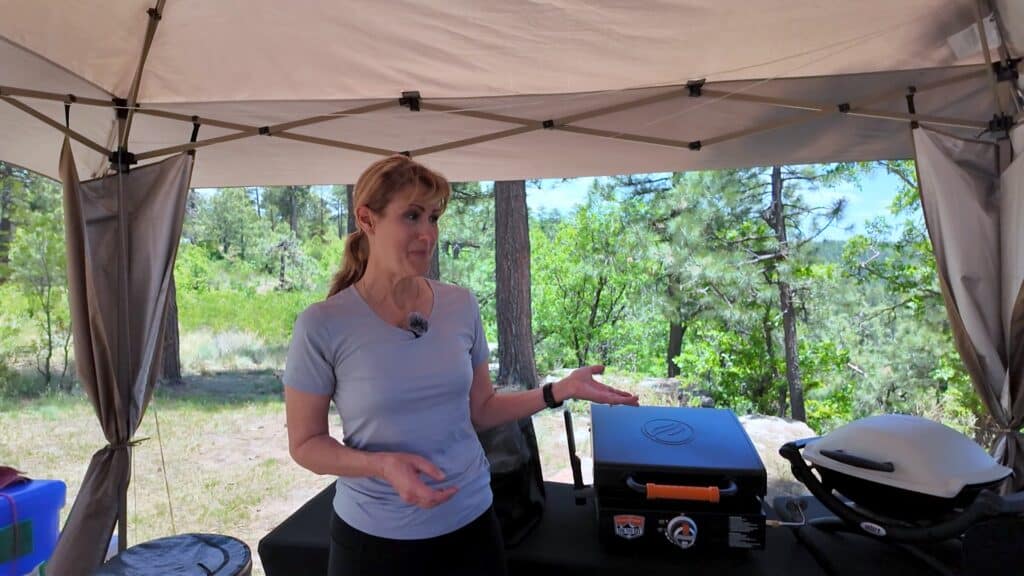
Heavy-duty folding tables serve as our prep counters and appliance stands. We typically assign one table to our Blackstone griddle, while the second accommodates a portable propane stove alongside a compact tabletop grill. Depending on the meal plan, we might fire up just one appliance or run all three simultaneously.
We also position a standard-size trash bin directly beside the prep area. It might sound like a basic detail, but having proper waste disposal on hand keeps the campsite tidy and makes post-meal cleanups effortless.
It’s a straightforward, highly practical setup where every piece of gear earns its spot.
Why We Keep Water at the Kitchen
A dedicated water dispenser right at the station is a total game-changer. Having immediate access to fresh water lets us wash hands mid-recipe and scrape down dirty cookware before it ever crosses the RV threshold.
Rinsing off heavy food scraps and grease outdoors keeps grime out of the interior sink. This saves precious space in our gray water holding tank and makes final dishwashing inside the trailer a total breeze—usually just a fast soap-and-rinse cycle.
This simple habit is an absolute lifesaver whenever we are dry camping or boondocking off the grid.
Shade, Mats, and Staying Comfortable Outside
We position a pop-up canopy directly over our entire cooking zone. This provides essential protection against scorching summer sun rays and keeps us dry during unexpected rain showers.
Underneath, we spread out outdoor RV ground mats. They create a cleaner footing area, reduce dust and dirt tracking, and make sweeping up scraps simple—especially off-grid on dirt or gravel.
To limit endless trips back and forth into the trailer, I load up a sturdy serving tray with ingredients, spices, and cooking tools before starting. It keeps everything organized and eliminates constant steps.
Our Propane and Storage Strategy
When it comes to fuel, we hook up a standard 20-pound propane cylinder rather than relying on those small 1-pound green canisters. A larger tank provides steady gas pressure, lasts significantly longer, and is far more economical for heavy outdoor cooking.
Every item in our mobile kitchen has a dedicated home—from utensils, cooking oils, and seasonings to paper towels, lanterns, and spare fuel. We carefully angle the station to maximize beautiful views while blocking prevailing winds, ensuring a seamless, functional workflow at every stop.
Cooking and Eating Outside Most of the Time
Preparing meals outdoors is one of my favorite parts of camping. Beyond keeping heat and cooking aromas out of the living space, it lets us soak in incredible surroundings. When we boondock in wild spaces, our outdoor kitchen often overlooks breathtaking vistas you simply can’t enjoy from inside the trailer.
We also make it a point to eat outdoors as much as possible. Why admire the wilderness through a window pane when you can sit right out in it?
If cold weather or heavy rain rolls in, we still handle the cooking outside under the canopy, then bring the finished hot meal indoors to eat comfortably.
One Important Safety Tip for Outdoor Cooking
If you are traveling in bear habitat, never leave food supplies, dirty grills, or garbage unattended outside. Doing so creates serious danger for campers and wildlife alike, and it often violates campground rules or forest regulations. Always secure your kitchen gear and store food properly.
If You Don’t Have a Built-In Outdoor Kitchen
If your camper came without a factory outdoor kitchen, don’t view it as a disadvantage. You can easily build a modular setup that offers far greater utility and freedom.
Creating a custom, standalone cooking station lets you adapt to any campsite environment, optimize your workspace, and turn outdoor meal prep into a highlight of every trip.