Spring is the easiest season to get a preschooler outside, and the hardest season to keep a plan simple. The days are longer, the grass is soft again, puddles appear after every shower, and a child who was bored indoors in February suddenly wants to examine every worm, petal and stone. The best fun spring activities for preschoolers do not need a big budget, a craft cupboard full of supplies, or a perfect garden. They need a little preparation, clothes that can get muddy, and an adult who is willing to slow down and let a short walk become the main event.
This refreshed guide brings together 11 ideas that genuinely work for three, four and five year olds. You will find calm activities for quiet mornings, active games for children who need to run, nature learning you can do on any pavement or park path, and wet-weather backups for the days when spring does not behave. Every idea includes what you need, how long it really takes, and the small safety detail parents usually wish someone had told them first.
How to Plan Spring Activities for Preschoolers Without Overdoing It
Preschoolers thrive on one good activity at a time. A morning that tries to fit in a scavenger hunt, a picnic, a craft and a bike ride usually ends with everyone tired and nobody remembering the good part. Pick one main activity, add one simple extra such as a snack outside, and leave space for the unplanned moments. Those moments, watching ants carry a crumb or finding a feather, are often what children talk about at bedtime.
Keep expectations age-appropriate. A three year old may hunt for three items and then want to carry the bucket. A five year old may want to tick off every picture and invent extra rules. Both are doing it right. The goal is time outside, fresh air, movement and curiosity, not a finished worksheet.
Nature Activities That Teach While Children Play
1. Picture Scavenger Hunt
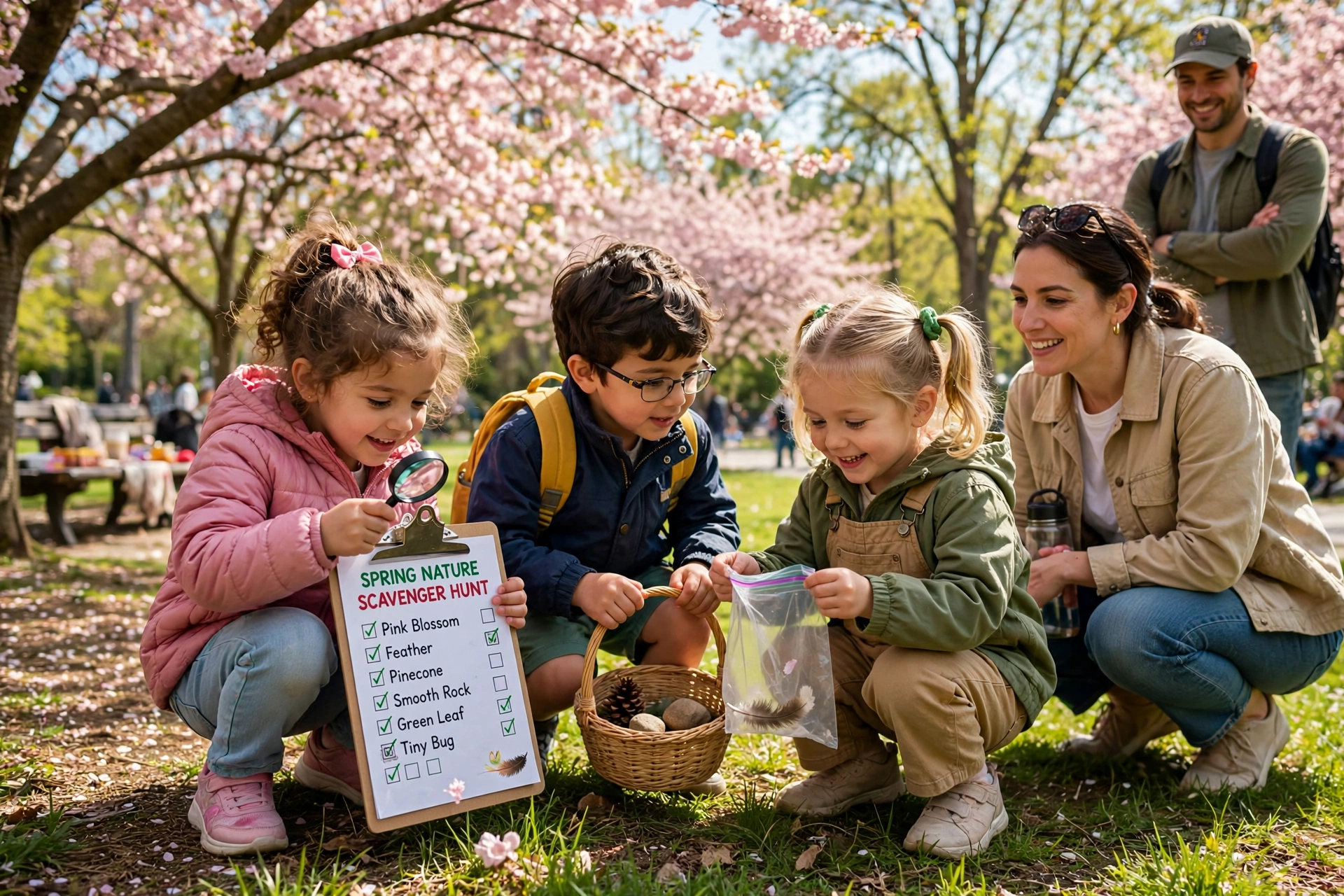
A picture scavenger hunt is the single most reliable spring activity for this age group. Draw or print simple pictures rather than words: a yellow flower, a smooth stone, a feather, a green leaf, something round, something that makes a sound. Give each child a small bag or bucket and let them collect only safe, fallen items. Set a clear rule before you start: we look at living flowers, we do not pick them unless an adult says that patch is fine. Finish by laying everything out and talking about colours, textures and which item was hardest to find.
2. Bug Watching, Kindly
Spring brings ladybirds, bees, worms after rain and butterflies on the first warm days. Give children a magnifying glass and a clear rule: look, do not grab, and always put a stone or log back where you found it. If your child is nervous, start with worms and woodlice, which cannot sting and are easy to find under pots and stones.
3. Plant Something They Can Watch Grow
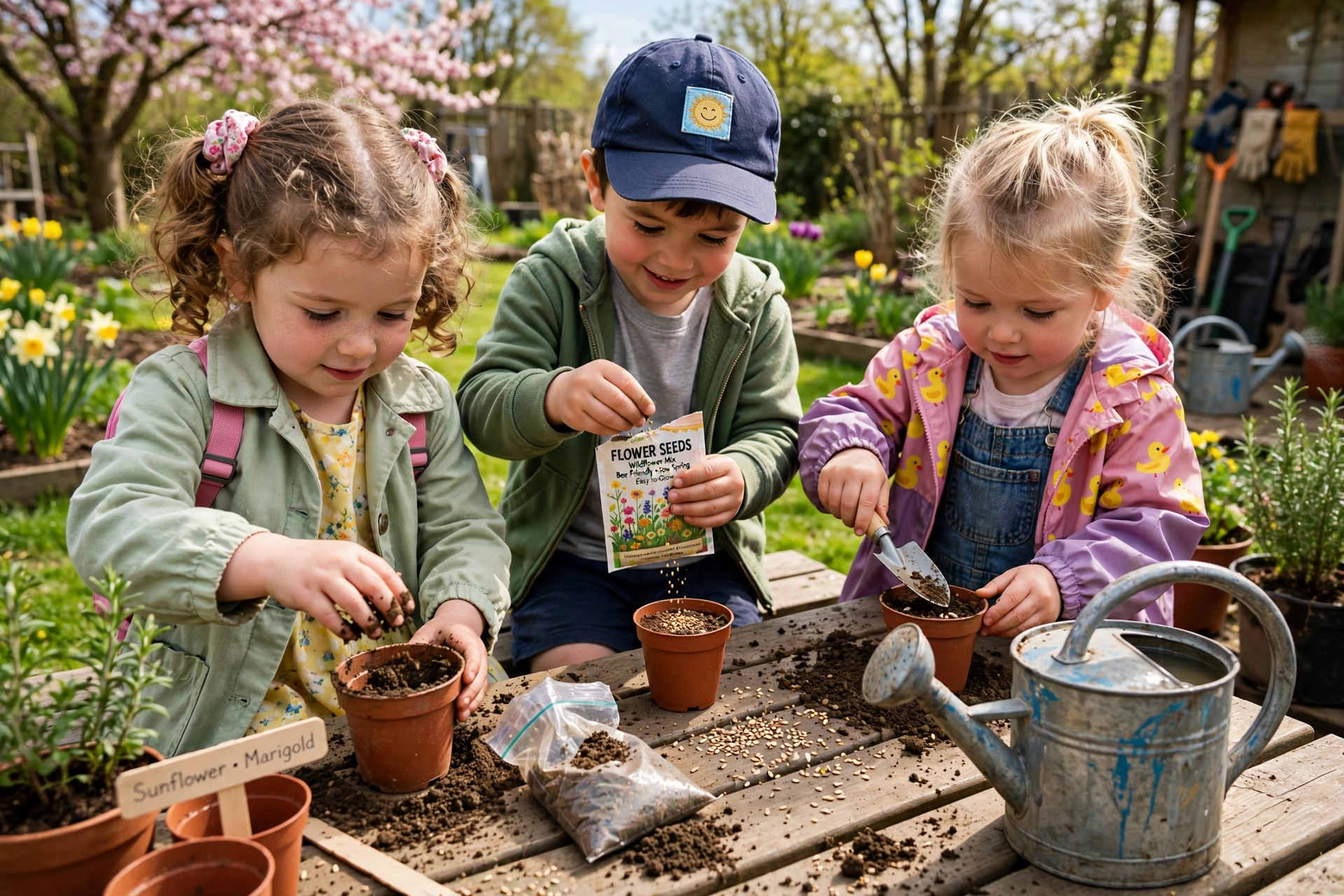
Fast results keep preschoolers interested, so choose seeds that sprout quickly and forgive irregular watering. Sunflowers, beans in a clear jar, cress on cotton wool and radishes in a pot all show change within days. Let children do the real work: filling the pot, pushing the seed in with a finger, watering with a small jug. Label the pot with their name and a drawing. The daily check to see whether anything has grown becomes a small, happy routine, and it teaches patience in a way no explanation can.
4. Puddle Science After Rain
After spring rain, put on wellington boots and go looking for puddles on purpose. Preschoolers can float leaves as boats, drop in stones to watch ripples, measure a puddle with a stick, and come back the next sunny day to see whether it has shrunk. Keep to pavements and safe paths, wash hands afterwards, and treat it as a proper outing rather than an accident on the way somewhere else.
Active Spring Games for Burning Energy
5. Chalk Obstacle Course
Chalk turns any driveway or quiet pavement into a course. Draw a wiggly line to follow, circles to hop into, a spiral to spin on, and a finish line worth cheering at. Preschoolers practise balance, jumping and following instructions while thinking it is all a game. Let them add one obstacle of their own.
6. Bubble Chase and Bubble Painting
Bubbles never really fail. A simple wand works, a bubble machine helps when several children are playing, and a shallow tray of bubble mixture with a straw, used only by older preschoolers who can blow out reliably, makes giant bubbles.
7. First Balance Bike Rides
Spring is a natural time to start or restart cycling, when paths are dry and evenings are light. A balance bike usually works better than stabilisers because children learn the hard part, balance, first. Choose a flat, traffic-free place, fit the helmet properly every time, and keep sessions short and cheerful. Follow American Academy of Pediatrics guidance on helmets and close supervision, and check helmet fit again as heads grow through the season. Walk beside younger riders, praise effort rather than speed, and stop while it is still fun.
8. Simple Garden Games That Still Work
Red light green light, follow the leader, duck duck goose and a very relaxed version of hide and seek have survived because they need nothing and teach a lot: listening, turn-taking, patience and self-control. Keep groups small, keep rules few, and let the birthday-party energy settle by finishing with a slower game. For mixed ages, give older children a job such as being the caller or the score keeper so younger ones can simply run and laugh.
Calm and Creative Spring Activities
9. Nature Art Without a Craft Kit
Collect fallen petals, leaves, twigs and stones and arrange them into pictures on the ground: a face, a house, a butterfly. Photograph the finished piece and leave the materials where you found them. This gives children the pleasure of making something without bringing home a bag of drying leaves, and it introduces the idea that outdoor art can be temporary.
10. Mud Kitchen Play
An old bowl, a spoon, a jug of water and access to soil can occupy a preschooler longer than most bought toys. Add flower petals, pine cones and leaves as pretend ingredients. Set one clear boundary about where digging is allowed, put on clothes that do not matter, and let the mess happen in that space. A bucket of clean water and a towel by the door makes the ending easy rather than stressful.
11. Story Picnic on a Blanket
Take lunch or a snack outside on a blanket, even if outside is only your own garden or a patch of grass near home. Bring two or three picture books and read them in the fresh air after eating. Let your preschooler help pack the food the night before; our 3-day family camping meal plan with shopping list has snack ideas that work perfectly for a spring picnic.
Spring Activities at a Glance
| Activity | Best age | Time needed | Cost | Mess level |
|---|---|---|---|---|
| Picture scavenger hunt | 3-5 | 20-40 minutes | Free | Low |
| Planting fast seeds | 3-5 | 15 minutes, then daily checks | Low | Medium |
| Puddle walk | 3-5 | 20-30 minutes | Free | High, planned |
| Chalk obstacle course | 3-5 | 20 minutes | Low | Low |
| Mud kitchen | 3-5 | 30-60 minutes | Free | High, planned |
| Balance bike practice | 3-5 | 15-20 minutes | Bike and helmet | Low |
| Story picnic | 3-5 | 30-45 minutes | Food you already have | Low |
| Bug watching | 4-5 | 15-30 minutes | Free | Low |
Wet Spring Days: Backups That Still Feel Like Spring
Spring weather will cancel plans, so keep two backups ready. The first is a proper puddle walk, described above, which turns rain into the activity instead of the problem. The second is an indoor spring station by a window: seeds on cotton wool, a drawing of what you can see outside, and a book about baby animals. Children handle disappointment better when there is a named plan B rather than a vague promise to do it later.
The same calm approach helps on family trips, which is why we cover it in our guide to first time camping with kids and the mistakes to avoid. Preschoolers take their cue from adults. If you treat a rainy spring morning as an adventure with boots, they usually will too.
Safety Notes Every Parent Should Keep in Mind
Spring safety is mostly ordinary common sense, applied consistently. Use sun protection on bright days even when the air feels cool, because children burn while playing happily and noticing nothing. Check for ticks after playing in long grass or woodland, especially around socks, waistbands and hairlines, and remove any you find promptly following current medical guidance. Teach children never to eat berries, mushrooms or leaves they find, however pretty they look, and to wash hands after outdoor play and before eating. For the serious side of spring weather, the National Weather Service weather safety resources are a good adult reference, especially for thunderstorms: when thunder is heard, outdoor play ends and everyone goes inside.
Around water, including shallow ponds and streams swollen by spring rain, stay within arm's reach of preschoolers at all times. Around roads, spring excitement makes children faster and less predictable, so hold hands in car parks and near traffic even if your child is usually reliable. Finally, respect wildlife and other people's space: watch ducks and pond life from the edge, and do not feed bread to ducks. Thawed peas, sweetcorn and oats are kinder options if a local park allows feeding at all, and many now ask visitors not to feed wildlife, so check signs first.
Frequently Asked Questions
What are the best spring activities for a 3 year old?
Keep it sensory and short. Puddle walks in boots, a simple three-picture scavenger hunt, bubbles, mud play in one allowed corner, and planting cress that sprouts in days all work beautifully at three. Expect activities to last 10 to 20 minutes, plan a snack afterwards, and do not worry when your child repeats the same favourite activity every day for a week. Repetition is how three year olds learn.
How do I keep spring activities educational without making them feel like lessons?
Follow curiosity instead of setting objectives. Count the petals, name the colours, compare a big leaf and a small leaf, talk about why the puddle is smaller today. Drawing one thing from your walk and labelling it together builds early writing and memory. If an activity starts to feel like a test, you are asking too many questions. Wonder aloud, answer briefly, and let play lead again.
What should preschoolers wear for spring outdoor play?
Layers are the answer in spring. A base layer they can play in, a warm middle layer, and a waterproof outer layer for showers, plus wellington boots for wet ground and a sun hat for bright days. Keep a spare set of clothes and socks ready, because one wet sock can end an outing. Dress for the coldest, wettest version of the forecast, and remove layers if the sun comes out.
How can I do spring activities if we do not have a garden?
Almost everything in this guide works in a park, on a pavement, or on a balcony. Seeds grow in a pot on a windowsill, chalk works on a quiet path where it is allowed, scavenger hunts work on any walk, and a story picnic needs only a blanket and a patch of grass. A small bag with a magnifying glass, a snack and a spare pair of socks turns an ordinary walk to the park into a spring outing.
When is it too cold or wet for preschoolers to play outside in spring?
There is no single temperature, but wind, rain and how well a child is dressed matter more than the number on a forecast. Short, well-dressed outings are fine in most spring weather. Come inside for thunder and lightning, for shivering that does not stop when you add a layer, or when a child is miserable despite warm clothes and a snack. Our guide to how cold is too cold for camping with a toddler explains the layering and warning signs in more detail.
Final Thoughts
Fun spring activities for preschoolers are not about filling every day with a new project. They are about noticing that the season has changed and giving children simple ways to join in: a hunt, a seed, a puddle, a picnic, a first ride. Choose one idea from this list this week, dress for mess and weather, and let your child set the pace. The activities that become family traditions are usually the simplest ones, repeated in the same park, on the same blanket, spring after spring.
