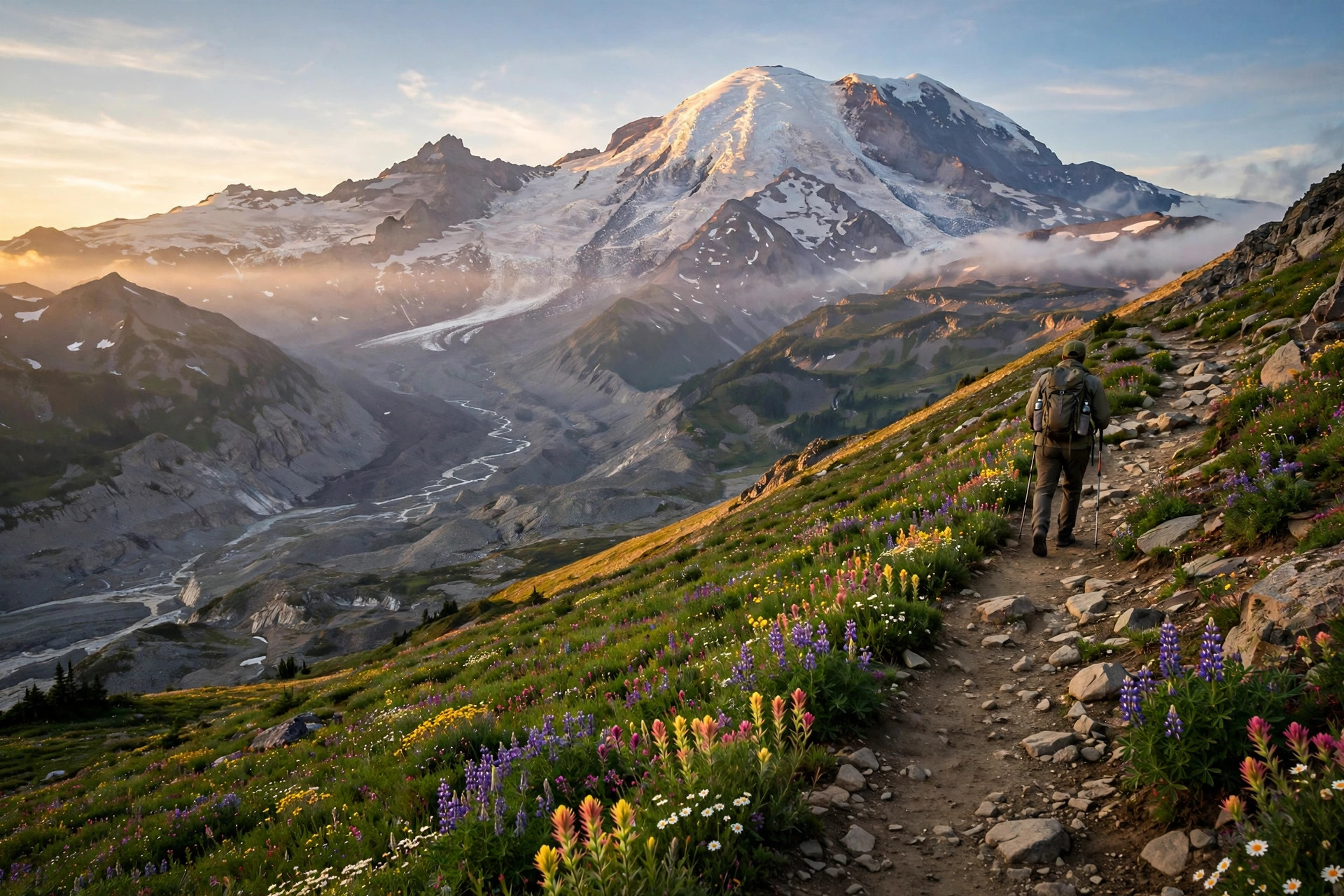
The Wonderland Trail around Mount Rainier is 93 miles of pure Pacific Northwest magic — glaciers, wildflower meadows, suspension bridges over raging rivers, and elevation gain that rivals the best of the long trails. I hiked it with a full ultralight kit and came home with strong opinions about what worked, what broke, and what I’d change next time. This is my updated Wonderland Trail gear list for 2026, refreshed with the current reservation system and everything I learned on the trail.
If you’re building up to a trip like this, it helps to have solid hiking experience under your belt — here are some easy hikes near national parks that are great warm-ups. And before you pack a single sock, read the official Mount Rainier wilderness camping page and the Recreation.gov permit portal: since 2023, about two-thirds of Wonderland camps are released through an early-access reservation lottery, with the rest on a 7-day rolling window. Book the moment your window opens — camps fill in hours.
Wonderland Trail Gear List
Backpack Essentials
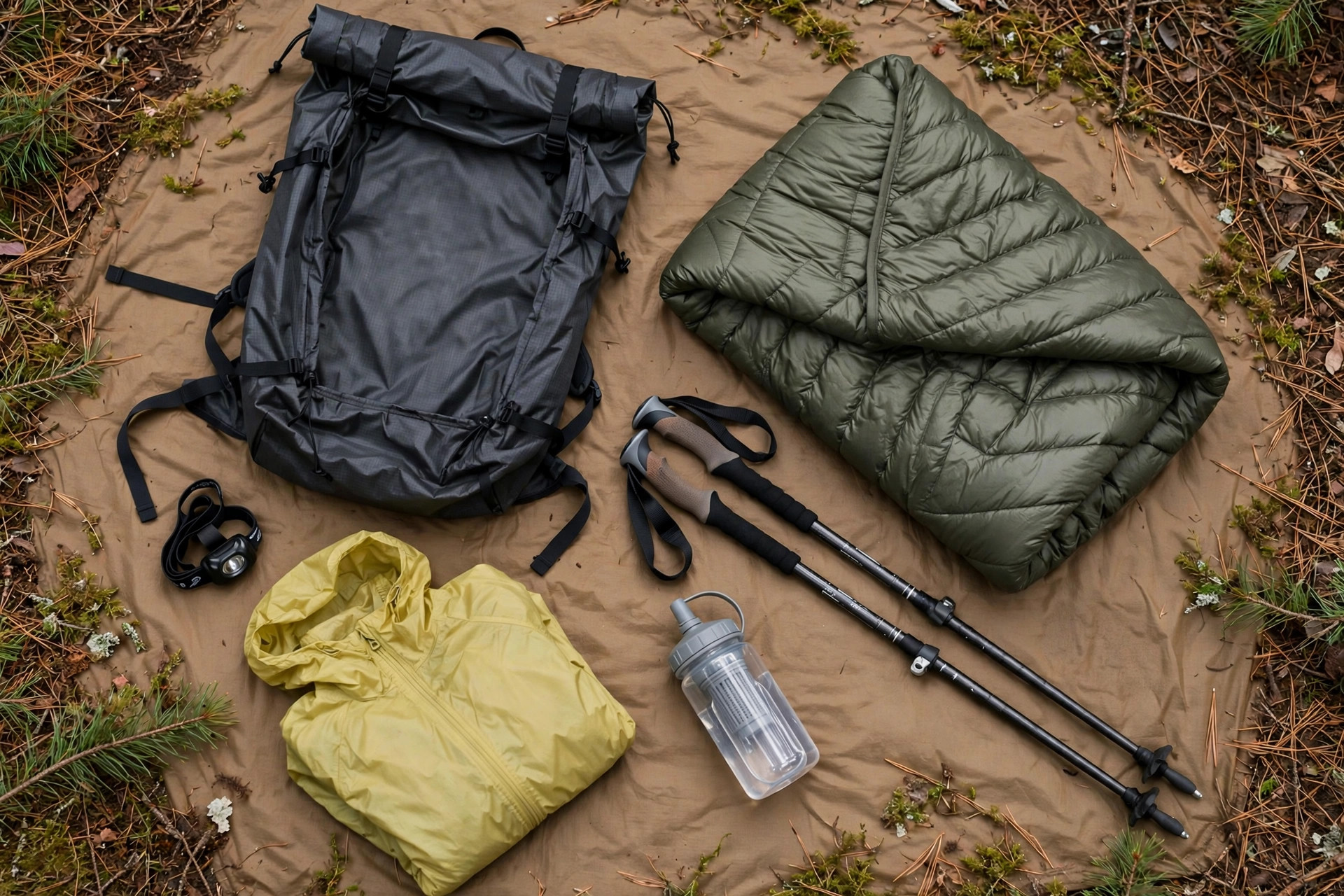
My frameless pack carried a 15-pound load with food and water, and minimalist carried means exactly one thing on this trail: every ounce earns its place. I used a 36-liter frameless pack with a foam sit pad that doubled as the framesheet and a nylofume pack liner — Rainier’s weather is a roulette wheel even in late July, and a liner is cheaper insurance than any pack cover.
2026 update: Frameless packs remain my pick for a sub-10-pound base weight, but if your base weight creeps past 12 pounds, a light framed pack saves your shoulders on the brutal 3,000-foot climbs between camps. The adjustment period is real — expect two to three days of neck and shoulder soreness with any new pack.
Shelter
A lightweight double-wall tent is the sweet spot for Rainier. I carried a spacious ultralight three-person tent (shared with my partner, so effectively a palace) and appreciated every inch of vestibule space during a misty morning at camp. Freestanding or semi-freestanding designs win here: some camps sit on hard-packed volcanic gravel where staking is miserable. National parks trips always reward the gear that handles the worst-case scenario, and on the Wonderland, worst case is a wind-driven rain squall at 6,500 feet.
Sleep System
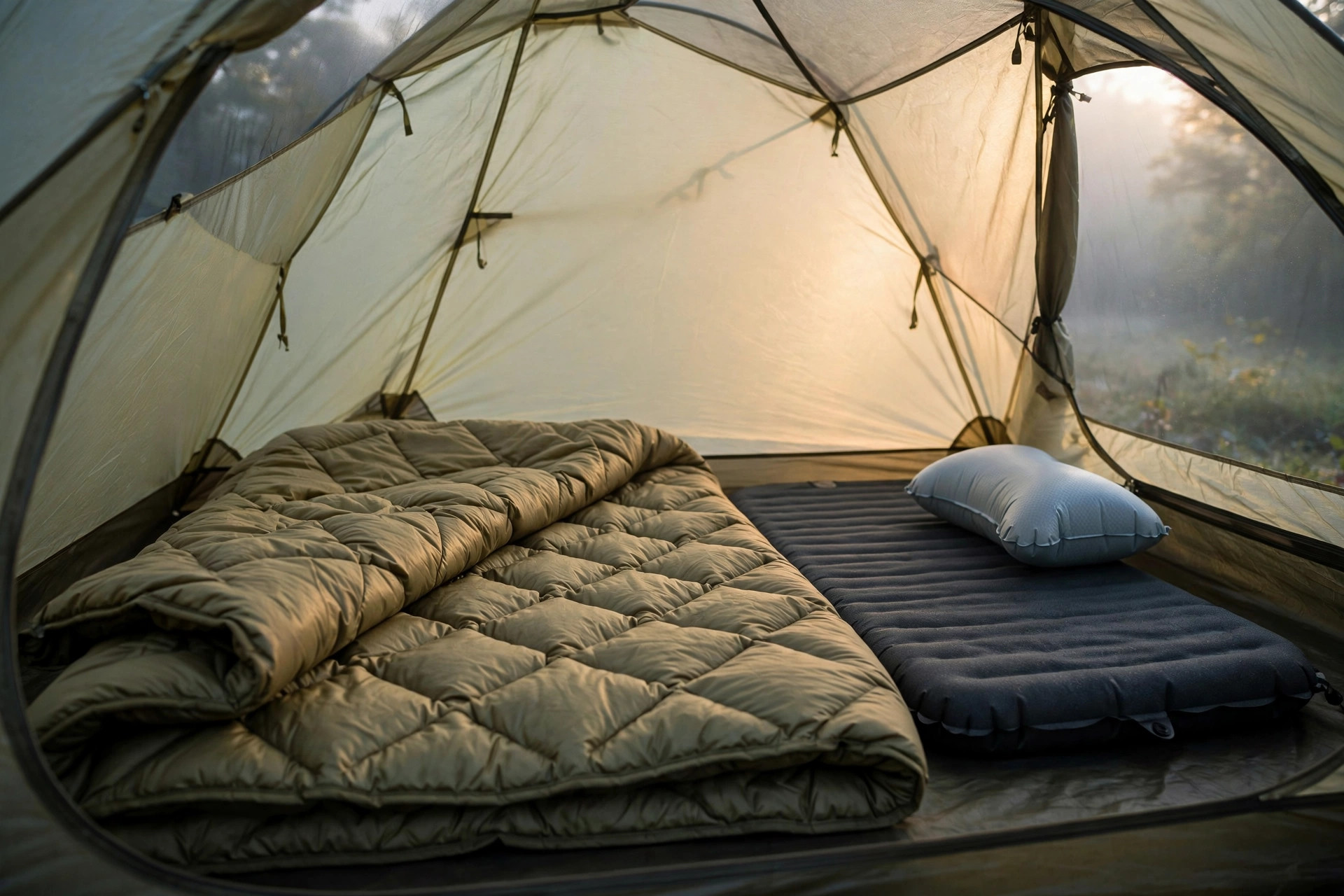
My 10°F down quilt kept me comfortable into the low 40s with layers on, and an inflatable ultralight pad made side-sleeping possible on the park’s notoriously sloped tent pads. One honest caveat: ultralight pads are noisy on silnylon floors and can feel slippery — position it against the tent wall or use a thin foam pad underneath. After several nights of testing, zero leaks or holes, which is all you can ask of a pad this light.
Add an inflatable pillow. It weighs almost nothing and the sleep-quality upgrade is enormous after 12-mile days.
Water Filtration
Water is everywhere on the Wonderland — snowmelt creeks, rivers, and clear alpine lakes — and I filtered from all of them. A squeeze filter threaded onto a 1-liter Smartwater bottle was my primary system, and it worked well on clear sources. Two hard lessons: squeeze-filter gaskets can fail mid-trip (carry the spare gasket if your model includes one), and disposable filter bags tear easily. Use durable water bottles instead of the bags, and backflush regularly — silty glacial runoff will clog a filter fast.
Food, Cooking & Bears
No bear canister required: every Wonderland camp has bear poles or bear boxes. A no-cook setup (a Talenti jar, a long-handled spoon, and a food bag) kept my kitchen under a pound. Tortillas, peanut butter, tuna packets, and couscous covered most meals; the jar doubles as a cold-soak container. Cache your food bag on the pole every single night — the park’s bears and raccoons are professionals.
Clothing: Worn on the Trail
Breathable hiking shorts, a lightweight sun hoody, merino underwear, and trail runners handled 90% of the mileage. Altra-style zero-drop shoes with rock-hoppable traction were perfect since every significant water crossing was bridged in season. Injinji toe socks plus merino wool socks kept blisters away over 93 miles. One regret: bring two pairs of hiking socks. Washing one pair in a cold creek at night and hoping it dries by dawn is a gamble you don’t need.
Clothing: Packed & Rain Gear
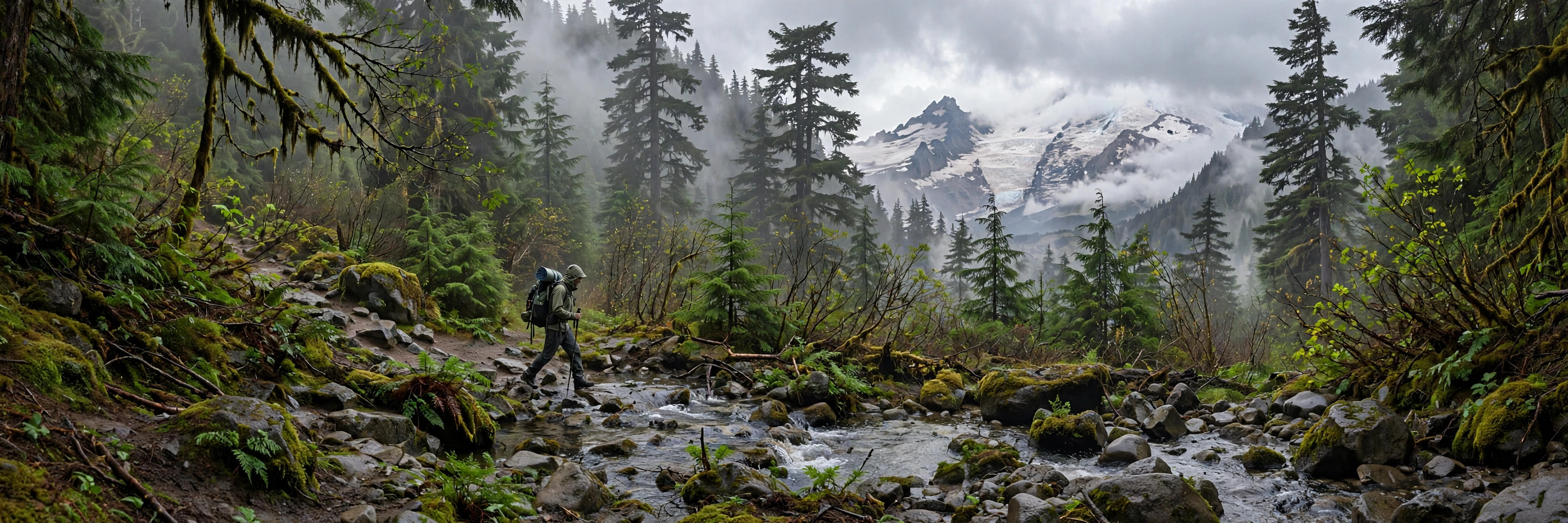
This is where Rainier gear lists live or die. I packed a full rain shell, rain mitts, wind pants, a rain kilt for ventilation, and backup merino layers — and my rain gear stayed packed the entire trip. That’s not wasted weight; that’s the Wonderland tax. A single storm at high camp would have made every ounce of it worth it. Wind pants proved their worth on breezy ridges (lighter and more breathable than a fleece layer for moving insulation). Skip fleece gloves and balaclavas in midsummer — temps stayed mild, and a rain shell plus midlayer covered the coldest mornings.
Hygiene & Leave No Trace
Every camp on the trail has pit toilets, so my trowel went unused the whole hike — nice to know, but I’d still bring it, since the one time you don’t is the time nature calls between camps. A pee cloth is a game-changer for women’s hygiene on long trails. Sunscreen and lip balm are non-negotiable: the snow and high altitude reflect serious UV even on cloudy days. Pack a small chafe stick too; wet shorts at mile 80 have no mercy.
Navigation, Safety & Electronics
A satellite communicator is strongly recommended on the Wonderland — cell signal dies within an hour of the trailhead, and the trail’s weather can turn a twisted ankle into a serious situation. Test your device’s messaging before you need it; GPS coordinates sometimes fail to send from deep glacial valleys. A 10,000 mAh power bank kept a phone alive for a week of navigation and photos but could not keep a full camera charged — bring a larger bank or a second battery if you shoot mirrorless. A headlamp with fresh batteries (or the rechargeable version) is essential: starts are early on the big climbing days.
Final numbers: 9-pound base weight (before camera gear), trekking poles absolutely essential on the descents. Why go ultralight at all? To spend the weight budget on a real camera. The photos were worth every gram.
Wonderland Trail: Post-Hike Gear Analysis
Seven days and 93 miles later, here’s the honest scorecard — what earned a place on the next trip and what got cut:
Backpack Performance
The frameless pack performed well overall. Early struggles with side-pocket access resolved once I reorganized, but the first three days of shoulder soreness were a real adjustment period. The foam sit-pad framesheet worked but didn’t eliminate back sweat — Rainier’s humidity surprised me.
Sleep System Success
Quilt and pad were the MVPs: warm into the low 40s, no failures, no punctures. Annoyances only — slippery, noisy pad on silnylon floors. Verdict: unchanged for the next trip.
Water Filtration Findings
Squeeze filters work great on clear water, but the gasket fell off after two days and the bag clogged in lake water; the disposable filter bags tore despite gentle handling. Fix for 2026: carry the spare gasket, backflush often, and skip the disposable bags in favor of hard bottles.
Unused Rain Gear
Rain kilt and mitts stayed packed — no heavy rain all week. Skipping fleece gloves and the balaclava was the right call. Verdict: carry it anyway. Rainier makes its own weather.
Power & Navigation
A 10,000 mAh bank was insufficient for a 7-day hike with a mirrorless camera: one 10% camera charge, five 40–50% phone charges. The satellite communicator’s battery underperformed expectations and coordinates failed to send from some campsites. Fix for 2026: bigger bank (20,000 mAh) or solar top-up, and test the communicator from a valley floor before relying on it.
FAQ
Do I need a permit for the Wonderland Trail?
Yes. Every overnight hiker needs a wilderness camping permit reserved through Recreation.gov. The early-access lottery covers most camps; the remainder are released on a 7-day rolling window. Check the park’s wilderness page for current fees and availability — they change nearly every season.
When is the best time to hike the Wonderland Trail?
Late July through early September is the prime window: most snow is gone, river crossings are bridged, and wildflowers peak in late July and August. Early season means snow travel and swollen creeks; late season means shorter days and the first fall storms.
Are there bears on the Wonderland Trail?
Yes, black bears are active throughout the park. All camps have bear poles or boxes — hang or store all food, scented items, and trash every night. No bear canister is required.
Can beginners hike the Wonderland Trail?
It’s a strenuous route — roughly 22,000 feet of elevation gain over 93 miles — so build up with shorter national park hikes first. Strong, prepared first-timers do complete it every year with good training and a dialed gear list.
Is a bear canister or rain gear required?
No canister — bear poles and boxes are at every camp. Rain gear isn’t “required” by regulation, but on Mount Rainier it’s effectively mandatory. The weather flips in hours.
